
Opinion Greece
Opinion: There are oranges elsewhere too – munitions, upgrades and weapons for the Greek Armed Forces beyond the traditional markets
Greece’s problem is not finding weapons but time: when US approvals for munitions and pods lag, Athens has turned to Israel, France and Italy, while India, Serbia and the rest of Europe offer options once off the table.

Greece does not have a problem finding weapons. It has a problem with time. For decades the Armed Forces have learned to buy first from the other side of the Atlantic, and that choice has deep roots: common NATO standards, training, reliability and platforms such as the F-16 Viper and the F-35 that have no equal. But when a fighter is delivered without its weapons, when a targeting pod waits for years or when a request for munitions is left without a binding answer, planning cannot stop. There are oranges elsewhere too, and Athens has already shown it in practice with Israel, France and Italy, while India, Serbia and the rest of Europe offer solutions that until a few years ago were not even part of the discussion. The pity is that each such choice is also a contract that American industry could very easily have won.
The weapons that wait: munitions and pods
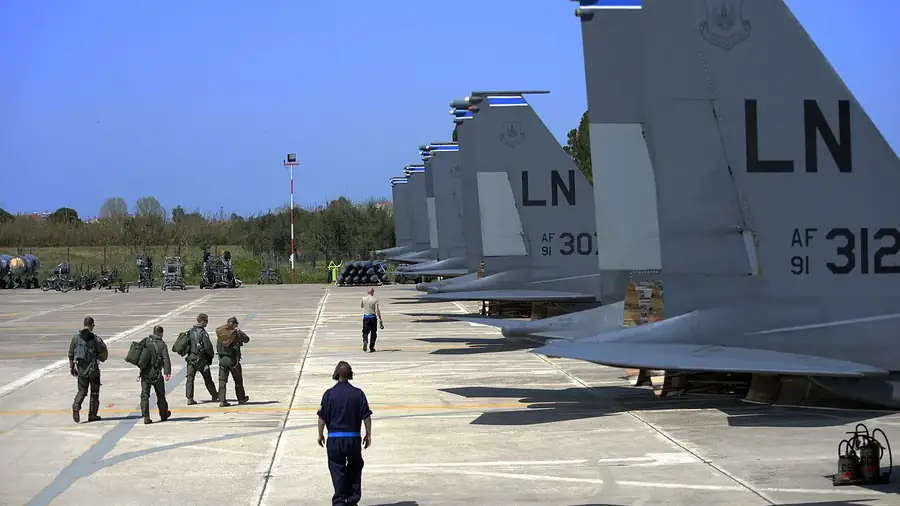
The most characteristic pending issue concerns the Air Force. As US Secretary of State Marco Rubio himself admitted in Athens in October, on the weapons for Greece’s F-35s “there is no official answer”, the matter is “being examined very seriously” and the final decision belongs to the president. Greek interest concerns AIM-120 and AIM-9X air-to-air missiles, JASSM strike weapons, AARGM anti-radar missiles and naval strike missiles such as Harpoon for the F-16 Vipers, where for most of them Athens is still waiting for positive answers before a binding document from the American side. The same applies to the Vipers’ new targeting pod, where the American Sniper and the Israeli Litening 5 have become an informal contest.
This is not an abstract matter. A modern fighter with a top AESA radar but without modern long-range weapons and without a targeting pod is an excellent sensor that cannot complete the strike chain on its own. The Air Force has already shown it is not waiting with folded arms: intergovernmental contract 009Γ/23 with Israel for SPICE 1000 and 2000 guidance kits for the F-16s, worth €130 million, acquired an inspection and acceptance committee in September, the Rafales already fly with the European Meteor and SCALP, and the Air Force is also looking at the French HAMMER.
Air Force: Israel and Europe have answers
If American approvals keep coming late, the Air Force has ready solutions for almost every gap. For the targeting pod, Rafael’s Litening 5 has been presented repeatedly to the Air Force General Staff and Greece already uses an older version. For long-range strike, the supersonic Rampage missile of IAI and Elbit is designed for F-16s and is in service with the Israeli Air Force, while SPICE covers precision strike with kits for bombs the Air Force already has. In air-to-air missiles, the Rafales already carry MBDA’s Meteor, which according to MBDA has the largest no-escape zone of any air-to-air missile, while European industry also offers Diehl’s IRIS-T. None of these solutions is a “substitute” for an AIM-120D on an F-35, because integration on the American fifth-generation fighter always goes through Washington. For the F-16 Vipers, however, which are the backbone of the Air Force for the next twenty years, the options are real.
Army: from Israel to India and Serbia
The Army has already made the biggest turn. On April 6, 2026 the ΓΔΑΕΕ and Israel’s SIBAT signed intergovernmental agreement 009Α/26, worth €690 million, for 36 PULS launchers of Elbit with munitions reaching 300 kilometres, and in the background is IAI’s LORA ballistic missile, where talks now concern its co-production in Greece. On August 31 the “Achilles Shield” was signed, an agreement of about €3 billion with David’s Sling, Barak MX, SPYDER and Drone Dome and Greek industrial participation of about €750 million (see our analysis), while the Army Aviation’s AH-64A Apaches are being upgraded with Elbit and gain Rafael’s SPIKE NLOS.
The options do not stop at Israel. The Army formally asked India’s Tata Advanced Systems in December 2025 for a WhAP 8×8 for field trials, an amphibious wheeled armoured vehicle developed with the state organisation DRDO, while India also offers missile systems. Serbia can cover quickly and cheaply the “simple” things: mortar rounds, 122 mm rockets for the 111 RM-70 launchers, 155 mm rounds and armoured vehicles such as the Miloš and the Lazar, as we proposed in our analysis on Greece–Serbia co-production. And Germany, with Europe’s largest defence industry, and France, with its excellent shipbuilding capabilities, are now hearing Nikos Dendias speak of joint production.
Navy: the European solution is already chosen
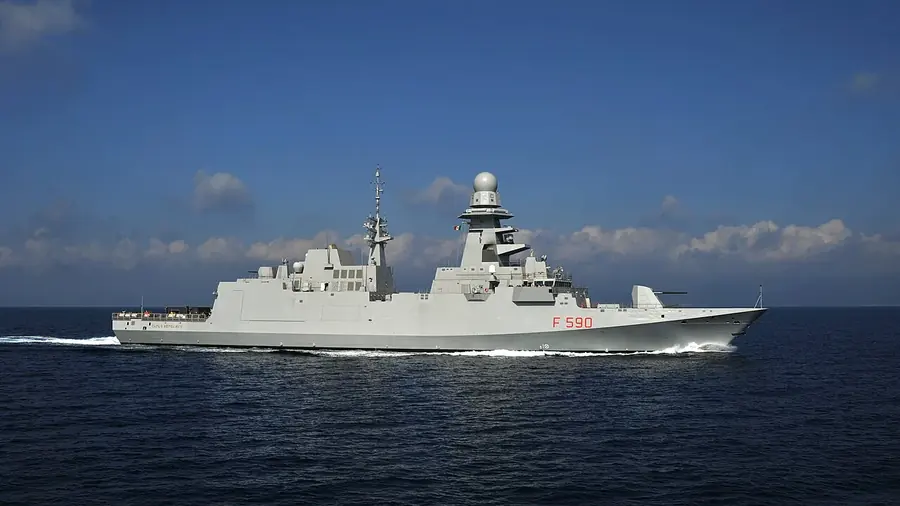
In the Navy the turn is almost complete. The four FDI HN frigates of Naval Group carry French Aster 30 and Exocet MM40 Block 3C missiles, and the Navy General Staff is already examining the anti-ballistic Aster 30 B1NT. The interim solution also came from Europe, with the Italian FREMM Bergamini frigates signed in Rome on September 8, 2026, after years of discussion of American ships that went nowhere, with the LCS rejected as unsuitable and the American Constellation frigate programme, in which Athens had shown interest, being cancelled. Even in the MEKO modernisation (see our analysis) the new hull sonar comes from the Israeli Elbit group. Underwater the options are equally European, from the German Type 212CD to the French Barracuda proposal.
The European framework makes this turn even more attractive. The European Union’s SAFE loan programme, worth €150 billion, finances joint procurement on condition that at least 65% of the value of components comes from Europe, Ukraine or EEA countries. Put simply, a European system can today be bought with cheaper European borrowing.
Who loses when Athens looks elsewhere
Greece remains one of American industry’s most stable customers in Europe. The F-35s, the upgrade of the F-16s to Viper, the MH-60R Seahawk helicopters, the $4 billion in FMS sales announced in October and the Stryker vehicles show a relationship that is not in question. That is exactly why every contract that goes elsewhere matters. The €3 billion air defence, the €690 million launcher, the €130 million guidance kits, the frigates and their missiles were all fields where American industry has top products. Each of them also means decades of spare parts, training, upgrades and munitions that will now go to Israeli, French, Italian or German production lines.
Athens is not looking for a rival to Washington. It is looking for weapons that arrive on time, for a confrontation with Turkey that does not wait for bureaucratic procedures. If the answer is late, there are oranges elsewhere, and the other gardeners seem willing to share both know-how and production with Greek industry. It would be a pity, for both sides, if Greece’s closest defence relationship ended up being measured in contracts lost not because someone else was necessarily better, but because they were faster.
Frequently asked questions about Greece’s alternative arms markets
Which American weapons is the Air Force waiting for? AIM-120 and AIM-9X air-to-air missiles, JASSM strike weapons, AARGM anti-radar missiles and naval strike missiles such as Harpoon for the F-16 Vipers and the F-35s.
What has Greece already bought from Israel? The “Achilles Shield” (David’s Sling, Barak MX, SPYDER, about €3 billion), Drone Dome (€26 million), 36 PULS launchers (€690 million), SPICE 1000 and 2000 kits for the F-16s (€130 million) and SPIKE NLOS for the Apaches.
What can India offer? In December 2025 the Army asked for a Tata WhAP 8×8 wheeled armoured vehicle for trials, and cooperation on missile solutions is also discussed. Greece and India signed in February 2026 a joint declaration of intent on defence industrial cooperation.
Why Serbia? Because it produces at scale and at low cost mortar ammunition, 122 mm rockets for the RM-70 launchers, artillery rounds and 4×4 and 8×8 armoured vehicles, which Cyprus already procures.