Europe
Pistorius: “We expect changes” in US forces in Europe, as NATO allies talk to the Pentagon’s Colby
German Defence Minister Boris Pistorius says NATO allies expect changes in US force levels in Europe, but nothing specific yet, as they meet Pentagon policy chief Elbridge Colby in Brussels.

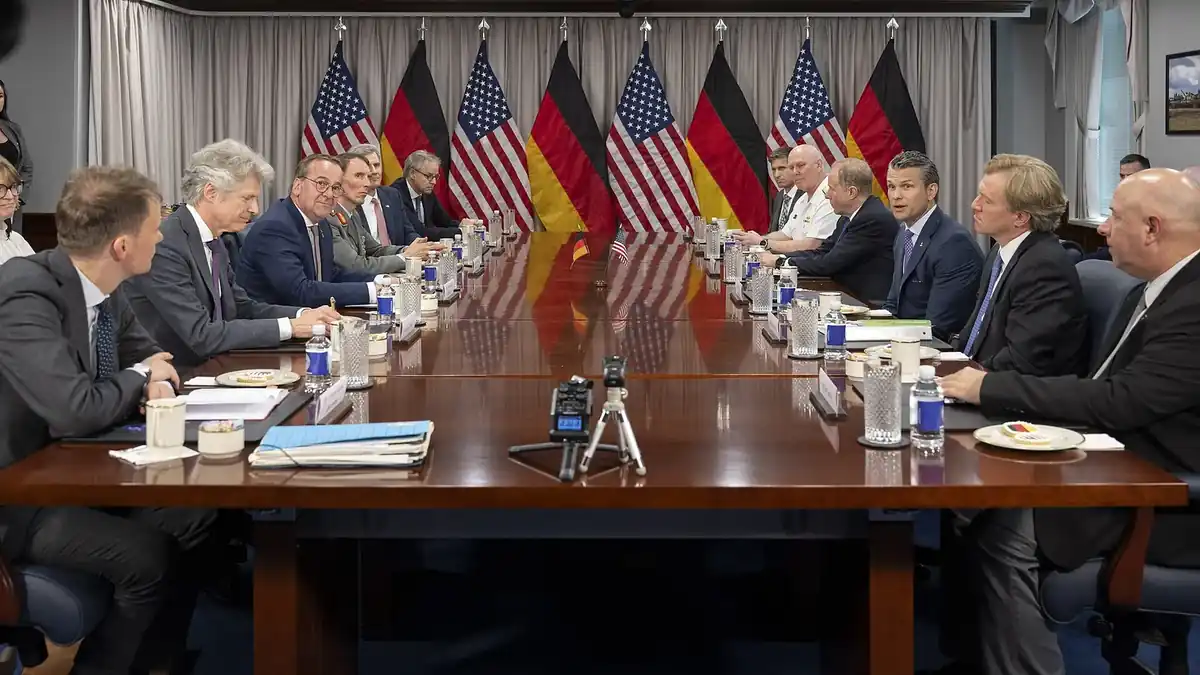
NATO allies are discussing on Tuesday, November 17 in Brussels, with Elbridge Colby, the US Under Secretary of Defense for Policy and head of the Pentagon’s strategy, the review of the American military presence in Europe. German Defence Minister Boris Pistorius announced it before the meeting of EU defence ministers, in which Colby takes part in a working lunch. “We expect changes in the level of forces, but we do not yet know anything specific,” he told Reuters. The German minister estimates that more clarity on the extent of any reduction will come within the next few weeks.
The six-month review was announced in June by Pentagon chief Pete Hegseth, who had threatened to withhold part of the US contribution to NATO if “free-riding” allies fail to meet their defence spending commitments. The outcome is expected before Christmas. About 80,000 US troops are in Europe, around 35,000 of them in Germany, the largest American presence on the continent. European military sources estimate that Washington may move a brigade, about 5,000 troops, from Germany to Asia or closer to NATO’s eastern flank, in Poland. The number matches the scenario that the Pentagon is considering a cut of just 5,000 troops in Europe instead of 25,000.
Pistorius did not say explicitly that the review will reduce US forces in Europe, but stressed that Washington wants Europe to do more and the US military to be able to meet its global commitments. He argued that a shift in the balance of conventional forces “would have happened with any other American president”, because of the US’s increased engagement in the Indo-Pacific. The talks with the Americans, he added, aim at coordination so that a reduction does not leave dangerous capability gaps in NATO’s European defence.
A new PURL package for Ukraine
Colby is also taking part in the afternoon in the meeting of the Ukraine Defense Contact Group (known as Ramstein) at NATO headquarters, where new weapons for Kyiv before winter are on the table. Pistorius announced that Germany and Norway are funding a new package of American weapons through the PURL mechanism, mainly PAC-2 and PAC-3 missiles for Patriot systems. “It is the fifth package Germany is taking part in. This time we are giving 300 million dollars,” he said. A PURL package typically comes to 500 million dollars, as Berliner Zeitung notes. Berlin is also preparing the integration of IRIS-T missiles into Norwegian NASAMS systems and is sending new radars and ammunition for F-16s and drones.
The German minister made a new appeal to the “sense of responsibility” of the allies and named Greece among the countries that still hold large stocks of Patriot missiles. In early November, saying Germany cannot currently give more Patriots to Ukraine, he had already asked the other allies to contribute more. “Supporting Ukraine is not a charity event,” he said. “It is about Europe’s security, and about stopping Vladimir Putin and putting him in his place.”