Europe
Saab: SEK 2 billion contract for the armament of Sweden’s FDI frigates – what the Luleå class will get
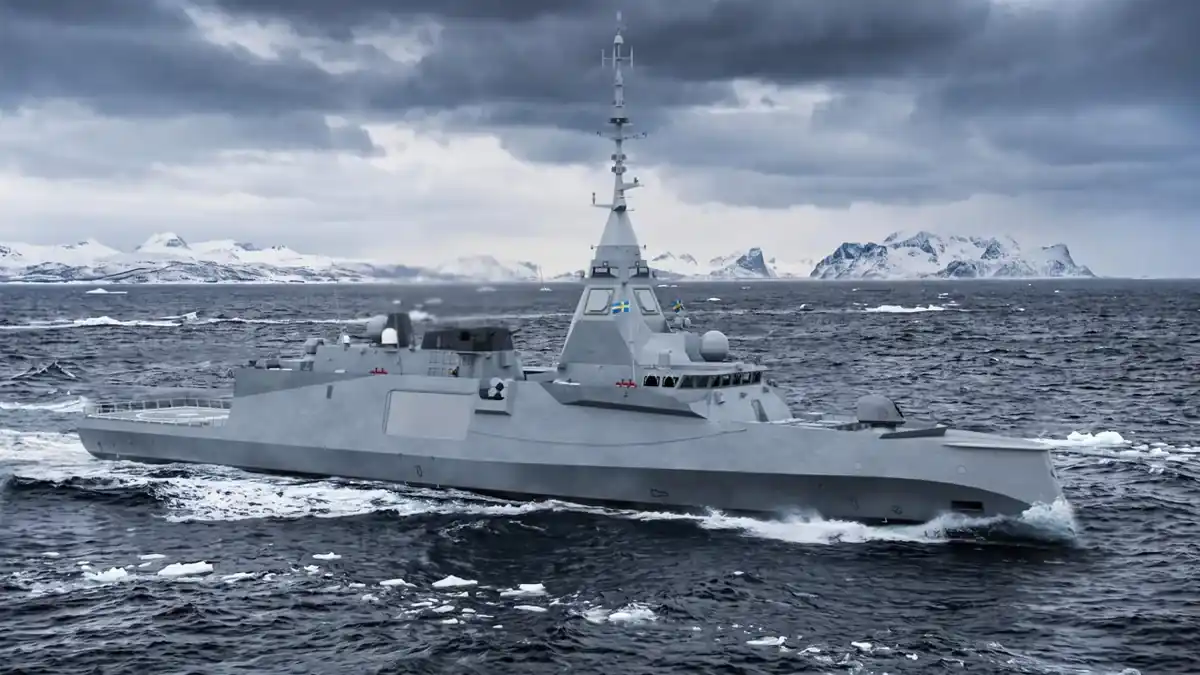
Saab will equip the four FDI frigates Naval Group is building for the Swedish Navy with weapon control, sensors, RBS15 missiles and lightweight torpedoes, in a contract worth about SEK 2 billion.

Saab will equip with Swedish weapons and sensors the four FDI frigates that Naval Group is building for the Swedish Navy. The Swedish group announced on Friday, November 6 that it had signed a contract with the French company for the delivery and integration of weapon control systems and sensors, worth about SEK 2 billion, which corresponds to about $202 million. Deliveries to Naval Group will take place from 2027 to 2034.
The package covers almost the whole “Swedish” part of the armament. It includes a weapon control system, the Ceros fire director, the EOS 500 electro-optical sensor, RBS15 anti-ship missiles, the Saab Lightweight Torpedo, the Trackfire remote weapon station and the Sea Giraffe 1X lightweight multi-mission surveillance radar. In other words, the frigate keeps the French platform and the French combat system, but gets Swedish anti-ship and anti-submarine armament.
“We are proud to equip Swedish ships with our leading products,” said Mats Wicksell, head of Saab’s Naval business area. As he said, the Swedish Navy will acquire advanced and integrated capabilities to detect, deter and respond to threats above and below the surface, as well as asymmetric threats at sea.
The Luleå class and the SEK 47 billion contract
Saab’s contract comes two months after the main agreement. On August 31, 2026, the Swedish Defence Materiel Administration (FMV) signed with Naval Group a contract of about SEK 47 billion for four frigates, together with training systems and spare parts. The signatures were given by FMV Director General Mikael Granholm and Naval Group CEO Pierre Éric Pommellet, at a ceremony aboard a French frigate at the Skeppsbron quay in Stockholm, in the presence of Emmanuel Macron and Ulf Kristersson. The ships will form the Luleå class and deliveries are planned for 2030-2034.
The programme is moving fast. Sweden chose the FDI in May, while at the beginning of October construction of the first Swedish frigate began, a month after the signing. Naval Group stresses that the ships’ air defence will rely on the Aster system and that the design is adapted to the waters of the Baltic, the North Atlantic and the Arctic North.
For Greece the development is of particular interest, since the FDI is already in service with the French and the Hellenic Navy, something both FMV and Naval Group cite to explain the fast delivery. The Hellenic Navy’s FDI HN frigates of the “Kimon” class, which we examined in a full analysis, carry French Exocet anti-ship missiles, while their Swedish sisters will have RBS15 and Swedish torpedoes, an example of how the same basic design is adapted to the requirements of each navy.