Air Force
Space Operations Command inaugurated at Dekelia – what Dendias said about the armed forces’ satellites
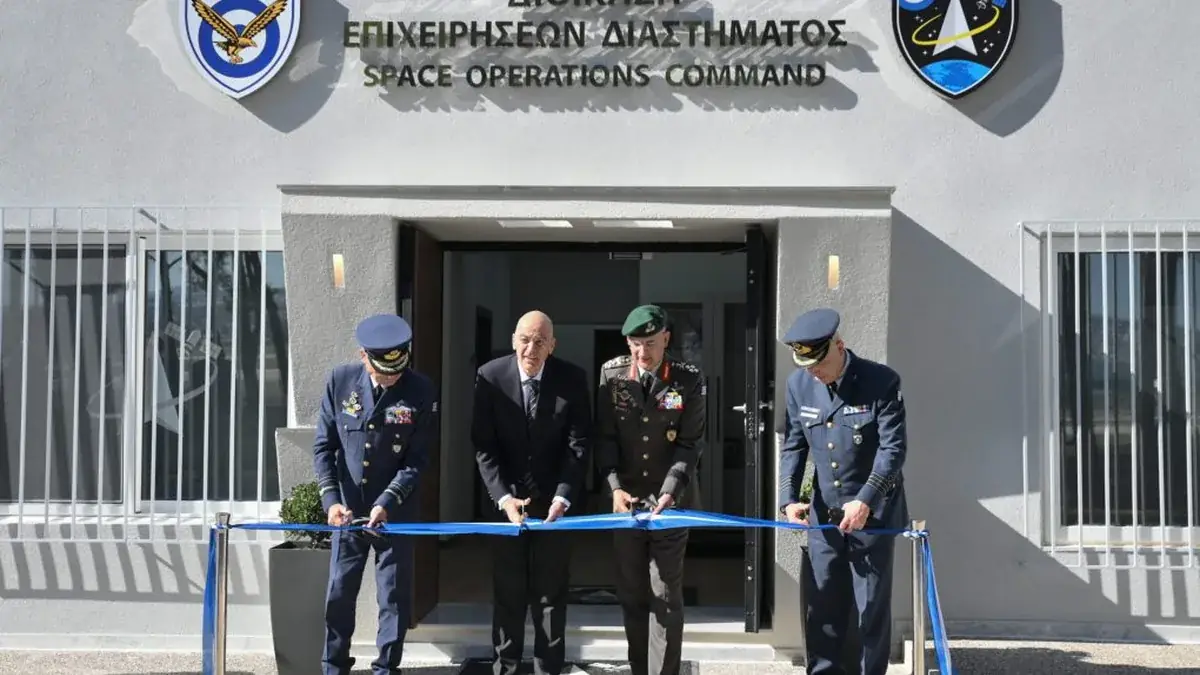
The Hellenic Air Force now has a Space Operations Command. At the Dekelia inauguration Defence Minister Dendias said Greece must stop buying satellite services from foreigners and outlined six optical, three SIGINT and three radar satellites.

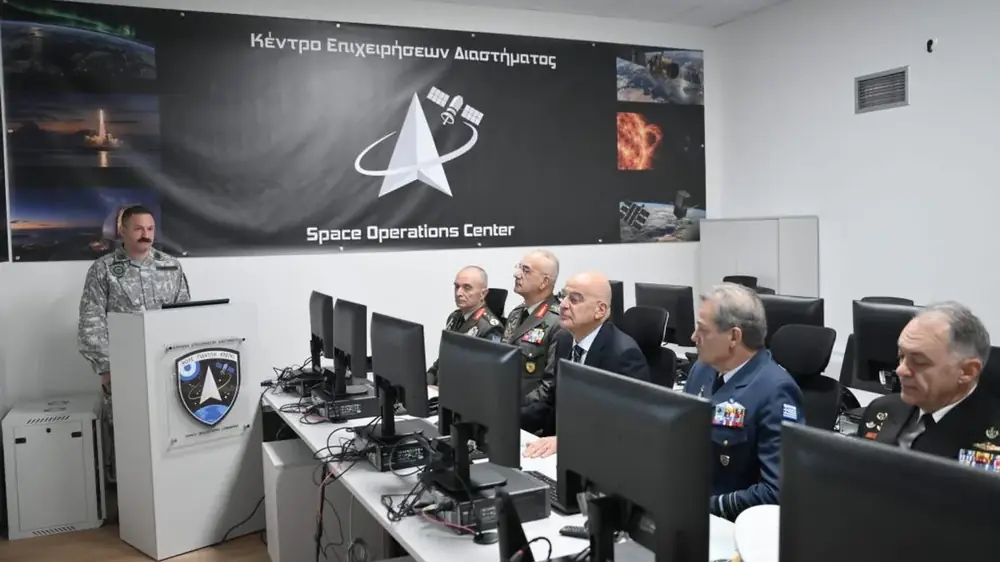
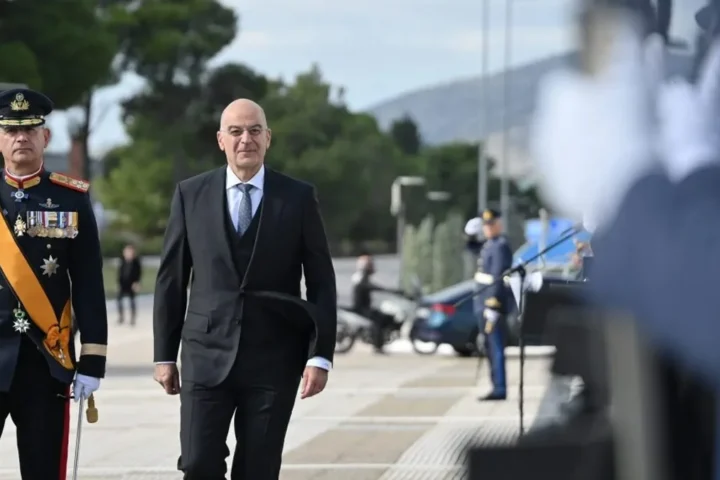
The Hellenic Air Force has officially acquired a Space Operations Command. The inauguration took place on Monday, November 9, at Dekelia Air Base, in the presence of Defence Minister Nikos Dendias, who described the new centre as a very substantial step for the armed forces to move into the new era. The ceremony came a day after the minister had presented, at the Hellenic Air Force Academy, the plans for the Air Force of “Agenda 2030”.
In his speech, published by the Ministry of National Defence, Mr Dendias focused on joint multi-domain operations, where Space, Cyberspace and the Electromagnetic Spectrum work together with sea, air and land. As an example he cited Ukraine, which a short time ago lost access to space capabilities and saw its communications hit.
The new Command’s mission is to systematically exploit satellites and integrate their data into operational planning. “Until today we buy these services from foreigners, and this, of course, is not enough,” the minister said, asking that satellite information belong in Greek hands. For this reason, he explained, the old C4I model gives way to the C5 ISRT architecture, a single structure where command and control are linked with communications, computing and cyber, but also with intelligence collection, surveillance, reconnaissance and targeting. “We are not pioneering. We are filling a huge gap that already exists,” he stressed, noting that other states, including in our region, already have a strong presence in Space.
The satellites that are coming
Greece already has at its disposal 16 dual-use low-orbit optical observation satellites, through cooperation with the Ministry of Digital Governance, but Mr Dendias called them insufficient. The plan provides for six optical observation satellites, three signals intelligence (SIGINT) satellites and three synthetic aperture radar satellites, which see even through fog. “Which minister can wait 24 hours to have a photograph of our wider region bought from a foreign provider?” he asked.
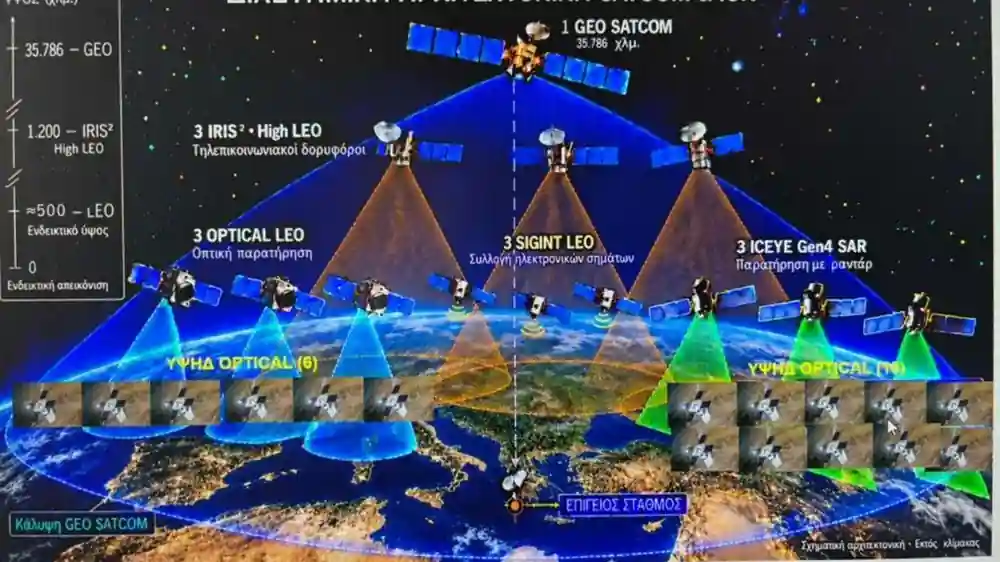
On communications, the minister was clear: it is not acceptable for a country in crisis to depend on a private company of a third state. The Long-Term Defence Equipment Programme includes a military telecommunications satellite in geostationary orbit, which the country wants to acquire quickly, while the national MILSATCOM programme aims for Greece to control operationally, without dependencies, both the satellite itself and the ground infrastructure and the network. Existing infrastructure will be modernised and included: at Tanagra, home of the 114 Combat Wing, the ground satellite station of the European HELIOS-II programme operates, while at Atalanti there is a ground station for satellite communications.
At European level, Attica was chosen as one of the two GOVSATCOM hubs, while participation in IRIS² relates to the plan to acquire three medium-orbit communications satellites. Mr Dendias also referred to the Hellenic Aerospace Industry, where space hardware can now be assembled, integrated and tested in Greece.
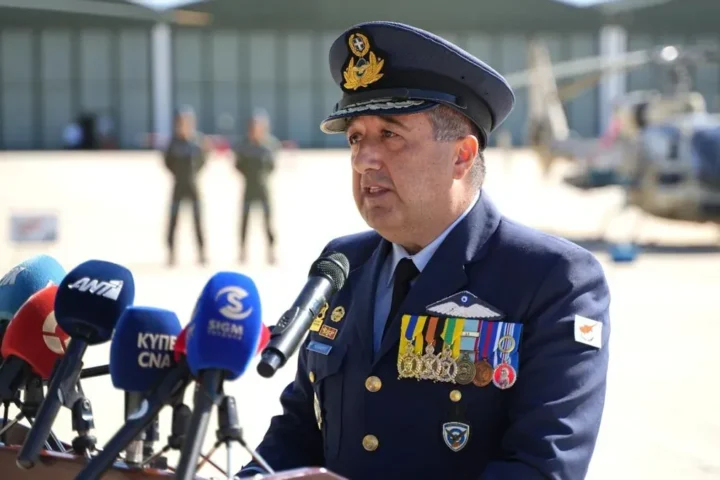
Present at the ceremony were General Dimitrios Houpis, chief of the Hellenic National Defence General Staff, the chiefs of the three branches and Thanos Dokos, Secretary General for National Security. The minister then toured the facilities, was briefed on the new Command’s role and saw the Space Operations Centre in operation.