Middle East & North Africa
Strait of Hormuz: two more tankers ablaze after hitting mines, Revolutionary Guards say
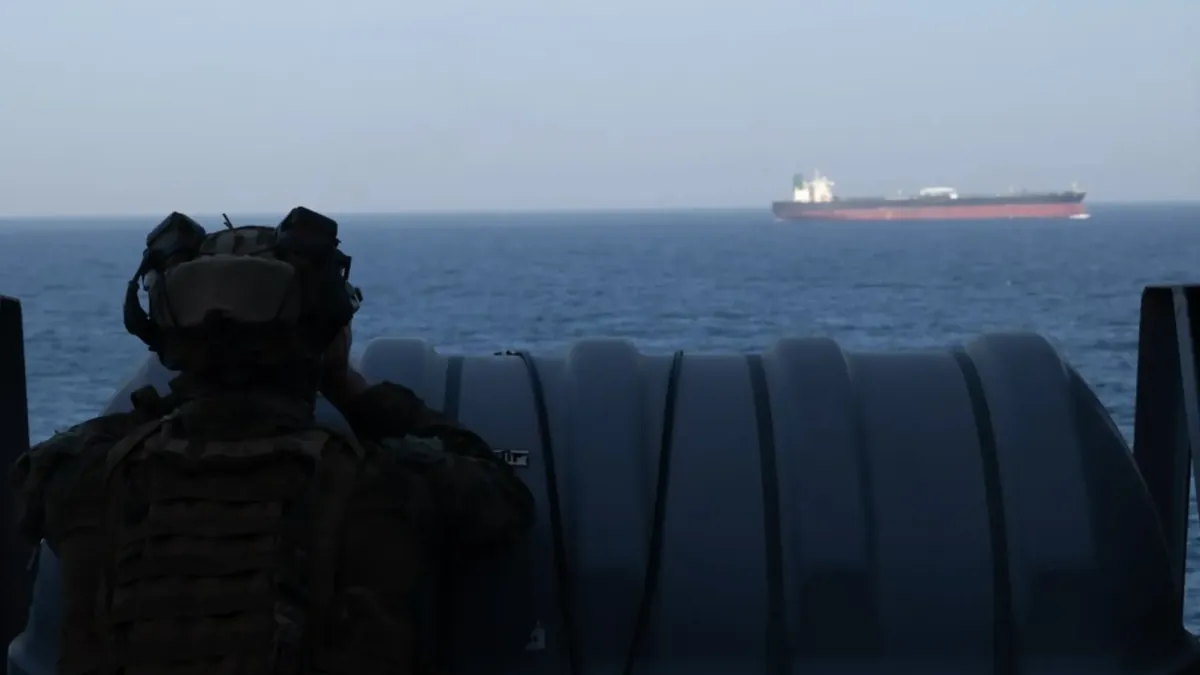
Iran’s Revolutionary Guard Navy says two more oil tankers caught fire in the Strait of Hormuz on Friday after hitting mines, without naming the ships or reporting casualties.

Two more oil tankers caught fire in the Strait of Hormuz on Friday, November 6, after hitting mines, the Revolutionary Guards Navy (IRGC) announced. Tehran did not give the names or flags of the ships and reported no casualties. The new announcement comes only a day after similar incidents involving other vessels in the same passage.
One tanker struck a mine in the eastern part of the Strait and the second inside the channel itself. According to the Guards, both were trying to transit by an “unauthorised route”, caught fire and were immobilised.
“They switched off identification systems”
In their statement the Guards accuse the crews of switching off navigation and automatic identification systems and trying to leave the Strait under US military cover. “These two tankers switched off all navigation and identification systems and were trying to exit the Strait of Hormuz by the unauthorised route with the support of the aggressive and terrorist US military, but after hitting a mine, they caught fire and were immobilised,” the text reads, as quoted by Middle East Eye. These are claims by the Guards; the ships’ identities and the damage have not been independently confirmed.
The statement ends with a warning to Washington: “The Strait of Hormuz is closed by the grace of God and the efforts of the Guards Navy, and nothing will change until the seven conditions are met.” The Guards add that attempts by “aggressive” CENTCOM forces to make tankers pass through the unauthorised, mined zone will bring only “successive and humiliating defeats”.
A third wave of incidents within days
On Thursday, November 5 the Guards had announced that two tankers and a tug caught fire. The first tanker hit a mine in the southern part of the Strait, while the second caught fire further east and the flames spread to the tug that approached to help. Separately, the regular Iranian Navy had reported that a tanker hit a mine and caught fire in the eastern part of the Strait after entering an “unsafe area”. It remains unclear whether this is one of the ships the Guards had already reported.
A few days earlier, the Guards had said that four tankers were destroyed by mines and were still burning. If the Iranian announcements are accurate, the number of ships hit in the passage within a week rises significantly.
Tehran’s seven conditions
The “seven conditions” to which the Guards refer are the prerequisites Iran has set for the Strait to reopen; see our report on the seven conditions.
Maritime traffic in the passage, through which a large share of Gulf oil passed before the war, has effectively frozen. The war began on February 28 with US–Israeli strikes on Iran and flared up again on July 8, when the United States struck Iranian targets again, saying it was responding to an attack on a merchant ship in the Strait, and Donald Trump announced the end of the ceasefire. Since then Tehran has been striking US facilities in Bahrain, Jordan, Qatar, Kuwait, the Emirates and Oman, and tankers trying to transit are constantly in the crosshairs.