Greece
Turkey in uproar over Greece–Israel talks on LORA: Anadolu picks up our exclusive, Haber7 speaks of a “dirty plan”
Our exclusive on Greece–Israel talks to co-produce the LORA ballistic missile reached Turkish media. State agency Anadolu reported it and the pro-government Haber7 called it a “dirty plan”.

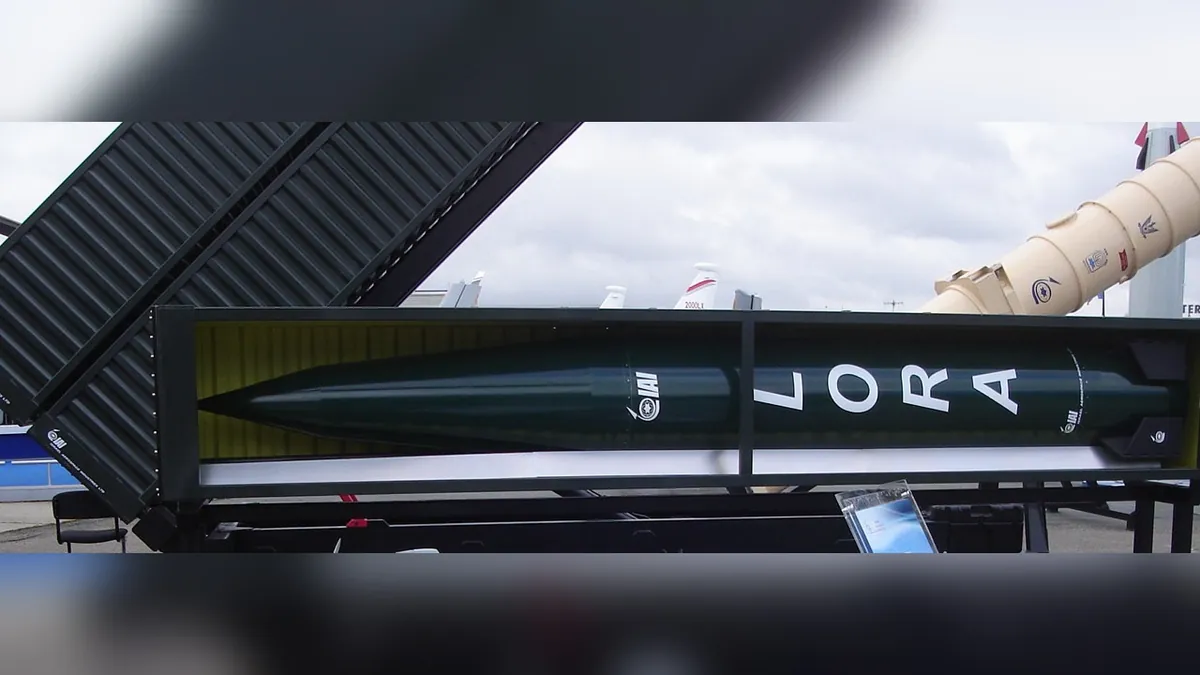
Our exclusive report on talks between Greece and Israel about co-producing the LORA ballistic missile in Greece has reached the Turkish media and is causing a stir in Ankara. The state news agency Anadolu reported on October 14 that, according to NEMESIS HD, Greece plans to buy the LORA system from Israel Aerospace Industries and produce it jointly with Israel. “Greece wants to produce these missile systems together with Israel on its own territory,” Anadolu wrote.
The Turkish agency repeated the main elements of the report: that the request is part of the plans of the Ministry of National Defence and the Hellenic National Defence General Staff, that once the talks are completed a price will be set and the procurement process will begin, and that the missile’s range exceeds 500 kilometres, as shown by the German Navy’s test in September. Anadolu linked the subject to the roughly €3 billion “Achilles Shield” deal, signed in August, which had already drawn a strong Turkish reaction.
From there the story passed to other Turkish outlets, in a much more aggressive tone. The pro-government Haber7, for example, published an article on Thursday, October 15 headlined: “Greece’s dirty plan revealed! They will produce jointly with Israel”, presenting the Greek procurement choice as something that had been hidden and has now “come to light”.
Why Ankara is worried
Ankara’s concern is explained by geography. A precision ballistic missile with a range of more than 500 kilometres, deployed on mainland Greece, would give the Hellenic Army a deep-strike capability across the whole Aegean and Asia Minor, answering Turkey’s Tayfun ballistic missiles. Co-production would also mean Greek defence industry acquiring know-how in a field where Turkey believed it held the lead. Interest in LORA is not limited to Greece, as Morocco is also negotiating with Israel for the same missile, raising alarm in Spain.
We have followed the subject for some time. Since January, when the Israeli defence minister visited Athens, LORA has been a central point of the discussions, with Israel willing to discuss co-production as well, provided Greece is interested in a sufficient number of missiles.
It is worth noting that Turkey, which invests systematically in developing ballistic missiles such as the Tayfun, treats the prospect of Greece acquiring comparable capabilities with particular sensitivity. That the exclusive became a reference point for Anadolu and then for other Turkish media shows how much interest even the prospect of strengthened Greek deep-strike capabilities generates on the other side.