Cyprus
Opinion: What will Greece do if Turkey obstructs the work on the Greece-Cyprus electricity interconnection?
Dr Konstantinos Balomenos, a political scientist and international relations specialist, argues that Greece needs a graduated crisis-management system for a Turkish obstruction of the Great Sea Interconnector, from rhetoric to a hot incident.

By Dr Konstantinos P. Balomenos, political scientist and international relations specialist.
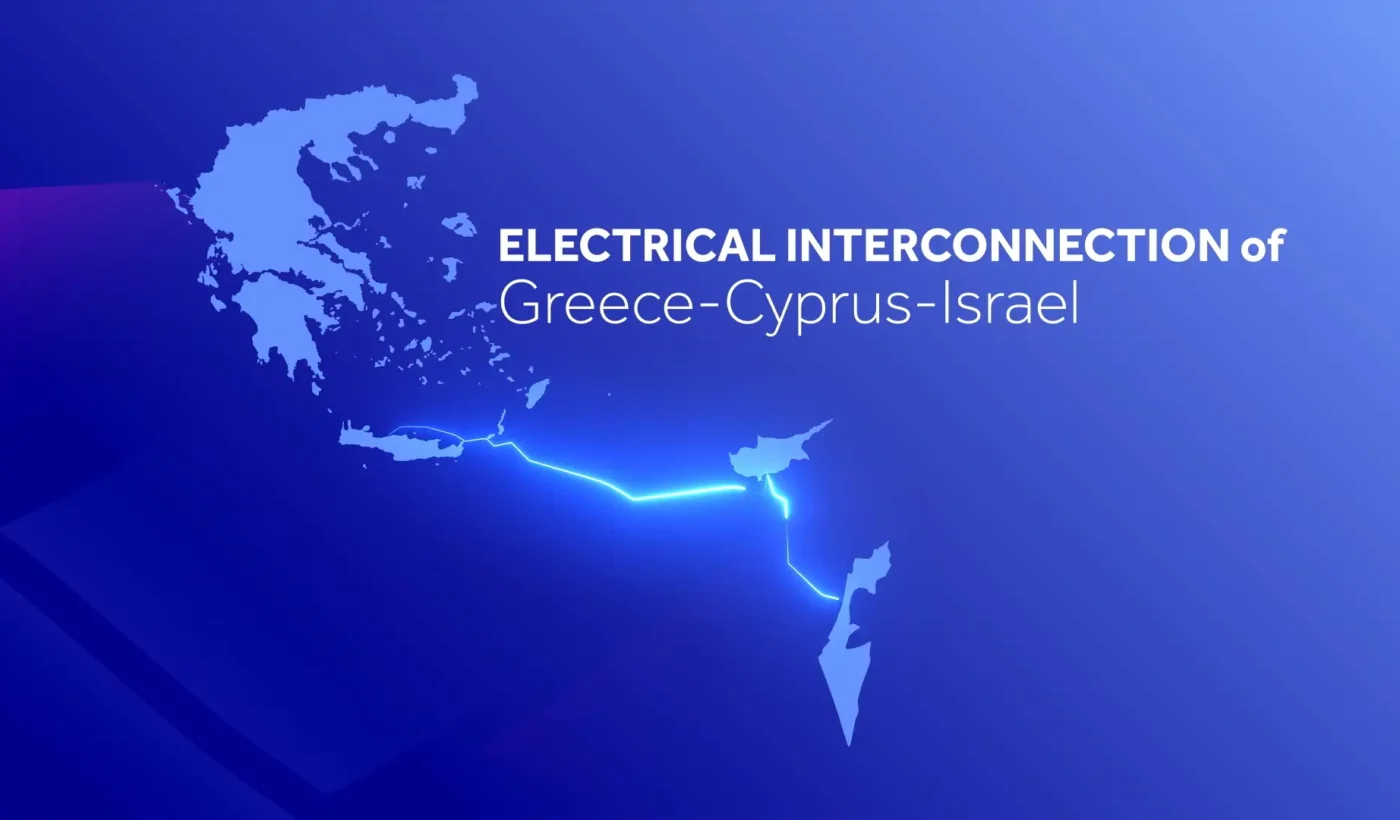
After the recent statements by Foreign Minister Giorgos Gerapetritis that the work for the implementation of the Great Sea Interconnector (GSI) will restart, and given the reactions Turkey has already expressed, the project is entering a new phase.
The critical issue is now not only the political and diplomatic confrontation around the project, but how Greece will manage the possibility that Turkish contestation moves from the level of statements to the operational field.
So, what will Greece do if Turkey obstructs the work on the Greece-Cyprus electricity interconnection?
The question has particular strategic importance, because the essence of strategic planning and management of a national crisis lies not only in the ability to predict how the adversary may move, nor in the existence of a predetermined reaction plan at the military level alone.
It lies mainly in the existence of a system able to function effectively at different levels of intensity and in different crisis scenarios, adjusting its decisions and available tools in time to changing conditions.
In this context, it must be able to detect in time the early indicators and early-warning signs of a possible crisis, verify what is really happening, assess the adversary’s intent and the level of the threat, support timely strategic decisions and manage escalation without losing control of the situation.
Strategic readiness therefore does not presuppose only the accurate prediction of the adversary’s next move, but the existence of a system that can effectively manage more than one possible development.
This distinction is especially important in a Greek-Turkish confrontation environment, where a statement, a NAVTEX, a diplomatic protest or even an operational move at sea can raise tension without necessarily meaning that a crisis has already begun.
The first step of an effective crisis-management system is therefore not reaction, but early assessment of the event and an evaluation of whether, and to what degree, it changes the level of the crisis.
In the situation-assessment phase the following must be evaluated:
- What exactly is the event?
- Who caused it?
- Is it a political message, an operational warning or an actual obstruction?
- What is the intent?
- What is the level of risk?
- At what point does an incident become a crisis?
The answers to these questions must be given before the crisis, not during it.
In this light, if work on the GSI resumes, the first mistake in managing a possible crisis would be not to assess the situation properly and to assume that every Turkish reaction automatically constitutes a crisis.
It must be understood that obstruction of the project by Turkey, as an operational event, does not automatically mean a national crisis has broken out.
The critical issue is the level of the obstruction, its intensity, its duration, the conditions under which it takes place and, above all, the ability to control the situation and escalation.
On the basis of the assessment of these data, strategic decisions on crisis management must be taken.
That is, the desired political and strategic objective must be defined, and the mix of diplomatic, operational, legal and communication tools required to achieve it.
The reaction, therefore, should not be an automatic result of escalation, but a choice that serves a specific political and strategic purpose.
Finally, every crisis-management plan must include from the outset de-escalation and exit mechanisms, as well as procedures for evaluating and assessing the crisis, with the aim of drawing lessons and strengthening national resilience.
Greek decision-makers should therefore take seriously that the start of a crisis or conflict in the operational field, without a clear understanding of how and under what conditions it can be ended, may lead to an escalation dynamic far harder to control than initially estimated.
In addition, levels of reaction must be set on the basis of escalation thresholds, so that the evolution of the crisis does not automatically lead to uncontrolled escalation, but is handled through a progressive and controlled decision-making process.
For example, a Turkish public statement, a NAVTEX, the deployment of naval units, the presence of a warship near a survey vessel, a dangerous approach or harassment, actual obstruction of the work, and an accident or a hot incident each require different handling.
Greece therefore needs a holistic and graduated system of plans and options, with clear activation criteria, based on the logic that as tension rises, the intensity of the reaction must be adjusted accordingly, without that adjustment leading to automatic or uncontrolled escalation.
Possible Turkish reactions
In this context it is useful to assess the possible scenarios of a Turkish reaction to the resumption of work on the GSI. Specifically, Ankara’s possible options, depending on the degree of intensity, are:
Low-intensity scenarios
- Rhetorical escalation through statements by political and military officials and a demand for “prior coordination” with Turkey for every survey or cable-laying operation.
- A communication effort to link the GSI with Turkey’s broader positions on maritime jurisdictions in the Eastern Mediterranean.
- Issuing NAVTEX notices that characterise the laying areas as “illegal” because they overlap the Turkish continental shelf.
- Diplomatic protests to the construction companies and to the governments of Greece and Cyprus, aiming to exert political pressure and to portray Greece as a violator of international law.
- Pressure on the executives of foreign investors and contractors, with threats of exclusion from future energy or commercial projects in Turkey.
Medium-intensity scenarios
- Harassment of Greek or other vessels taking part in the work, with naval or air units and the transmission of “instructions to leave”, claiming that the vessels are on the Turkish continental shelf.
- Obstruction practices (risk manoeuvres) with communications jamming, dangerous manoeuvres or naval crowding around the vessel carrying out the work, to increase the insurance and operational risk for the company and force it into a temporary suspension of work.
- Deployment of Turkish research or other vessels in adjacent areas, aiming to create operational pressure and contestation.
- A strengthened Turkish military presence in the area without directly provoking a hot incident.
- Issuing a counter-NAVTEX by Turkey that reserves the same areas for supposed “military exercises”, attempting to create artificial crowding and a risk of accident.
- A combination of operational actions with diplomatic and communication moves, to raise the cost of continuing the work.
High-intensity scenarios
- A significant increase in the Turkish naval and air presence in the area.
- Direct operational obstruction of the work through the deployment of warships that demand the immediate departure of the cable-laying vessel under threat of the use of force.
- Dangerous approaches or other actions that significantly raise the risk of an accident or hot incident (for example harassment by Turkish drones or aircraft).
- The possibility of a hot incident at sea or in the air, which could turn an initially operational issue into a broader Greek-Turkish crisis.
- Wide-scale geopolitical escalation with a generalised crisis in the Eastern Mediterranean.
These scenarios are not necessarily a linear escalation sequence, since Turkey could choose a different level of reaction, combine tools or move from one level to another, depending on conditions and on how the situation develops.
The choice of reaction could be influenced by the Greek stance, the estimated cost and benefit of each option, the internal dynamics in Turkey, and the stance of the EU, the US, France, Israel and other involved parties.
At the same time, the European dimension of the GSI, and the financing and participation of international investors and companies, can raise the political, diplomatic and economic cost of a possible obstruction, without however ruling out a crisis.
Greece must therefore be able to manage a range of possible reactions, from simple diplomatic and communication pressure to operational obstruction and, in the worst case, a hot incident.
In this context a unified coordination and decision-making mechanism is required, with clear political guidance and a continuous link between the political and operational levels.
Five axes of response
Specifically, Greece must be able to move on multiple levels simultaneously, adjusting its available means and instruments of power to the level and form of the Turkish reaction. The Greek strategic response should develop along five complementary axes:
1. Operational readiness and deterrence
At the operational level, a credible system of surveillance, protection and readiness is needed, with clear activation criteria depending on the level of escalation.
In parallel, coordination is needed with the Republic of Cyprus and the bodies involved, to protect the personnel, vessels and critical infrastructure of the project.
If conditions require it, there must be the ability to strengthen the operational presence, primarily with Greek forces and, where feasible and decided within existing bilateral, European or allied frameworks, with forces of France and other European countries.
2. Diplomatic and European shielding
Greece must exploit the European character of the GSI and ensure that any attempt to obstruct the project is not treated solely as one more episode of the Greek-Turkish confrontation, but is also assessed as an issue concerning European energy security, interconnectivity and the protection of strategic European infrastructure.
In this context, timely briefing and coordination with the European institutions, as well as with the countries that have a direct interest in the implementation of the project, can raise the diplomatic and political cost of a possible obstruction.
3. Legal shielding
Greece must have a documented legal position from the outset, able to support the legality of its actions and to answer the Turkish objections at the bilateral, European and international levels.
Legal preparation is therefore not merely a tool of reaction after the crisis has broken out. It is an element of strategic readiness itself.
4. Strategic communication
Communication management should run in parallel with diplomatic and operational management.
The main objective should not be a communication confrontation with Turkey, but the shaping of the interpretive framework within which the crisis and any Turkish actions, should they occur, will be assessed, in relation to European infrastructure, energy security and stability in the Eastern Mediterranean.
The core message should rest on four axes: European infrastructure, international law, energy security, regional stability.
In this way, Greece should avoid the bilateralisation of the GSI and continuously show that the implementation of the project is part of a broader European effort to strengthen energy interconnectivity and resilience.
5. Coordination with partners and allies
Timely coordination is needed with the Republic of Cyprus, the European institutions and the countries that have a direct strategic or economic interest in the region and the project.
This cooperation should not be seen only as a means of creating a “common front” against Turkey, but as a mechanism for coordinating political, diplomatic, legal and operational options.
The involvement of international investors and companies, as well as the European financing and institutional support of the project, can at the same time raise the political and economic cost of a possible obstruction.
By combining the above measures, Greece can strengthen its deterrent credibility, limit the room for uncontrolled escalation and increase the options available to it should the crisis escalate.
Greek strategy should therefore not rely on a single tool, but on a holistic mix of deterrence, diplomacy, legal preparation, operational readiness and strategic communication, which can be adapted to the level of the crisis.
Conclusion
In conclusion, the resumption of work on the GSI does not mean that a new crisis is inevitable. Greece must nevertheless be prepared for the possibility of a crisis and, above all, for more than one form and level of its development.
Because real strategic readiness is measured not by how well we know what the adversary may do, but by how well we can manage what eventually happens.
On the GSI, therefore, the challenge for Greece is not only to protect a European project.
It is to ensure that, should a crisis arise, it will have the political, diplomatic, legal, operational and communication options to manage it, control the escalation and keep the initiative.
In short, Greece’s success in a possible Turkish reaction over the GSI will not be judged by whether it can show it is able to escalate.
It will be judged by whether it can manage the crisis without losing control of the escalation, protect the project and its interests, preserve the European dimension of the GSI and lead the situation from crisis back to stability.