Cyprus
European Commission report on Turkey: casus belli, “Blue Homeland” in school textbooks, more violations and obstruction of the cable
The Commission’s 2026 Turkey report lists the casus belli, the “Blue Homeland” doctrine in school textbooks, a sharp rise in violations of Greek airspace and waters and obstruction of the Greece-Cyprus cable survey.

In its 2026 report on Turkey, published on Wednesday, November 4 with the enlargement package, Brussels records a series of Turkish actions that directly affect Greece and Cyprus. They include a sharp rise in violations in the Aegean, the casus belli that remains in force, the “Blue Homeland” doctrine in school textbooks and the obstruction of surveys for the Greece-Cyprus electricity interconnector (GSI). Ankara remains a candidate country and a “key partner” for Brussels, but the gap between its declared accession goal and its backsliding on the fundamental political criteria “has widened further”.
More violations, overflights above islands
The Commission acknowledges that Greek-Turkish relations have improved overall since 2023 and that Ankara avoided unauthorised drilling in the Eastern Mediterranean. It immediately goes on to record the return of Turkish overflights above Greek territory and stresses that violations of Greece’s airspace and waters increased significantly.
Ankara, the report adds, has not stopped systematically issuing unauthorised NAVTEX messages and raising the issue of demilitarising the eastern Aegean islands, which were given to Greece by international treaties, something the Commission says indirectly questions Greek sovereignty. The incorporation of the “Blue Homeland” doctrine into Turkish school textbooks is described as “a cause for concern”, as it may damage the Athens-Ankara talks and regional cooperation. The 1995 declaration of the Turkish Grand National Assembly also remains in force, treating as a cause for war (see also our Greece-Turkey comparison) any unilateral move by Athens to extend its territorial waters to 12 nautical miles, a right Greece holds under the UN Convention on the Law of the Sea.
The text also records the two new marine parks that Ankara declared by presidential decree on August 15, 2026 in the north-eastern Aegean and the eastern Mediterranean. According to the Commission, most of their area lies outside Turkey’s territorial waters, in international waters, while Ankara continued to react to the Greek marine parks.
Patriot, F-16 and the cable
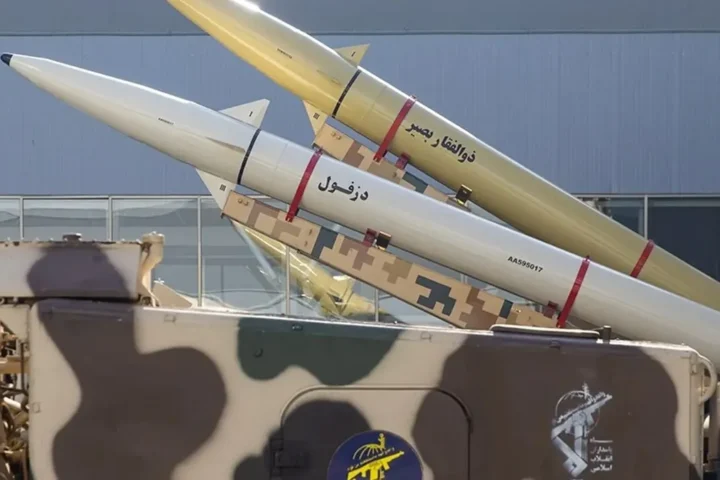
The report notes that Ankara protested strongly against the transfer of Patriot batteries to a Greek Aegean island during the Iranian missile attack. Although the move had been coordinated through NATO, Ankara considered that it was aimed at Turkey. It also reacted to the deployment of Greek F-16s to Cyprus. On the Greece-Cyprus interconnection the wording is clear: Ankara has not stopped obstructing the surveys for the GSI, a project the EU has designated of common interest. Foreign Minister Giorgos Gerapetritis also spoke about the cable on Wednesday, saying that Turkey will find Greece opposite it if it tries to obstruct it; for the state of play, see what remains before the new NAVTEX.
Cyprus, Varosha and the Turkish-Libyan memorandum
On Cyprus, the Commission writes that Ankara continues not to recognise Nicosia and has repeatedly called for a two-state solution, although the relevant UN resolutions say the opposite. In the occupied part of the island Turkey further upgraded the Lefkoniko drone base and the Bogazi naval base, temporarily increased its forces on the island with F-16s and air defence systems during the war with Iran, and did not reverse its actions in Varosha. On the 2019 Turkey-Libya memorandum, which the parliament of eastern Libya ratified in October in Benghazi, the report repeats the EU’s established position: the text violates the sovereign rights of third countries and is incompatible with the law of the sea (an opinion on how Greece can answer it).
The Commission expects Ankara to commit unequivocally to good relations with its neighbours and to peaceful settlement of disputes, going if necessary to the International Court of Justice, to avoid any threat or action that damages relations with neighbours and to normalise its relationship with Nicosia. On foreign policy, Turkey’s alignment with the statements of the High Representative and with Council sanctions was only 4% (figures up to September 2026), barely above the 3% of 2025.