Politics & Diplomacy
Canada imposes new sanctions on Russia targeting ballistic missiles – how many names Ottawa adds to the blacklist
Canada’s foreign minister Anita Anand announced sanctions on 38 entities and 24 individuals on November 9, targeting Russia’s ballistic missile industry, cyber activity and wartime financial networks.

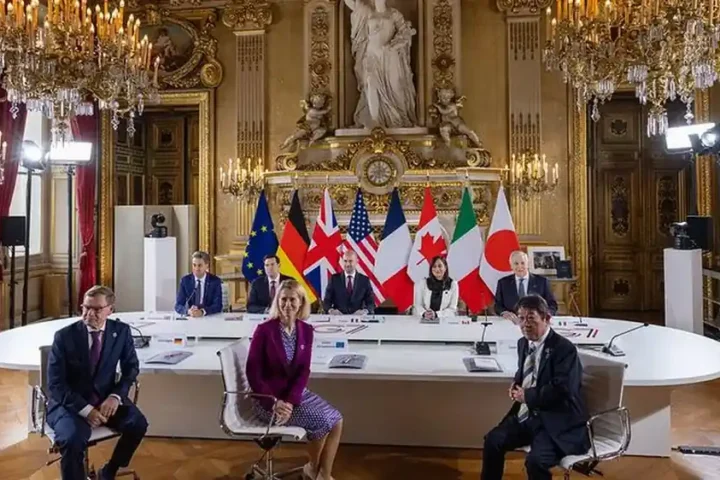
Canada is turning against the Russian industry that builds the ballistic missiles hitting Ukrainian cities. Foreign Minister Anita Anand announced on Monday, November 9, on the sidelines of the G7 foreign ministers’ meeting in Paris, the listing of 38 entities and 24 individuals under the sanctions list provided by Canada’s Special Economic Measures regulations on Russia, as stated in the Canadian government’s announcement.
The package has three targets. The first is Russia’s defence industrial base, with emphasis on those developing ballistic missile technology. The second is Russian cyber activity. The third is the financial networks that keep the war economy afloat, among them cryptocurrency exchange platforms. Ottawa wants, as it explains, to limit Moscow’s military capabilities and its ability to hit non-military targets, but also to raise the economic cost of the war.
“Canada is taking action to undermine Putin’s ability to hit Ukrainian cities with his missiles,” Ms Anand said. “We remain steadfast in our support for Ukraine and will continue to impose costs on Russia until it ends its aggression and respects Ukraine’s sovereignty and territorial integrity.” Since 2014 Canada has imposed sanctions on more than 3,500 individuals and entities and over 700 ships.
Kyiv presses its partners
The Canadian step comes as Kyiv has for weeks been pressing its partners to increase economic pressure on Moscow. On Sunday, November 8, Volodymyr Zelensky wrote that in one week Russia fired 115 missiles of various types, nearly 1,900 guided bombs and more than 3,000 attack drones at Ukraine, in combined strikes with many ballistic missiles. A significant share of the missiles, he added, was made in 2026. “If the world does not have enough anti-ballistic systems to protect Ukraine’s skies, it must stop the missiles at the production lines,” he noted, asking for sanctions to be synchronised across Europe and the G7.
Russian attacks have turned again to the energy grid ahead of winter. In Dnipro and its region more than 600,000 people were left without power after the attack overnight into Sunday, November 8, while the Ukrainian side is trying to reach the sources of missile fuel as well, as with the strike on the Morozov plant that produces fuel for the Iskanders.
The new package follows a series of Canadian measures this year. In August Ottawa sanctioned a defence company supplying the Russian military-industrial complex, in September eight Russians over the illegal deportation and forced transfer of Ukrainian children, and on October 30 it announced a 500 million euro contribution through the EU to help Ukraine cover its 70 billion euro budget gap in 2027. The new sanctions package was announced at the Paris meeting where the G7 discussed security guarantees for Ukraine.