Politics & Diplomacy
CSTO summit in Moscow without Armenia – Pashinyan in Paris and Russia’s proposal on Yerevan’s voting right
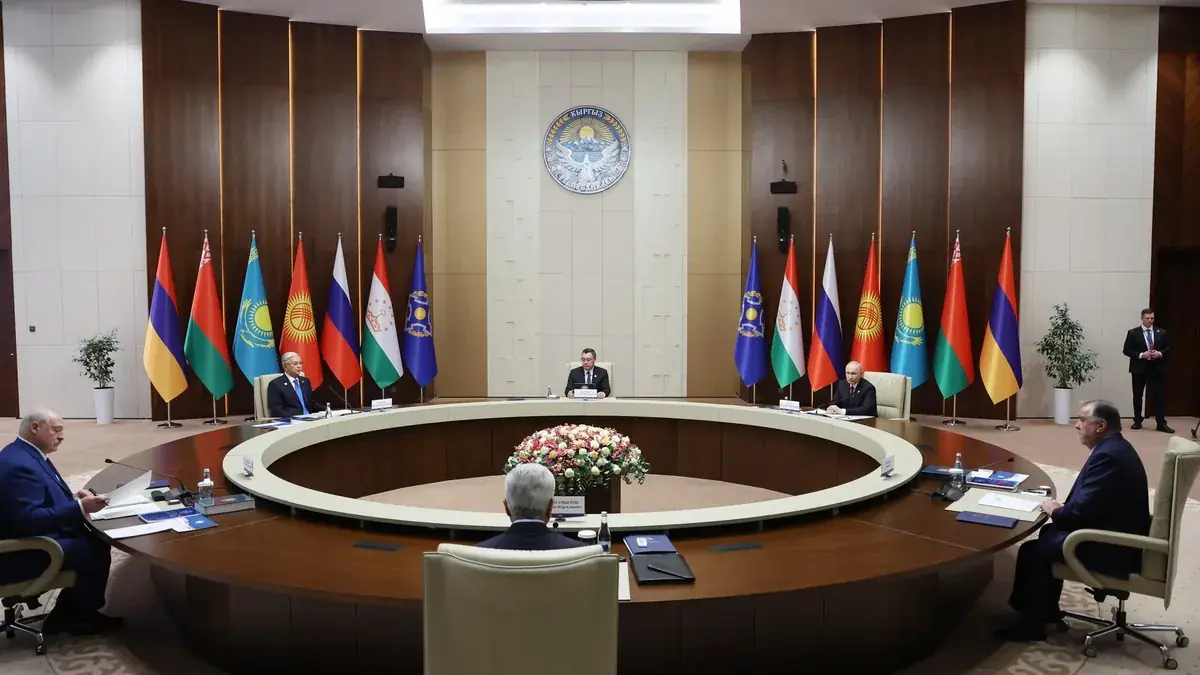
Vladimir Putin hosts the CSTO summit in Moscow on November 11, with Armenia absent. Moscow has tabled a draft decision that would strip Yerevan of its voting right until it pays its arrears.

Vladimir Putin hosts the session of the Collective Security Council of the Collective Security Treaty Organisation (CSTO), the Russian-led military alliance, in Moscow on Wednesday, November 11. According to the Kremlin’s agenda, the items include signing a final declaration, a counter-terrorism strategy to 2030 prepared by Moscow, and the handover of the chairmanship from Russia to Tajikistan from January 1, 2027. But all eyes are on the member that will not show up.
Armenian Prime Minister Nikol Pashinyan left on Monday, November 9 for Paris, where on Tuesday, November 10 he takes part in the 9th Peace Forum, as his office announced. A few days earlier, on November 5, at a briefing for reporters at the government headquarters, he had closed the subject with one sentence: “I want us to say it once and for all: our interest in the CSTO has run out.” He was answering a question from Armenpress on how Yerevan would react if the Moscow summit decided to apply Article 25 of the organisation’s Charter to it.
What Moscow proposes
The issue is expected to be discussed at the November 11 summit. The organisation’s Secretary General Talatbek Masadykov revealed that Russia has tabled a draft decision applying Article 25 of the Charter. Armenia would temporarily lose its voting right and the ability to nominate candidates for posts due to it, until it pays its overdue contributions. He clarified that expulsion of the country is not on the table.
Russia’s Deputy Foreign Minister Alexander Pankin accused Yerevan on Monday of trying once again to shift responsibility for its decisions onto others. “We are not leaving Yerevan out of our cooperation,” he said, adding that Moscow sees “no corresponding step” from the Armenian side. Kremlin spokesman Dmitry Peskov noted that Armenia in practice does not take part in the organisation’s work and that decisions will be taken through discussions among members.
The rift has a history. Yerevan has boycotted the alliance’s activities since 2022, accusing it of not supporting it against the Azerbaijani military attack on Armenian territory, and in February 2024 it “froze” its participation, also stopping its contributions. Since August Mr Pashinyan has repeatedly said Yerevan would have no objection if the CSTO decided to expel Armenia, without announcing an official withdrawal. The organisation’s other members, besides Russia and Armenia, are Belarus, Kazakhstan, Kyrgyzstan and Tajikistan.
Armenia’s other track: Washington and Baku
At the same time Armenia is advancing with Washington and Baku. On November 6 US Assistant Secretary of State for Europe and Eurasia Brendan Hanrahan, Armenia’s Deputy Foreign Minister and International Trade Vahan Kostanyan and Azerbaijan’s Deputy Foreign Minister Elnur Mammadov launched trilateral technical planning groups for the “Trump Route for International Peace and Prosperity” (TRIPP), as they announced in a joint statement. The first two groups concern transport and electricity transmission. The corridor grew out of the August 2025 peace declaration at the White House, while Yerevan is also discussing with Baku the territorial questions of the enclaves, as we reported when Mr Pashinyan proposed an enclave swap.