Europe
The European Commission sets up an EU Sanctions Office and names Sweden’s Lars Danielsson as the new sanctions envoy
The Commission is creating an EU Sanctions Office to pool its expertise on the whole sanctions cycle, and appointed Swedish diplomat Lars Danielsson as Special Envoy for the Implementation of Sanctions.

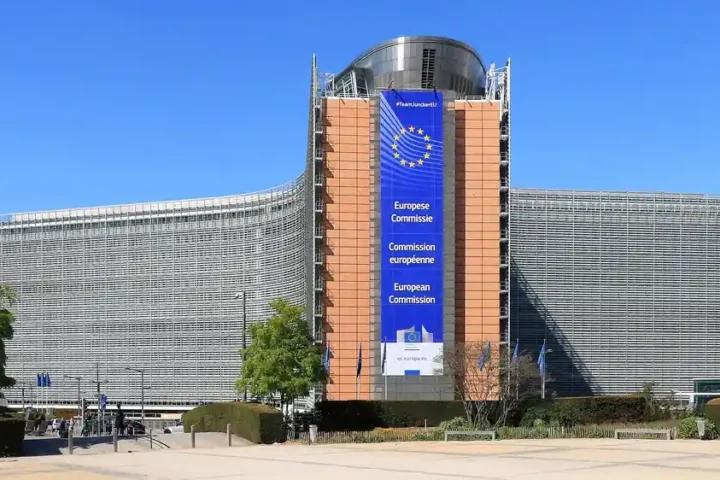
The European Commission is creating a dedicated EU Sanctions Office, which will bring together in one structure the Commission’s expertise across the whole sanctions cycle, from designing measures to implementation, enforcement and tackling circumvention, as well as outreach to third countries. The decision was announced on Wednesday, November 18, together with the appointment of Swedish diplomat Lars Danielsson as the new EU Special Envoy for the Implementation of Sanctions. The new office covers all of the Union’s sanctions regimes, with emphasis on those against Russia and Belarus, but also against Iran, North Korea and Syria.
The Commission links the change directly to the war in Ukraine. Since the start of the Russian invasion, the EU has adopted 21 sanctions packages against Moscow. The scale and complexity of the measures, the Commission explains, showed that better coordination, closer cooperation with member states and deeper contact with international partners are needed. The office will give member states faster compliance guidance, share data and carry out economic and technical analysis, so that sanctions are applied and enforced in the same way across the Union.
“EU sanctions are a central part of our response to Russia’s war of aggression against Ukraine. With every package we erode the foundations of the Russian war economy,” said Commission President Ursula von der Leyen. She added that, to be effective, measures must be fully implemented, strictly enforced and protected from circumvention. Commissioner for Financial Services Maria Luís Albuquerque noted that “sanctions are only as effective as our ability to implement and enforce them” and pledged to close the “loopholes”.
How it will work
The Sanctions Office will operate within the Commission’s Secretariat-General, under the political responsibility of Commissioner Albuquerque. It will pool experts from the Secretariat-General, the Directorates-General for Financial Stability, Financial Services and Capital Markets Union (DG FISMA), Trade (DG TRADE) and Taxation and Customs Union (DG TAXUD), the European Anti-Fraud Office (OLAF) and other services. The changes take effect on January 16, 2027.
The Special Envoy will play a central role, speaking with third countries to limit the risk of sanctions being circumvented through alternative trade routes, financial channels or procurement networks. Mr Danielsson will take up the post on February 6, 2027, when the term of the current envoy, David O’Sullivan, ends. The Swedish diplomat has served as State Secretary for International and EU Affairs in the Swedish prime minister’s office and as Sweden’s ambassador and permanent representative to the EU from 2016 to 2023. The envoy will report to the Commission’s Secretary-General, with a direct line to Ms Albuquerque, and the office will prepare, run and follow up his missions and provide administrative and logistical support. The same day the Commission proposed a new €45 billion loan for Ukraine for 2027.