Middle East & North Africa
Iran’s Rezaei: enriched uranium will not leave the country, and Moscow has been told
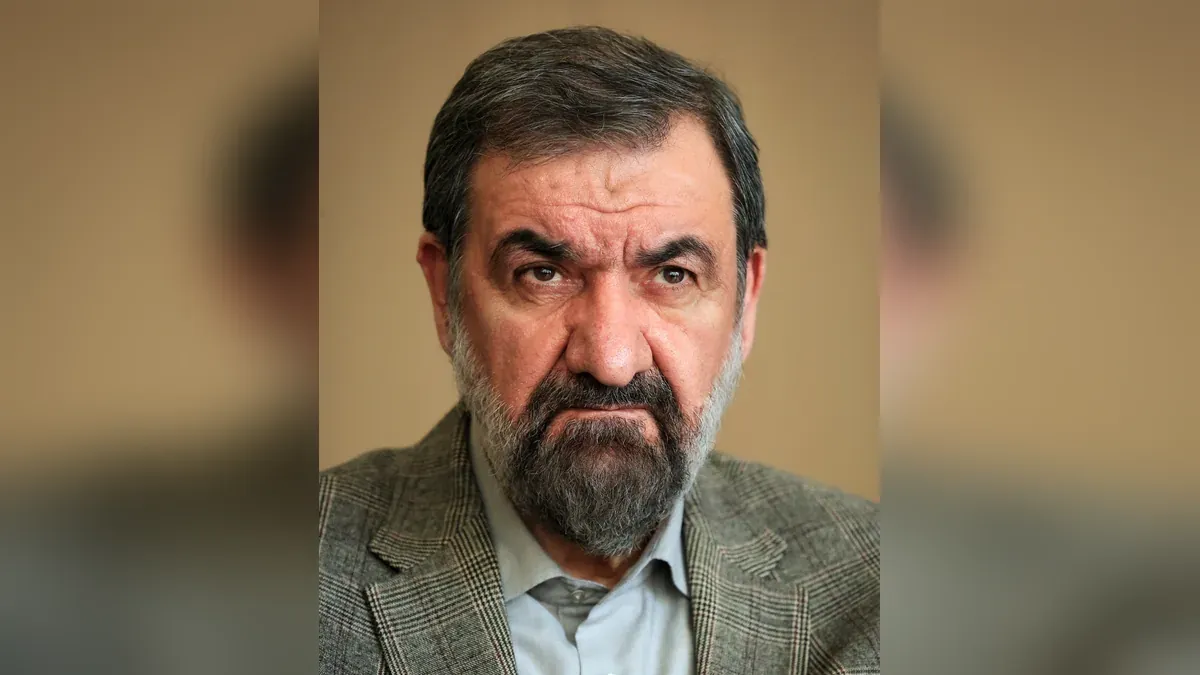
Mohsen Rezaei, secretary of Iran’s Supreme National Security Council, says not a trace of enriched nuclear material will leave Iran. He rejects reports of talks with Washington and threatens US bases, including distant ones.

Iran’s enriched uranium will not leave the country, not even a small quantity. That was the message on Wednesday, November 11 from the secretary of the Supreme National Security Council (SNSC), Mohsen Rezaei, rejecting one of the scenarios being discussed for a deal with the United States.
Rezaei spoke to Lebanon’s Al Mayadeen network, which released extracts before broadcasting the whole interview. “We will not take a trace of enriched nuclear material out of Iran,” he said, adding that Tehran has told its “Russian friends” the material will stay in the country and be used by Iran itself. Iran’s state news agency IRNA carried the same position.
The reference to Moscow is not accidental. Russia often appears as the likeliest destination for the stockpile in a scenario where Iran would hand over its highly enriched material to close a deal. Rezaei himself was in the Kremlin on November 5, where he delivered a message from Supreme Leader Mojtaba Khamenei to Vladimir Putin.
As justification, the SNSC secretary cited the needs of the naval programme: Iran, he said, needs enriched material to design ships and submarines with nuclear propulsion. Before the US and Israeli strikes of June 2025, the International Atomic Energy Agency (IAEA) estimated that Tehran held 440.9 kilograms of uranium enriched to 60%. Since then inspectors have not been able to confirm how much remains and where it is kept, while new strikes came when the new war began on February 28.
A threat to distant US bases
In the same interview Rezaei warned that any new American attack would be answered with strikes on US military bases, even those far from Iran. He named an end to the war on all regional fronts, particularly in Lebanon, as one of the main conditions, and claimed that Iran’s electronic warfare capabilities now let it take control of American drones and bring them down intact.
He denied that talks with Washington are taking place and called reports of a meeting in Qatar “pure lies”, which, he said, were meant to push oil prices down. In recent days a scenario had circulated of a meeting between Vice President JD Vance and Rezaei in Doha, which Tehran denied.
Iran’s conditions for ending the war include, besides Lebanon, lifting the naval blockade, releasing frozen funds and guarantees against a new attack. Washington, for its part, appears to be betting on economic pressure: Secretary of State Marco Rubio judged on Tuesday, November 10 that major military operations are not needed because the economic campaign against Iran is “so devastating”. Tehran, meanwhile, does not accept reopening the Strait of Hormuz without significant concessions. These are statements by Iranian officials, reported as made.