Europe
Kristallnacht, 88 years on: UN panel examines what photographs of the 1938 pogrom show and what they hide
A UN panel in New York marked 88 years since the November 1938 pogrom by asking what surviving photographs reveal about Jewish victims and what they conceal, with testimony from Rabbi Arthur Schneier.

Eighty-eight years after the Kristallnacht pogrom of 9 and 10 November 1938, a panel at United Nations Headquarters in New York this week asked what the surviving photographs of that violence reveal about the people who lived through it, and what they leave out. UN News reported on the event on 8 November 2026.
The discussion, titled “Understanding Past Realities of the Holocaust: Photography Versus Art”, was organised by the Holocaust and the United Nations Outreach Programme and the Fritz Ascher Society for Persecuted, Ostracized and Banned Art, with the support of Germany’s Permanent Mission to the UN. It was held in memory of the victims.
A night of state-sanctioned violence
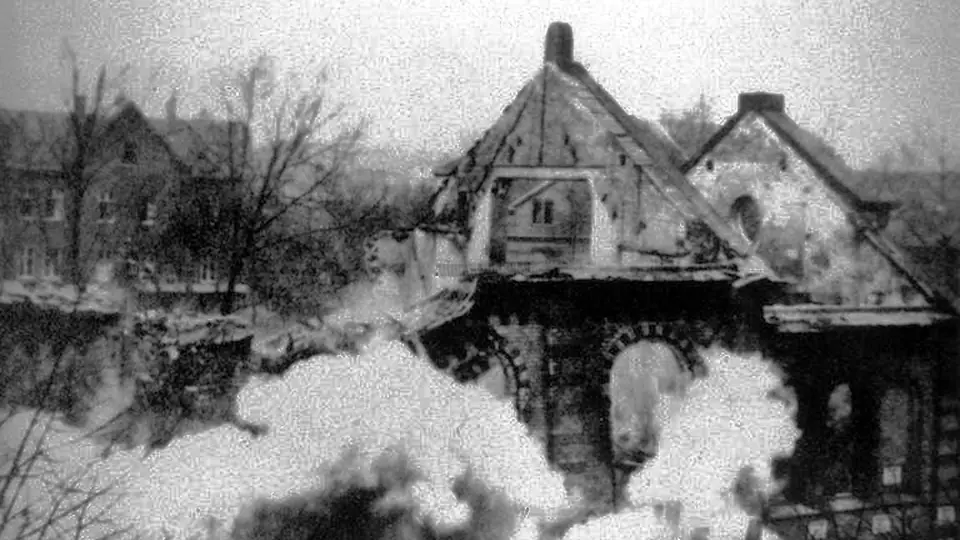
UN News recalls that on the night of 9 to 10 November 1938 synagogues were set alight, Jewish homes and businesses were ransacked, and some 30,000 Jewish men were arrested and sent to concentration camps. The attacks struck Jewish communities across Germany, Austria and the Sudetenland and marked a turning point, as Nazi persecution moved from discrimination and exclusion to open violence in the streets. Many Jews tried to flee, only to find that other countries would not admit them.
The name Kristallnacht, “night of broken glass”, refers to the shards that covered the streets. UN News notes that it was a euphemism that played down violence done to people.
A survivor’s testimony
Rabbi Arthur Schneier, who was eight years old in 1938, spoke to the panel in a video recording. On his way to school in Vienna on the morning of 10 November he watched his synagogue burn while firefighters and police officers stood by “rejoicing”. He said the memory shaped a lifelong conviction that an attack on a community’s house of worship strikes at the heart of its faith, and he called for mutual respect, acceptance and learning from the past.
Photographs as evidence, and as an instrument of humiliation
Holocaust historian Christoph Kreutzmüller urged the audience to treat photographs as primary sources to be examined critically, not as simple illustrations. He asked who took each picture, who was watching, who was being photographed and whose perspective has been preserved.
He noted that in Germany within its 1937 borders alone there were 2,416 violent incidents recorded against Jews during 1938, yet statistics cannot convey the full human consequences. “We don’t know the number of murders. We don’t know the number of injured,” he said, adding that the effects on those affected cannot even be measured.
Many of the photographs, he argued, were taken by perpetrators or by people aligned with them, without the consent of those pictured. He cited the case of Emily Freising, a Jewish woman who in 1935 raised an object in front of her face to avoid being photographed while trying to leave her hometown. The photographer sent the picture to the antisemitic newspaper Der Stürmer, complaining that she had refused.
Kreutzmüller also examined photographs from Baden-Baden, a town of around 30,000 people, where Jewish men arrested by the police and Gestapo were marched bareheaded through the streets, a deliberate humiliation at a time when men normally wore hats in public. The images show neighbours and passers-by watching, and also other photographers, including a member of the Nazi paramilitary “Brownshirts” with a camera. In UN News’s account of his argument, the camera did not simply witness the violence but helped to extend it.
What art can add
Art historian Rachel Perry discussed works by persecuted artists, among them Charlotte Salomon, the German-Jewish painter of the autobiographical series “Life? or Theater?”, who was murdered at Auschwitz at the age of 26. Perry said Salomon’s work follows German Jews as they tried to understand what was happening, sought information and prepared to leave, with images such as a suitcase being packed and a woman looking out of a train window as it pulls away.
Perry drew a distinction between the record made by perpetrators, which often shows the aftermath, and the work of artists who sought to bear witness and could convey experience unfolding over time. In her words, “What the photograph cut out, someone drew.” She also said that Jewish artists had little time, materials or stability to create, and that much of their work was destroyed.
Remembrance in Europe this week
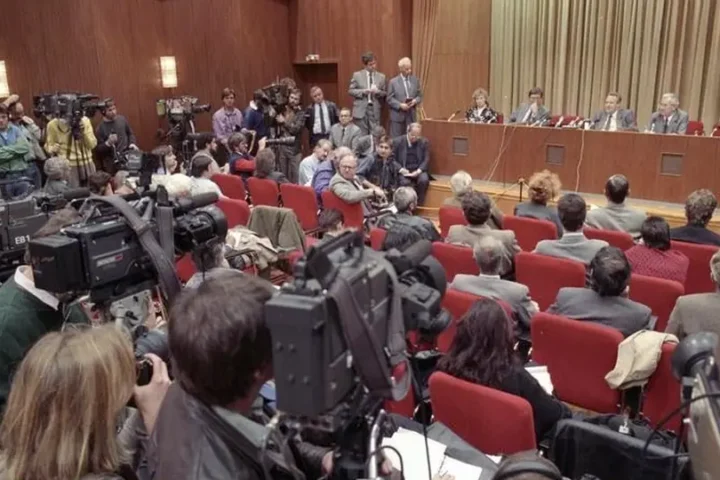
The date of the pogrom, 9 November, is also the date on which the Berlin Wall fell in 1989, a very different chapter of German history that Geopolitiki covered in Fall of the Berlin Wall explained: what happened on 9 November 1989. The UN panel’s message was that remembering 1938 requires reading its images critically and listening to those who were there.
The full recording of the event is available through UN News.