Middle East & North Africa
Netanyahu offers to let Eisenkot serve first as prime minister in a rotation unity government
The caretaker prime minister publicly accepted a rotation for the first time; the two leaders are to meet on Sunday at 10 a.m.

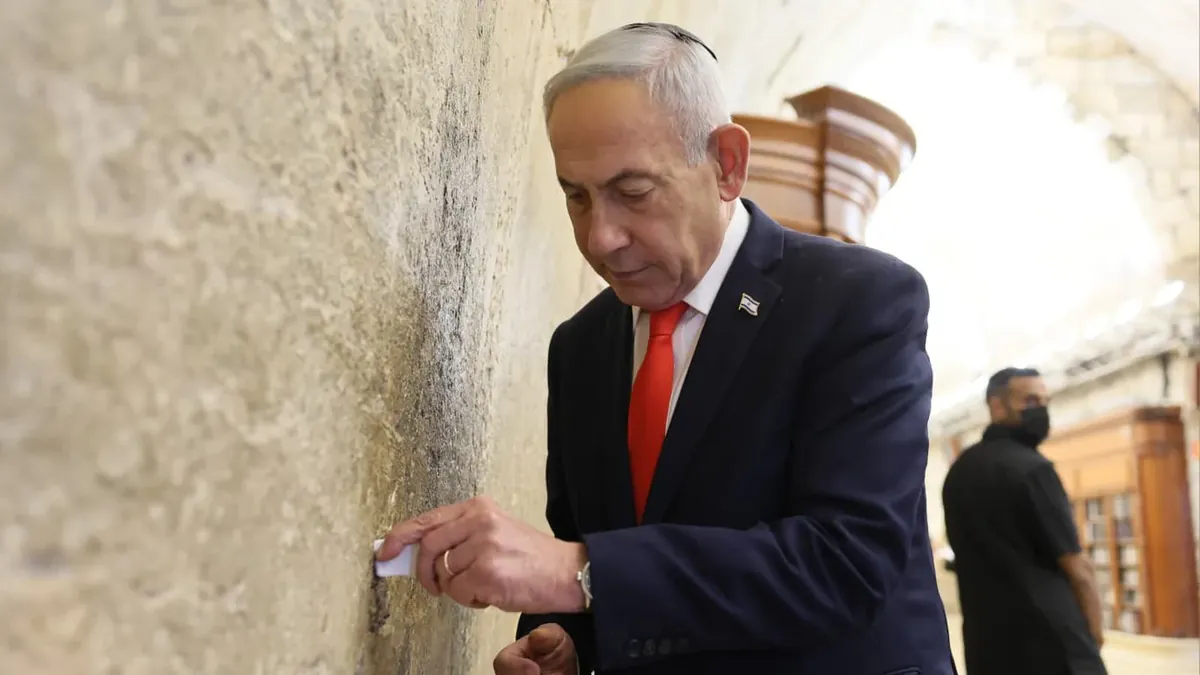
Israel’s caretaker Prime Minister Benjamin Netanyahu said on Saturday, November 28, that he is willing to let Gadi Eisenkot serve first as prime minister in a national-unity government with a rotation in power. Under his proposal, he would be deputy prime minister at the start of the term.
It is the first time Mr. Netanyahu has publicly accepted not leading the government himself. In a statement posted on X, he said that as head of the largest party he should “naturally” lead a unity government, but that “given the scale of the existential threat” and the chance of a government unable to confront it, his responsibility as a leader obliges him “to put everything aside”. He called on both sides to begin “substantive, honest and rapid negotiations” at once.
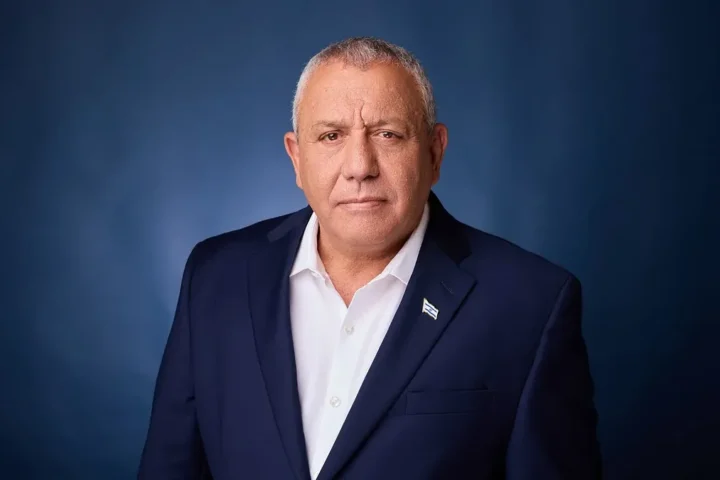
Mr. Eisenkot, leader of the centrist Yashar party, who holds President Isaac Herzog’s mandate to form a government, replied with an invitation of his own. “If Likud is ready for real unity, I am willing to test how serious its intentions are within the next 24 hours,” he said, inviting Mr. Netanyahu and his team to the Dan Accadia hotel in Herzliya, where he was with his negotiators. Soon after, Likud said the two men spoke and agreed to meet at the same hotel on Sunday at 10 a.m.
According to Mr. Eisenkot, a detailed proposal with “significant compromise positions” was sent to Mr. Netanyahu last Sunday through a back channel the prime minister himself requested, and he had received no answer. The offer came a day after Mr. Eisenkot accused Likud of deliberately stalling talks to force new elections. He has pledged to announce a government by the formal December 6 deadline without seeking the 14-day extension the law allows.
So far he has signed deals with Yair Golan’s Democrats and Avigdor Liberman’s Yisrael Beytenu, which together with Yashar reach 36 seats, far below the 61 needed in the 120-seat Knesset. At the October 27 election Mr. Netanyahu’s bloc won 53 seats and Mr. Eisenkot’s potential partners 48. A deal with Likud could give him a 63-seat majority without ultra-Orthodox or Arab parties. The Jerusalem Post reports, however, that Mr. Netanyahu does not appear to seek immediate rotation and first wants to close a sensitive security issue.
The post of deputy prime minister was created in 2020 under the Netanyahu-Benny Gantz rotation deal, which was never implemented. Unlike ministers, a deputy prime minister need not resign if indicted, which matters for Mr. Netanyahu because of his corruption trial. The proposal drew criticism in the opposition camp: former prime minister Yair Lapid called it “yet another blatant fraud” and demanded that an Eisenkot government be sworn in first, while Mr. Golan wrote, “Enough with the tricks. Netanyahu lost.”