Politics & Diplomacy
Saudi foreign minister meets Rubio in Washington as Yemen fighting strains Red Sea security
Prince Faisal bin Farhan met Marco Rubio in Washington as fighting in Yemen and threats to Red Sea shipping sharpen Saudi security concerns.

Saudi Foreign Minister Prince Faisal bin Farhan met US Secretary of State Marco Rubio in Washington on September 28, as renewed fighting in Yemen and threats to Red Sea shipping put pressure on the two governments’ regional security relationship.
Saudi Arabia’s foreign ministry announced the prince’s arrival for an official visit and said the agenda included bilateral ties and regional and international developments. Official US Department of State footage released the same day shows the two ministers meeting at the department. Neither government had announced a new military commitment or a negotiated outcome in the material available at the time of this report.
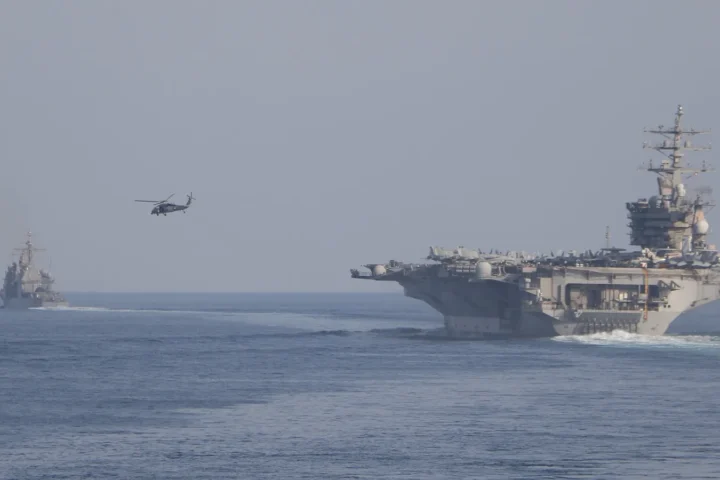
The visit comes amid a Houthi offensive in Yemen and attacks that Saudi officials say have threatened their territory. The Iran-aligned movement has advanced along parts of Yemen’s Red Sea coast, bringing renewed attention to the Bab el-Mandeb maritime passage and the security of vessels crossing toward the Suez Canal.
Yemen and shipping on the agenda
Riyadh has supported Yemen’s internationally recognized government against the Houthis. The conflict has become more urgent for Saudi Arabia as the wider US–Iran war disrupts the Strait of Hormuz, the other major maritime outlet from the region. The risks on the Red Sea route affect oil exports as well as commercial shipping, but the Saudi ministry’s announcement did not set out a detailed negotiating agenda for the Washington meeting.
At the United Nations the previous week, the foreign ministers of Saudi Arabia, Turkey, Egypt and Pakistan affirmed the kingdom’s right to defend itself under international law and called for safe navigation. They also expressed support for Yemen’s government and said dialogue and diplomacy were needed to address the regional conflicts. That joint statement was a diplomatic position, not an announcement that the four countries would enter the fighting together.
The United States has faced requests from Saudi Arabia for a stronger response to the Houthis. Washington has not publicly committed to joining a new Saudi military campaign. Rubio said last week that the US would stand with Saudi Arabia under its agreements, while describing the Yemen conflict as dangerous and complex. Those remarks do not specify what assistance, if any, might follow this week’s meeting.
A diplomatic channel amid wider war
Saudi Arabia’s concerns extend beyond the battlefield in Yemen. Oil flows from the Gulf have been disrupted by the US–Iran war and restrictions around Hormuz, and the kingdom has relied more heavily on alternative routes. The security of both maritime corridors is therefore central to its talks with Washington.
The meeting also follows discussions among Gulf states about diplomatic routes to reduce the wider Middle East escalation. Qatar has been mediating indirect contacts between the United States and Iran about reopening Hormuz. Those talks and the Saudi visit are separate processes, and no joint US–Saudi position on the proposal was announced in the initial official accounts.
For the Washington visit, the confirmed development is the meeting itself and its broad agenda. Any change in US assistance to Riyadh or in the approach to Yemen would require a subsequent statement from the governments or a clearly attributed account of their discussions.