Middle East & North Africa
Trump: “We may have to hit Pickaxe Mountain. We will destroy it quickly”
President Donald Trump said the US is looking at a new strike on Pickaxe Mountain, Iran’s deeply buried nuclear site near Natanz. He ruled out nuclear weapons and ground forces, but not the MOAB bomb.

US President Donald Trump said the United States is considering a new strike on Pickaxe Mountain, the deeply buried Iranian nuclear facility near Natanz. “Now we are looking at Pickaxe Mountain. We may have to go there. We will try to hit that target. We will destroy it quickly,” he said on Thursday, October 15, in an interview with Newsmax’s Rob Finnerty at the White House. Asked whether ground forces would be needed, he answered: “No, I do not see that. I do not see that.” Trump announced no order to attack and no timetable.
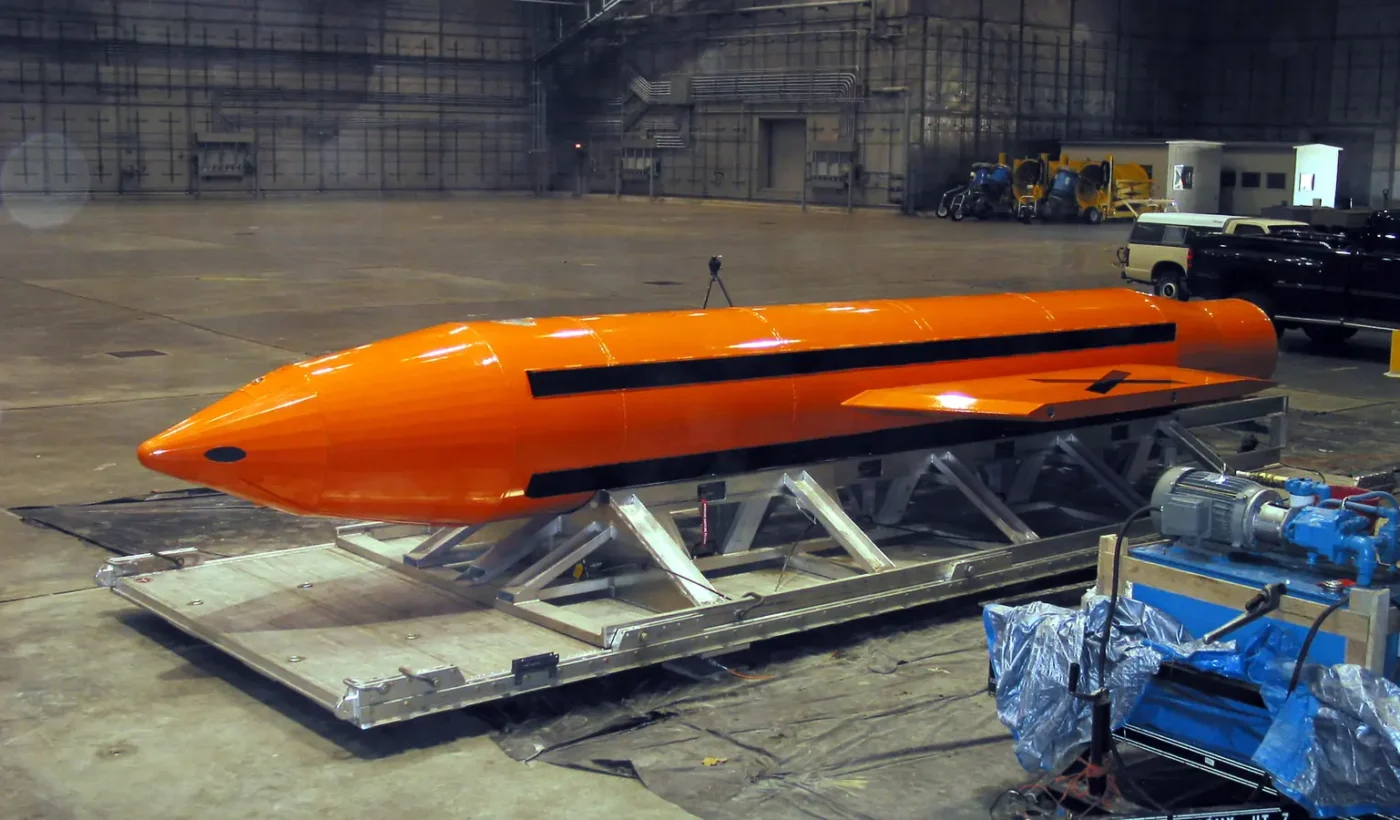
The president ruled out using nuclear weapons against Iran, but not the GBU-43/B MOAB, one of the largest non-nuclear bombs in the American arsenal. “The mother of all bombs is not nuclear. No, it is not nuclear at all. It is just an extremely big bomb,” he said.
According to CNN, the Pentagon has prepared plans that include the use of the MOAB against Iranian energy infrastructure and nuclear sites if Trump orders new operations, possibly after the midterm elections of November 3. Officials question, however, whether the bomb, which mainly creates a powerful surface blast wave, can destroy underground facilities. Trump had said earlier that the US would not attack Iran before the midterms, as covered in our report on his statement, while the Pentagon told CENTCOM to complete preparations to resume major operations, covered in our report on the Axios story.
MOAB and MOP: blast versus penetration
The MOAB differs radically from the GBU-57/B Massive Ordnance Penetrator (MOP) that US B-2s dropped on Iran in June 2025. The MOAB, weighing about 21,600 pounds (9.8 tonnes), is a blast weapon: it is designed to cause a huge explosion at the surface rather than penetrate the ground. Its only combat use was on April 13, 2017, against an ISIS-K tunnel network in the Achin district of Nangarhar province in Afghanistan, killing 36 fighters according to the Afghan Ministry of Defence, as shown in Pentagon footage reported by Task & Purpose.
The MOP, at 30,000 pounds (about 13.6 tonnes), is by contrast a penetrator, built to pass through rock and reinforced concrete before exploding against deeply buried targets. In Operation Midnight Hammer, on June 21-22, 2025, B-2s dropped 14 MOPs on Fordow and Natanz, in the weapon’s first operational use, as described by The War Zone.
That is why choosing the MOAB for Pickaxe Mountain, which is buried even deeper, raises questions: it could hit entrances, ventilation shafts and surface installations, but not the halls beneath the rock.
“They asked us to stop”
Trump claimed that Iran asked for the attacks to stop. “They asked us, please, to stop. And we are doing it, because we are negotiating with them,” he said. “The war with Iran will end very soon. One way or another it will end. And oil will drop like a rock, and so will gasoline prices.”
On the possibility of leaving before Tehran’s acquisition of a nuclear weapon is definitively blocked, he said: “We could. But if we do, within a year we may have to do it again. We want to do it so that they never get a nuclear weapon, because if they had one, in my opinion, they would use it immediately.”
Pickaxe Mountain, known in Iran as Kuh-e Kolang Gaz La, lies beneath layers of rock and is considered to exceed the capabilities even of the most powerful American penetrator bombs. Tehran said in September that there is no nuclear activity at the site, while Iranian parliament speaker Mohammad Bagher Ghalibaf says Iran “will fight and negotiate”, as covered in our report on Ghalibaf.