Middle East & North Africa
Yemen: WFP says fighting has cut aid to 800,000 people, most of them in Taiz
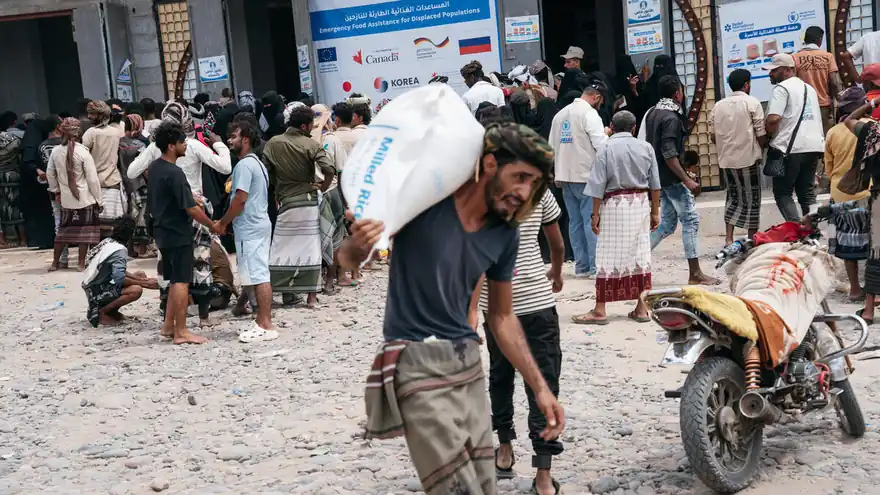
The World Food Programme says escalating fighting has cut off aid to 800,000 people in Yemen, more than 600,000 of them in Taiz, and reports 37 of its staff among 72 UN personnel detained by the Houthi authorities.

The UN World Food Programme (WFP) said on 14 October that the escalating fighting in Yemen has cut off life-saving assistance to 800,000 people, most of them in the besieged city of Taiz, and warned that the situation could “rapidly spiral into a humanitarian catastrophe” if aid cannot move safely.
In a statement datelined Aden, WFP said that shifting front lines, blocked roads and insecurity are restricting its access. It put the number of people now out of reach at more than 600,000 in Taiz, including over 200,000 women and children, plus communities on the west coast that lost access in early September. WFP added that ten of Taiz’s 16 districts had earlier been classified at Emergency level (IPC 4) for food insecurity.
Nationwide figures and detained staff
According to WFP, more than 18 million people face acute food insecurity across Yemen and 2.2 million children under five are acutely malnourished, including 500,000 with severe acute malnutrition. It said 74 per cent of households in accessible areas could not meet basic food needs, a record for this year. WFP says it has reached more than 115,000 newly displaced people in locations it can access and could scale up to 1.5 million as access allows.
WFP also said 72 UN personnel are detained by the Houthi de facto authorities, 37 of them from WFP, and joined the UN Secretary-General in calling for their immediate and unconditional release. The statement does not include a response from the Houthi authorities.
El-Khidir Daloum, WFP’s representative and country director in Yemen, said the agency is critically concerned about the conflict and about “the growing number of people we can no longer reach because of it.” Matthew Hollingworth, WFP’s Assistant Executive Director for Programme Operations, told reporters in Geneva: “Hunger in Yemen today is accelerating before our eyes.”
Taiz and the health situation
The warning followed a briefing on 13 October in which the UN Spokesperson said Taiz faces a “devastating” humanitarian crisis. UN News, summarising that briefing, reported that the Houthis, who have besieged the city since 2015, took control of the last main road linking Taiz to other government-held areas in early October, and that wheat and flour supplies in the city could run out in under three weeks. Stephane Dujarric urged all parties to “refrain from direct attacks against civilians and civilian infrastructure.”
The World Health Organization reported 8,034 suspected cholera cases and 27 deaths in Yemen this year, a quarter of them in the last four weeks, and said its 90-day emergency response needs $31 million but has received $4.3 million.
Funding
WFP said it needs $268 million to continue operations in Yemen through 2027 and that without new funding it will significantly cut assistance from November.
The fighting follows the Houthi offensive launched in September along Yemen’s southwestern Red Sea coast. For the military picture as reported by the parties, see Yemen: Government says it killed 1,150 Houthis in 24 hours; Taiz hospitals close to collapse and Yemen: Murky picture on the Bab el-Mandeb coast as Houthis show combat capability; the ring tightens around Taiz.