Technology
CISA adds four actively exploited flaws to its KEV catalogue, including Synology DSM and LiteLLM
The US cybersecurity agency added Synology DSM, LiteLLM, REDCap and Apache Axis flaws to its Known Exploited Vulnerabilities catalogue. All four allow arbitrary code execution, with federal fix deadlines of November 21 and December 2.

The US Cybersecurity and Infrastructure Security Agency (CISA) added four software vulnerabilities that are already being exploited in attacks to its Known Exploited Vulnerabilities (KEV) catalogue on Wednesday, November 18, 2026. They are CVE-2024-10441 in Synology DiskStation Manager (DSM), CVE-2026-40217 in BerriAI’s LiteLLM, CVE-2026-90817 in Vanderbilt University’s REDCap and CVE-2026-90436 in Apache Axis. All four allow an attacker to execute arbitrary code.
Deadlines
There are two remediation deadlines. For the Synology DSM, REDCap and Apache Axis flaws, the deadline is Saturday, November 21, 2026, three days after the entry. For LiteLLM it is Wednesday, December 2, 2026. The dates bind US federal civilian executive branch (FCEB) agencies, under CISA’s binding operational directive BOD 26-04 on prioritising security updates by risk. For the first three, the catalogue also asks for an initial forensic triage, that is, examining systems for signs of compromise. For LiteLLM it does not. Use in ransomware attacks is recorded as unknown for all four entries.
Synology DSM
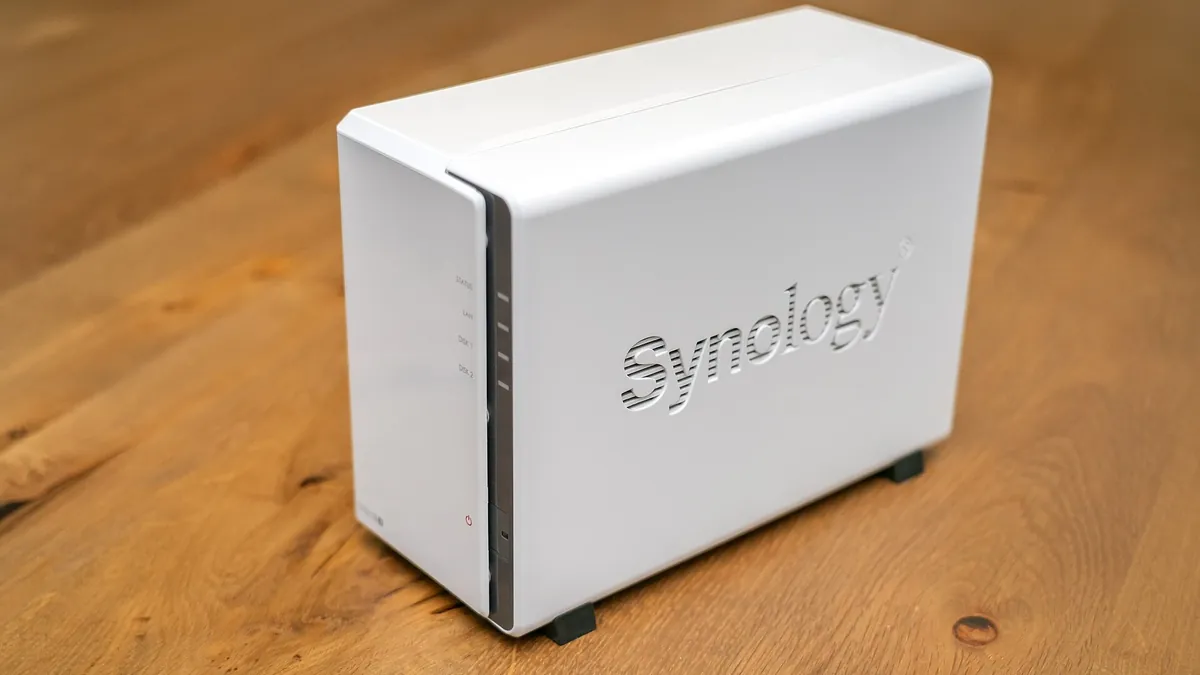
Synology DiskStation Manager is the operating system of Synology’s network-attached storage (NAS) devices. CVE-2024-10441 is an improper output encoding or escaping flaw in the system’s add-on daemon and lets a remote attacker execute code in unspecified ways. Synology has rated it 9.8 on the CVSS (Common Vulnerability Scoring System) scale and describes it in advisory Synology-SA-24:20, published on November 5, 2024 for DSM flaws found at the Pwn2Own 2024 contest. The fix is per DSM line: 7.2.1-69057-6 for 7.2.1, 7.2.2-72806-1 for 7.2.2, 7.2-64570-4 for 7.2 and 7.1.1-42962-7 for 7.1, or later, and no workaround is suggested. The flaw also affects Synology BeeStation OS before version 1.1-65374.
LiteLLM
BerriAI’s LiteLLM is an open-source proxy server for large language models with a single OpenAI-compatible interface for more than 100 providers. CVE-2026-40217 concerns the /guardrails/test_custom_code endpoint, where administrators test Python code for input and output guardrails. A regular-expression-based barrier is bypassed with bytecode rewriting techniques, resulting in code execution on the server. The NVD (National Vulnerability Database) has listed it since April 10, 2026 for versions up to April 8, 2026, with a score of 8.8. The research firm X41 D-Sec, in advisory X41-2026-001, describes an attack by an HTTP request to the API from a user with credentials, and notes that in the default Docker image the process runs as root.
REDCap
REDCap (Research Electronic Data Capture) is a research data collection and survey platform developed by Vanderbilt University. The project’s website lists 8,539 institutions in 167 countries. CVE-2026-90817 lets an unauthenticated attacker execute code on the server, using specially crafted HTTP requests that reach an unintended controller path from a public survey and pass a manipulated file-path or stream parameter during data import. A precondition is knowledge of a valid public survey hash. It affects REDCap from version 13.3.0 onward, is rated 9.8 and has been in the NVD since September 20, 2026. The vendor’s guidance is given through the REDCap Community portal, which is open only to registered administrators of member institutions.
Apache Axis
Apache Axis 1.x is a SOAP (Simple Object Access Protocol) engine for Java that the Apache project has declared end of life (EOL). CVE-2026-90436, a critical flaw in all 1.x versions up to and including 1.4, was announced on the team’s mailing list on November 6. When a SOAP fault contains an exceptionName element, Axis loads the class named there and, if a data element is also present, instantiates it before checking that it is an AxisFault. If a suitable class exists in the application, this leads to remote code execution. Because the fault is parsed before each service’s checks, authentication settings do not protect. Apache does not plan a new 1.x release. It recommends migrating to another SOAP engine, such as Axis 2/Java, or using a build with the relevant patch. The flaw was found by José Apari-Pantigozo of OKIOK, and the catalogue notes it may affect other products embedding the component.
CISA asks organisations to apply the vendor’s mitigations and, where the product is a cloud service, the BOD 26-04 guidance for those, or to stop using the product if no mitigations are available. Agencies must also assess each system’s exposure to the internet. For earlier entries, see CISA’s listing of UnrealIRCd and Check Point flaws and its six vulnerabilities, including Barracuda, Chromium and Outlook.