Asia-Pacific
India and Japan agree on firing ranges, maritime security and joint research at their “2+2” in Tokyo
At their fourth “2+2” ministerial in Tokyo, India and Japan agreed to speed up defence cooperation: Japanese forces will train on Indian firing ranges for the first time, with new commitments on maritime security.

India and Japan agreed in Tokyo on Thursday, November 19, 2026 to speed up their defence cooperation, with the first use of Indian firing ranges by Japan’s Self-Defense Forces (JSDF) and new commitments on maritime security. The meeting was the fourth “2+2” of the two countries’ foreign and defence ministers and lasted 90 minutes, from 14:40 to 16:10, according to Japan’s foreign ministry. Japan was represented by Foreign Minister Toshimitsu Motegi and Defence Minister Shinjiro Koizumi, and India by External Affairs Minister S. Jaishankar and Defence Minister Rajnath Singh. A joint statement was issued.
Firing ranges and a Letter of Intent
The same day in Tokyo, Mr Singh held a bilateral meeting with Mr Koizumi, their third in a short period after August and October 2026, according to India’s defence ministry. A Letter of Intent was signed on the use of firing ranges in India. Japanese forces will train for the first time on Indian ranges with live fire, including with ship-to-surface missiles, and the two sides agreed to speed up coordination.
Maritime security
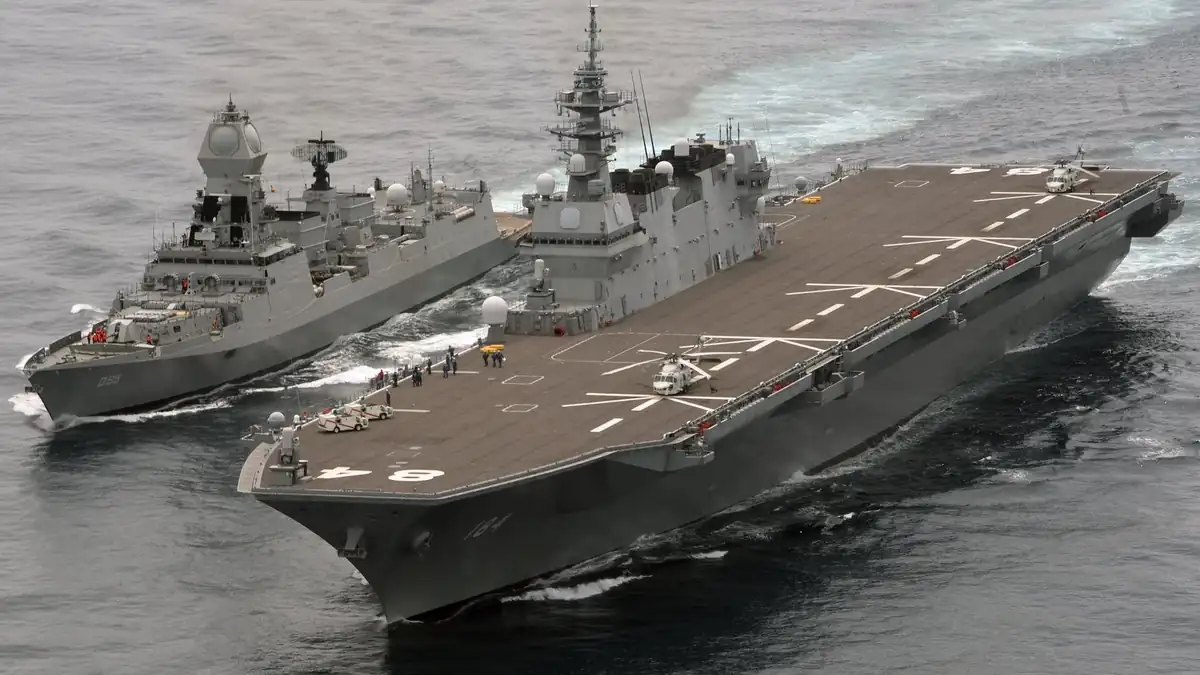
On naval cooperation, the ministers welcomed the Memorandum of Cooperation on Maritime Security signed by the defence authorities in August 2026. A working group at director-general level will advance cooperation on mine countermeasures and look at joint shipbuilding and warship design. They also agreed to create an environment that facilitates information sharing between the Japan Maritime Self-Defense Force and the Indian Navy. The two air forces will cooperate on air domain awareness, and exchanges between special forces will be expanded.
Equipment and research
On equipment, the two sides expect a swift conclusion of the arrangements for UNICORN, the Unified Complex Radio Antenna, as well as India’s Acceptance of Necessity (AoN) by February 2027. India’s DRDO and Japan’s ATLA will develop research and development cooperation on advanced missiles and defence technologies. For the Indian Navy, see also the deal with Israel Aerospace Industries to upgrade its Barak-1 missiles.
Exercises and the Indo-Pacific
The ministers welcomed the Malabar 2026 exercise, involving Japan, the US, India and Australia, and JAIMEX26, both held in Japan in November 2026. The joint statement describes the two countries as “Special Strategic and Global Partners” and refers to Japan’s “updated” vision for a Free and Open Indo-Pacific (FOIP), presented in May, and to India’s IPOI and MAHASAGAR initiatives. The two governments say they oppose unilateral attempts to change the status quo by force or coercion and will strengthen cooperation on the security of sea lanes of communication.
Japan’s foreign and defence ministers presented their country’s plan to revise three security documents, among them the National Security Strategy. The East China Sea, the South China Sea, North Korea, South Asia, the Middle East and Ukraine were discussed. The two sides expressed serious concern about economic coercion, including arbitrary export restrictions. The previous, third “2+2” was also held in Tokyo, on August 20, 2024.