Technology
NASA’s Swift telescope ends its mission after nearly 22 years and more than 2,000 gamma-ray bursts
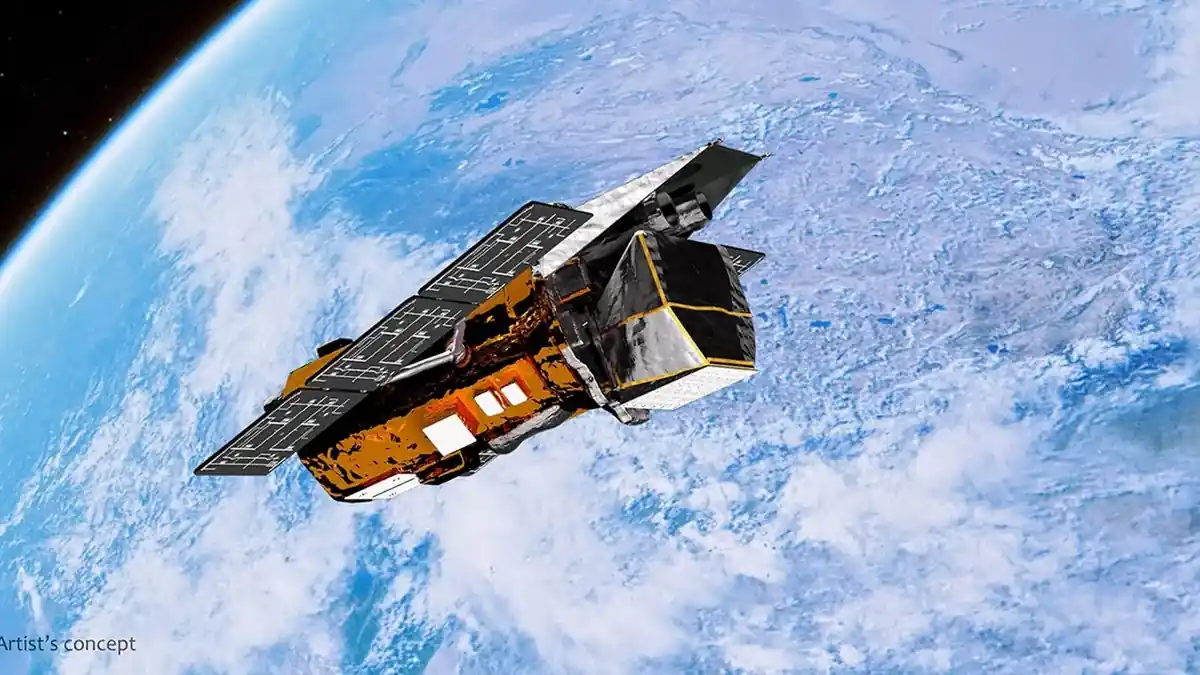
NASA announced that the Neil Gehrels Swift Observatory has completed its science mission. Its last observation was on October 20, and it is expected to re-enter the atmosphere within weeks.

Swift, the space telescope that watched the most powerful explosions in the universe, has come to the end of its life after nearly 22 years. NASA announced on Friday, October 23, 2026 that the Neil Gehrels Swift Observatory, the satellite that studied gamma-ray bursts, has completed its science mission. The last observation was made on Tuesday, October 20, and, according to the agency’s announcement, Swift is expected to re-enter Earth’s atmosphere within the next few weeks.
Its record far exceeds the original plan. Swift was designed for a two-year prime mission and operated for more than ten times as long. It observed more than 2,000 gamma-ray bursts and over 1,400 supernova explosions. It recorded stars torn apart by black holes, completed an all-sky X-ray survey and studied asteroids and comets. Its data contributed to some 7,000 published scientific papers. “Swift has returned to the country, for many years, far more than was invested in it,” said Shawn Domagal-Goldman, director of the Astrophysics Division at NASA Headquarters in Washington.
Speed was its strength
Gamma-ray bursts are sudden flashes that fade so fast that no large telescope could point at them in time. As S. Bradley Cenko, the mission’s principal investigator at NASA’s Goddard Space Flight Center, described it, Swift would detect the burst, send its position to other observatories and turn toward the spot before the afterglow faded. The process usually took about a minute.
The satellite was launched on November 20, 2004 and began operating the following month. It carries the name of its first principal investigator, Neil Gehrels, after NASA renamed the mission in 2018 following his death.
The short burst GRB 050509B of May 2005, lasting just 0.03 seconds, shows Swift’s speed better than any other. The telescope turned fast enough to detect 11 X-ray photons, so the afterglow of a short burst was recorded for the first time. The observations confirmed long-standing theoretical models and showed that such bursts most likely come from mergers of two neutron stars, objects with the mass of the Sun squeezed to the size of a city.
Why it ended
The cause was its low orbit. The telescope is now below 171 miles (275 kilometres) above Earth, and atmospheric drag at that altitude does not allow its instruments to stay steadily pointed at targets. NASA explains that any spacecraft in low Earth orbit without a propulsion system gradually loses altitude to atmospheric drag, and that a period of heightened solar activity strengthened the effect.
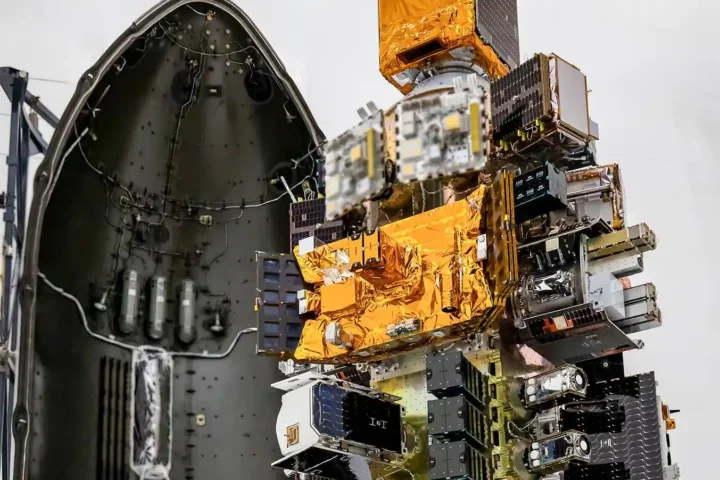
The agency had tried to prevent the end. In September 2025 it commissioned Katalyst Space of Flagstaff, Arizona, to build in about a year the robotic spacecraft LINK, which would grapple the telescope and raise its orbit. LINK was launched in July 2026 from Kwajalein Atoll in the Marshall Islands on a Northrop Grumman Pegasus XL rocket, but suffered communication interruptions and attitude-control problems. The mission was reduced to technology demonstrations, NASA ended its participation on September 3, and LINK re-entered the atmosphere on September 25.
What remains is the archive: nearly 22 years of brightness measurements and more than 1.5 million images from the ultraviolet/optical telescope. The data, publicly available, come to about 12 terabytes, roughly 600 high-definition films. Domagal-Goldman said NASA is considering using and strengthening its existing space telescopes for rapid response to cosmic events.