Analysis
Strait of Hormuz explained: why the narrow passage matters
The Strait of Hormuz carries about a fifth of the world’s oil and a large share of its LNG. Here are the numbers, the geography, the bypass routes and the law of passage.

The Strait of Hormuz is the narrow sea passage between the Arabian Peninsula and Iran that links the Persian Gulf with the Gulf of Oman and the Arabian Sea. It matters because most of the oil and a large share of the liquefied natural gas produced around the Gulf has to pass through it to reach buyers, and because the options for going around it are limited.
Key points
- The U.S. Energy Information Administration (EIA) puts oil flows through the strait at 20.9 million barrels a day in the first half of 2025, about one fifth of world petroleum liquids consumption.
- The International Energy Agency (IEA) says the strait is only 29 nautical miles wide at its narrowest point, with shipping channels about two miles wide in each direction.
- Only Saudi Arabia and the United Arab Emirates have working crude pipelines that avoid the strait, and the IEA estimates their spare capacity at 3.5 to 5.5 million barrels a day.
- Under the UN Convention on the Law of the Sea, ships in a strait like this enjoy “transit passage” that coastal states may not suspend, but Iran and the United States do not appear on the UN’s list of parties.
Where is the Strait of Hormuz and how wide is it?
The strait separates Iran, to the north, from the Arabian Peninsula, to the south. The IEA’s February 2026 factsheet gives its width at the narrowest point as 29 nautical miles (54 km). Ships do not use all of that. Inbound and outbound traffic each have a navigable channel about two miles (3.7 km) wide, separated by a buffer zone of the same width.
The EIA notes that the strait is deep and wide enough for the world’s largest crude oil tankers, which is why such a narrow corridor carries so much of the trade.
How much oil and gas passes through it?
The EIA, which publishes the most widely cited flow estimates, wrote that total oil flows through the strait “averaged 20.9 million b/d” in the first half of 2025. It describes that as the equivalent of about 20% of global petroleum liquids consumption and one quarter of the oil traded by sea. For liquefied natural gas, it estimates 11.4 billion cubic feet a day, or over 20% of global LNG trade, moved through the strait in the same period, primarily from Qatar.
The IEA reaches a similar picture from tanker-tracking data for the full year 2025. It counts almost 20 million barrels a day of oil exported through the strait, of which 14.95 million were crude oil and condensate and 4.93 million were oil products. The IEA’s LNG share is slightly lower, at 19% of global trade, which it attributes to about 93% of Qatar’s and 96% of the UAE’s LNG exports passing through the strait.
| Exporter | Crude oil and condensate (million b/d) | Oil products (million b/d) | Total (million b/d) |
|---|---|---|---|
| Saudi Arabia | 5.43 | 0.80 | 6.23 |
| Iraq | 3.32 | 0.31 | 3.63 |
| United Arab Emirates | 2.02 | 1.22 | 3.24 |
| Iran | 1.69 | 0.72 | 2.41 |
| Kuwait | 1.40 | 0.97 | 2.37 |
| Qatar | 0.73 | 0.69 | 1.43 |
| Saudi-Kuwaiti Neutral Zone | 0.35 | 0.00 | 0.35 |
| Bahrain | 0.00 | 0.21 | 0.21 |
| Total through Hormuz | 14.95 | 4.93 | 19.87 |
Source: IEA, Strait of Hormuz Factsheet, February 2026, full year 2025 (based on Kpler data).
For a short visual introduction to the same facts, Al Jazeera English has published an explainer on how the strait works and why it matters to global oil supplies.
Who depends on the strait?
The main customers are in Asia. The EIA estimates that 89% of the crude oil and condensate that moved through the strait in the first half of 2025 went to Asian markets. The IEA says China and India together received 44% of the crude exports in 2025, and that Japan and South Korea are particularly reliant on the flow. Europe is a minor destination for crude: about 600,000 barrels a day, or 4% of the region’s crude flows, according to the IEA.
The IEA also points out that most of the world’s spare oil production capacity is held by Saudi Arabia, so a prolonged disruption could make that reserve unavailable as well. Iran, Iraq, Kuwait, Qatar and Bahrain rely on the strait for the vast majority of their oil exports, in the IEA’s words.
Can oil bypass the Strait of Hormuz?
Only partly. The IEA identifies two operational crude pipelines that can carry oil around the strait. The UAE’s Abu Dhabi Crude Oil Pipeline runs about 400 km from Habshan to Fujairah on the Gulf of Oman, with an original capacity of 1.5 million barrels a day and a reported current capacity close to 1.8 million. Saudi Arabia’s East-West pipeline carries crude from Abqaiq to Yanbu on the Red Sea; its capacity has been reported at up to 7 million barrels a day, a level the IEA says has not been tested for sustained flows.
The IEA estimates the available bypass capacity at 3.5 to 5.5 million barrels a day, which is well below the roughly 20 million that pass through the strait. The EIA gives a similar order of magnitude, about 4.7 million barrels a day for the Saudi and UAE pipelines together, and notes that the UAE plans another 1.5 million barrel-a-day line. Iran’s Goreh-Jask pipeline to the Gulf of Oman has a stated capacity of 1 million barrels a day, but the IEA says it effectively remains non-operational, and the EIA puts its effective capacity at around 0.3 million. For gas, the IEA says there are no alternative routes for the Qatari and Emirati LNG volumes.
What does international law say about passage?
The main rules are in Part III of the 1982 UN Convention on the Law of the Sea (UNCLOS). Article 38 says that in straits used for international navigation, “all ships and aircraft enjoy the right of transit passage, which shall not be impeded”. Transit passage is defined as freedom of navigation and overflight “solely for the purpose of continuous and expeditious transit” of the strait.
The convention puts duties on both sides. Ships and aircraft must proceed without delay and refrain from any threat or use of force against the sovereignty, territorial integrity or political independence of the bordering states. Article 44 says that bordering states “shall not hamper transit passage” and that “there shall be no suspension of transit passage”. Article 42 allows bordering states to adopt certain laws and regulations on transit passage, but these may not discriminate among foreign ships.
The UN’s chronological list of parties to the convention, which counts 172 members after Cambodia joined in February 2026, does not include Iran or the United States, while Oman, on the southern shore, is listed as having ratified in 1989. The convention’s text does not say how this affects the legal claims of non-parties, and this article takes no position on it.
What is happening in the strait now?
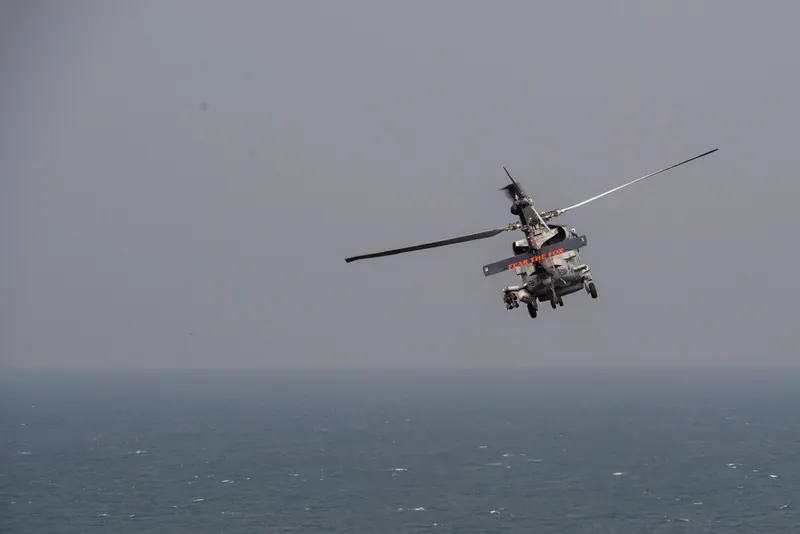
Traffic through the strait has been sharply disrupted in recent weeks, and the competing claims are hard to verify. Geopolitiki’s report on the weekly briefing of the UK Maritime Trade Operations (UKMTO) said traffic was about 70% below pre-war levels, and that the agency warned most ships under attack do not report it. The same report recorded the claim of Iran’s Revolutionary Guards that a supertanker hit a mine on an “unapproved” route and that the strait is closed, and a statement from the head of U.S. Central Command that it remains open. See Geopolitiki’s coverage in Hormuz: Revolutionary Guards say a supertanker exploded on a mine on an “unapproved” route – UKMTO: traffic 70% down and Iran: “If the US leaves the region, the Strait of Hormuz will open” – “If they don’t leave, we will drive them out”.
Exporters have also been rerouting. As reported in Iran’s oil minister resigns as Gulf exports recover, with 40% bypassing Hormuz, the analytics firm Kpler estimated that 40% of Gulf crude and condensate exports in September bypassed the strait, against 17% before the war.
Sources
This article rests on the EIA’s World Oil Transit Chokepoints analysis (Strait of Hormuz section, updated March 2026), the IEA’s Strait of Hormuz Factsheet (February 2026), the text of UNCLOS Part III and the UN’s chronological list of ratifications. Figures for current traffic come from Geopolitiki’s earlier reports, which cite UKMTO and Kpler.