Cyprus
Egypt, Cyprus and Greece push to speed up East Mediterranean gas projects, with Cyprus’s Cronos and Aphrodite fields on the table
The energy ministers of Egypt, Greece and Cyprus met in Athens on the sidelines of the Eastern Mediterranean Gas Forum roundtable. They discussed developing Cyprus’s Cronos and Aphrodite fields, possibly with processing and liquefaction in Egypt, and linking the gas to European markets.

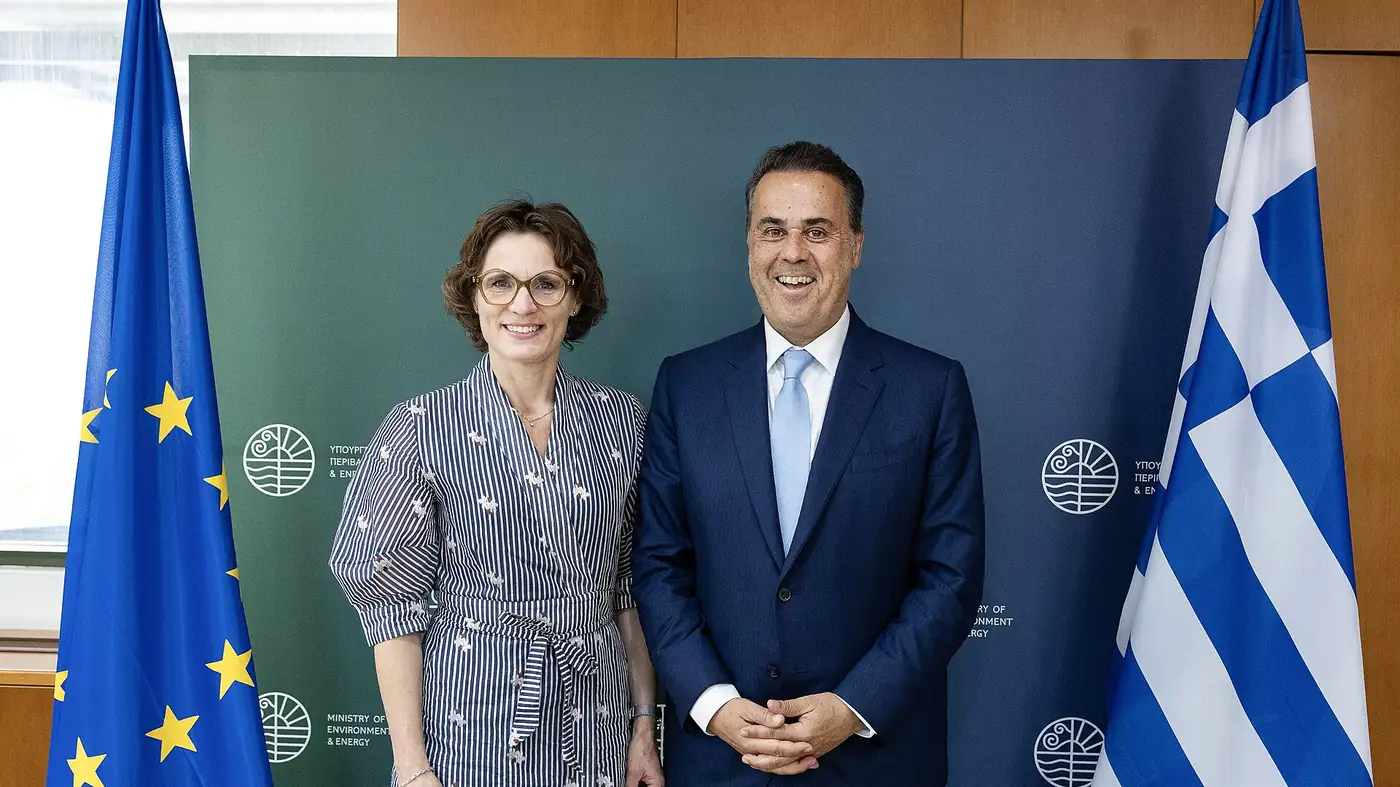
The energy ministers of Egypt, Greece and Cyprus discussed in Athens how to speed up the development of East Mediterranean gas and its connection to European markets. Egypt’s Minister of Petroleum and Mineral Resources Karim Badawi met Greece’s Minister of Environment and Energy Stavros Papastavrou and Cyprus’s Energy Minister Michael Damianos on the sidelines of the high-level roundtable of the Eastern Mediterranean Gas Forum (EMGF), Egypt Oil & Gas reported on October 7.
The meeting took place within the Egypt–Cyprus–Greece trilateral framework. The ministers underscored the three countries’ complementary strengths: Cyprus has the gas reserves, Egypt has the infrastructure for transport, processing, liquefaction and re-export, and Greece has its strategic location and interconnected networks giving access to Southern and Central Europe.
Cypriot gas via Egypt
The focus was the development of Cyprus’s Cronos and Aphrodite fields, including the option of processing and liquefying Cypriot gas in Egypt before it is exported to European markets. The ministers also discussed integrating regional infrastructure, making better use of existing facilities and assessing future capacity needs.
They stressed that priority projects must move from planning to implementation, by addressing technical, commercial and regulatory obstacles and advancing towards final investment decisions. They called for a stable investment environment, clear rules, faster permitting and transparent access to infrastructure.
The Vertical Corridor and GREGY
The ministers highlighted the role of the Vertical Gas Corridor, the network of existing and planned infrastructure linking Greece with Bulgaria, Romania, Moldova, Ukraine, Hungary and Slovakia, as a route for East Mediterranean gas to Europe. Egypt is one of its potential sources. Badawi said that integrating Egyptian infrastructure with regional resources and European interconnections would strengthen Egypt’s position as a regional gas trading hub. The corridor was also discussed at a recent energy forum on the Ionian Sea and the Greece–Cyprus interconnection; see Geopolitiki’s report, Ionian: Drilling at “Asopos 1” in early 2027.
Egypt–Greece cooperation extends to electricity through the GREGY interconnection project, under which Egypt plans to export 3,000 megawatts of renewable electricity to Europe through the Greek grid.