Analysis Air Force
Turkey’s F-16 Block 70 and F-35: paid for, signed and still invisible, the chronicle of the promises
Ankara says it has paid about $1.4 billion for F-35s it never received and another $1.4 billion up front for 40 F-16 Block 70s, none of which has been delivered. A chronicle of the promises, and what it means for Greece.

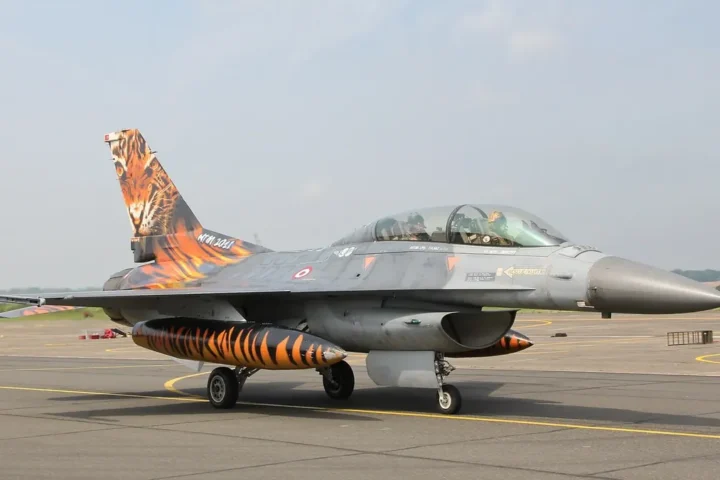
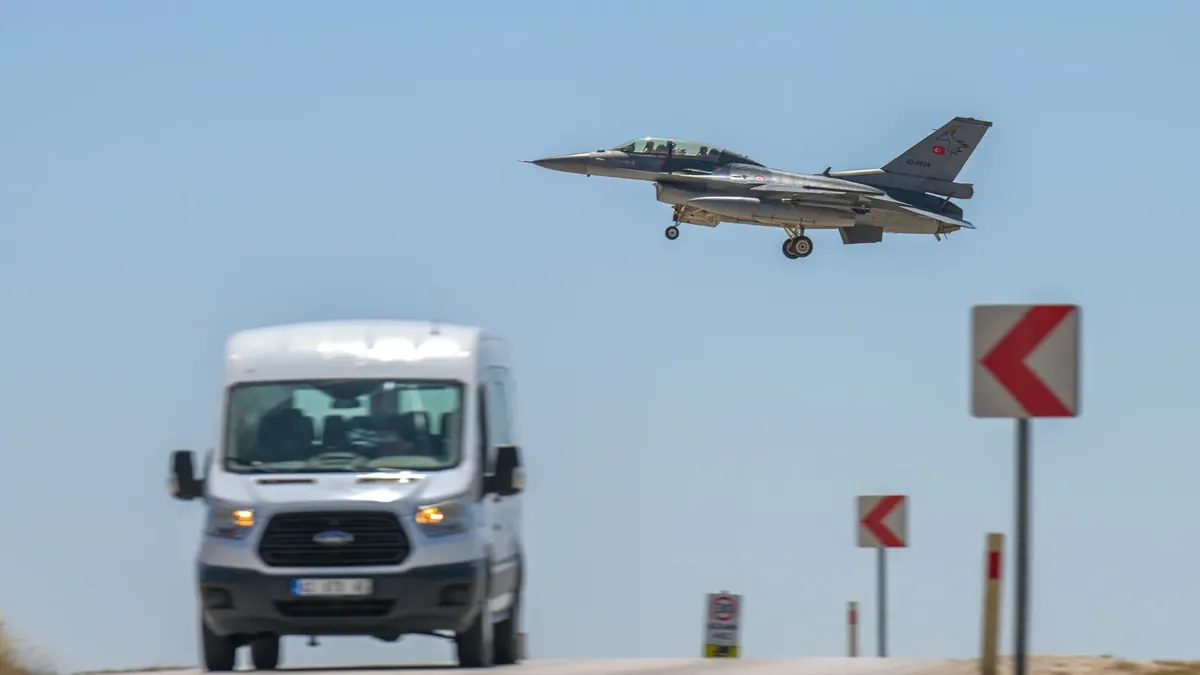
A Turkish two-seat F-16D (92-0024) lands at the 3rd Main Jet Base in Konya during Anatolian Eagle 25, June 2025. The Turkish Air Force still relies on its older F-16s while the 40 new Block 70s await a production contract. Photo: U.S. Air Force, Airman 1st Class Zachary Jakel
Turkey has achieved something even Lockheed Martin did not: it has acquired truly invisible fighters. It has paid for them, it has signed for them, the US president has told it that it will be able to buy them, but nobody has seen them in Turkish skies. By November 2026 Ankara says it has paid about $1.4 billion for F-35s that were never delivered, and about another $1.4 billion as an advance for 40 new F-16 Block 70s, according to the Turkish defence minister in 2024, of which it has received not one. In the meantime it has collected enough positive statements to fill a hangar. The question is why, seven years after the S-400, Ankara keeps reading every friendly phrase from Washington as a delivery date.
F-16 Block 70 for Turkey: signed in 2024, paid, and the production line has not yet opened for Ankara
The story begins in October 2021, when Turkey, two years after its removal from the F-35 programme, formally requested 40 new F-16 Block 70s and 79 modernisation kits for the F-16s it already operates. It took another two years and more, and the ratification of Sweden’s NATO accession by the Turkish Grand National Assembly, for the sale to be notified to Congress. The announcement by the US Defense Security Cooperation Agency (DSCA) on January 26, 2024 spoke of a package of up to $23 billion. A notification to Congress is not a purchase. It sets only the ceiling of value for which the sale is allowed to take place. The substantive step came in June 2024, when Ankara signed the Letter of Offer and Acceptance (LOA), that is the FMS contract, and on June 6 the State Department announced that it was a “significant step forward”.
Five months later the “significant step” got smaller. In November 2024 Turkish Defence Minister Yaşar Güler told the Turkish parliament that Ankara had dropped the 79 kits, because the modernisation can be done by TUSAŞ with the ÖZGÜR programme. In the same speech he said an advance of $1.4 billion had already been paid and that the cost of the 40 new aircraft with their weapons comes to about $7 billion. Two years later, the number that interests the Turkish Air Force most remains zero. In late September 2026, people involved in the talks with Washington said that “the payment has been made but there are no deliveries yet”, and the F-16 discussions restarted. Turkish defence analyst Arda Mevlutoğlu noted that five years after the request and two after the FMS contract, the production contract between the Pentagon and Lockheed Martin for the 40 Turkish aircraft has not yet been signed.
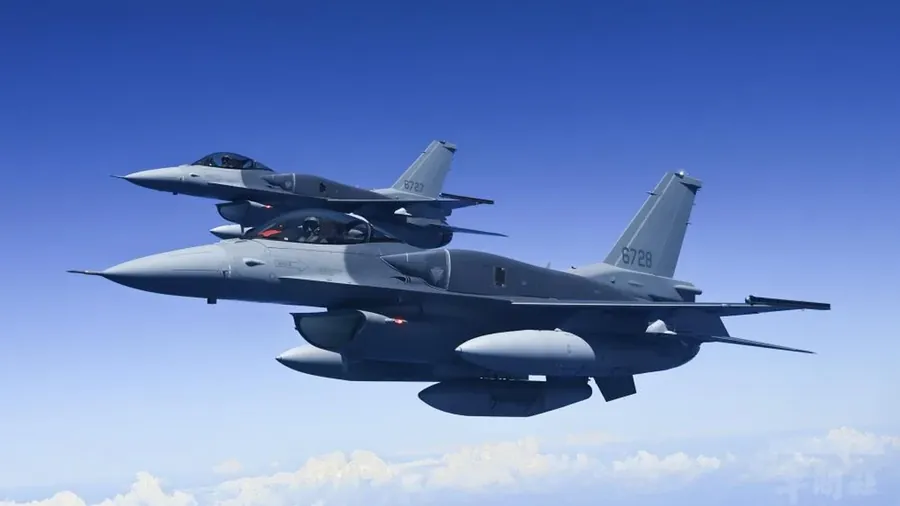
The irony is clearest when one looks at who else is waiting in the same queue. The only active F-16 Block 70/72 production line, in Greenville, South Carolina, has already delivered aircraft to Bahrain, Slovakia and Bulgaria. On October 6, 2026 Lockheed Martin announced the first flight of Morocco’s first Block 72. Taiwan, which got approval for 66 aircraft in 2019 and had its own delays, received its first two on October 2 and three more on November 8. Turkey, with more than 230 F-16s, watches other countries’ delivery ceremonies through photographs.
Turkey’s six F-35s: sealed in a hangar since 2019
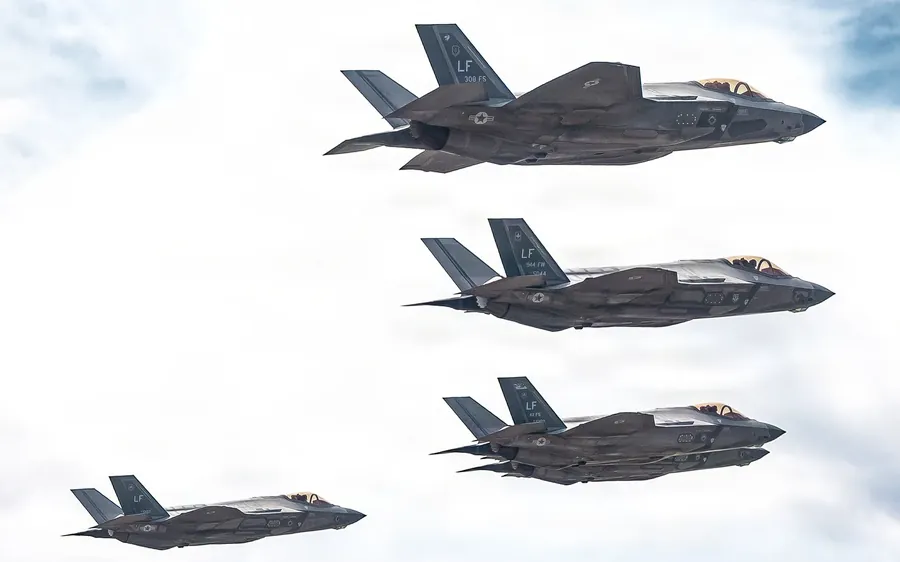
If the F-16s are the short version of the story, the F-35s are the series with many seasons. The first Turkish F-35A was unveiled at Fort Worth, Texas on June 21, 2018, with a ceremony, Turkish flags and Turkish pilots training at Luke Air Force Base in Arizona. About a year later, on July 12, 2019, the first parts of the Russian S-400 began arriving in Ankara, and on July 17 Washington announced Turkey’s removal from the programme. In December 2019 Congress wrote the ban into law, in Section 1245 of the National Defense Authorization Act (NDAA) for fiscal year 2020. In December 2020 the first Trump administration imposed CAATSA sanctions on the Presidency of Defense Industries (SSB), its then head Ismail Demir and three other officials. Since 2019 six F-35As built for Turkey have been sealed in a US facility, with anti-corrosion maintenance. They are perhaps the best-maintained fighters in the world that never reached their owner’s country.
Donald Trump’s return to the White House changed the vocabulary, not the law. On September 25, 2025, with Erdoğan beside him in the Oval Office, the US president said his Turkish counterpart “will be able to buy whatever he wants”. In autumn 2025 US Ambassador to Ankara Tom Barrack set the end of 2025 as the horizon. In December he moved it to “four to six months”, a horizon that expired without result, and a few days later he reminded that under US law Turkey must no longer possess the S-400s. In June 2026 the State Department notified Congress of a possible sale of about 80 F110 engines for Turkey’s KAAN fighter, and a joint resolution of disapproval was introduced in the House to block it.
The best episode was written in Ankara itself. At the NATO summit on July 7, 2026, Trump said “we will lift the sanctions”, called the F-35 sale “something we will certainly look at”, and said of the S-400s that he has “no concern”. Erdoğan replied that Trump “always keeps his word”. Fifteen days later, on July 22, the State Department sent a letter to Congress that was far less poetic: “Türkiye has not yet fulfilled these conditions.” The letter explained that the law bans the transfer of F-35s while Ankara possesses the S-400s or their accompanying equipment and while it has not given credible assurances that it will not acquire them again. The president’s statement and the legal process move on different levels. The law provides for a specific certification, and it has not been made. Ankara, as usual, heard only the first.
A phase of friendly statements without dates followed. On October 2, 2026 a journalist asked Trump what is delaying the lifting of the CAATSA sanctions. The answer had no date: “President Erdoğan is my friend. And I will always keep him happy.” A few days later Secretary of State Marco Rubio confirmed that the president wants delivery of the already paid-for aircraft to proceed, but added: “Until those conditions are met, the sale cannot go forward.” In mid-October the Turkish Ministry of National Defence confirmed that contacts on the six F-35s continue and that Ankara “expects a positive outcome”. Deputy Defence Minister Alpaslan Kavaklıoğlu said the matter will be resolved “in a short time”. Ankara has been hearing the same “soon” since 2019.
The new Congress and the limits of the “Trump card”
The ballot box was added to an already difficult picture. In the midterm elections of November 3, 2026, Democrats won the majority in both the House and the Senate. The new Congress takes office on January 3, 2027, and with it the committees that oversee arms sales pass to the Democrats. Retired Turkish ambassador Selim Kuneralp summed it up the next day: “The Trump card can no longer be played.” The picture, however, is more complex. For CAATSA sanctions the president has, according to the Congressional Research Service, a special waiver authority that is not subject to congressional review, provided he certifies that the risk to US defence systems is not substantially increased. The F-35 ban, however, is a separate provision, Section 1245. To lift it, the administration must certify that Turkey no longer possesses the S-400s and their accompanying equipment, that it has given credible assurances it will not acquire them again and that it has not acquired other Russian equipment dangerous to the F-35, and 90 days must pass. The S-400s are still in Turkey, even though Ankara and Moscow have confirmed they are discussing reselling them to a third country.
In the meantime the Turkish Air Force is not waiting only for Washington, and that is the most telling element of the case. In October 2025 Ankara signed an agreement with Britain for 20 new Eurofighter Typhoons, and on November 5, 2026 BAE Systems began construction at Samlesbury of the forward fuselage of the first, with Airbus building the centre section in Germany. Deliveries of the 20 aircraft are planned from 2030 to 2032. TUSAŞ is modernising the older F-16s with the ÖZGÜR programme, the first former British C-130Js are expected in December, and the KAAN is waiting for its American engines. For the Eurofighters, that is, construction of the first Turkish aircraft began a year after signature. For the F-16s, two years after the 2024 advance, Turkish analysts point out that no production contract has yet been signed. Ankara openly asks for the lifting of all sanctions in exchange for the “allied relationship”. Washington answers that it respects Turkey’s strategic importance and points to the terms of the law.
What it means for Greece, and why there is no room for complacency
In US arms sales, a statement of intent from the White House is not enough without the conditions the law sets, and Ankara has repeatedly chosen to give weight only to the first. Greece signed for 20 F-35s in July 2024 and the first delivery to Greece is scheduled for November 2029, while the Hellenic Air Force already flies F-16 Vipers from the upgrade programme of 84 aircraft and Rafales with Meteor missiles. Until the Greek F-35s arrive, however, the picture in the region may change. A solution on the S-400s, which would open the way both to lifting CAATSA sanctions and to the Section 1245 certification, or a signature for the production of the 40 F-16s, could change the data much faster than it changed over the past seven years. The Turkish queue for American fighters is for now stationary, not closed, and Athens must watch it with the cold realism that Ankara lacked.
Frequently asked questions about Turkey’s F-16s and F-35s
Has Turkey received the new F-16 Block 70s? No. Turkey signed the FMS contract in June 2024 and, according to the Turkish defence minister, has paid an advance of about $1.4 billion, but as of November 2026 none of the 40 aircraft has been delivered and no production schedule has been announced.
How many F-16 Block 70s is Turkey buying and what do they cost? The notification to Congress in January 2024 covered 40 new aircraft and 79 modernisation kits, with a maximum value of $23 billion. In November 2024 Ankara dropped the kits. The roughly $7 billion cited then by Defence Minister Yaşar Güler concerns only the 40 aircraft with their weapons.
Where are Turkey’s F-35s? The six F-35As built for Turkey have remained sealed at a US facility since 2019, when Turkey was removed from the programme over the Russian S-400s.
Have the CAATSA sanctions on Turkey been lifted? No. Donald Trump said at the NATO summit in Ankara in July 2026 that the US would lift the sanctions. As of November 2026 no lifting has been announced, and the Turkish Ministry of National Defence continues to ask for it.
What does Turkey need to get F-35s? Under Section 1245 of the fiscal 2020 NDAA, the US government must certify that Turkey no longer possesses the S-400s and their accompanying equipment, that it gave credible assurances it will not acquire them again, and that it has not acquired other Russian equipment that would endanger the F-35. The ban can be lifted 90 days after certification. In July 2026 the State Department told Congress that Turkey has not met the conditions.