Asia-Pacific
Leaked document: Iran controls terminals and storage tanks in Chinese ports to move sanctioned oil – sources
Iran International reports a confidential letter saying Tehran secured terminals, piers and long-term tank leases in Chinese ports to sell sanctioned crude directly to China.

Iran now reportedly controls terminals, piers and large storage tanks in Chinese ports so that its oil can reach the Chinese market despite American sanctions. The information was published by Iran International, based on a confidential letter it says it obtained and on two sources inside Iran’s oil ministry. These are claims from a single outlet that Beijing and Tehran have not confirmed.
The document is signed by Hamid Bovard, former head of the National Iranian Oil Company and now caretaker oil minister. It answers a top-secret letter from Ali Shamkhani to the then Supreme Leader Ali Khamenei, in which the former secretary of the Supreme National Security Council called oil sales under President Masoud Pezeshkian disastrous. Shamkhani and Khamenei were killed in the US-Israeli strikes of February 28, 2026.
According to the letter, Iran’s foreign ministry negotiated with Beijing the acquisition of port facilities and terminals to set up a hub for sanctioned Iranian crude. Tehran also secured long-term tank leases at various points in China in order to sell directly to the market. Intermediaries trusted by the Iranian leadership were told to continue with vessels already under sanctions, as long as they could berth at those ports.
Ningbo-Zhoushan, Qingdao and seven tanks
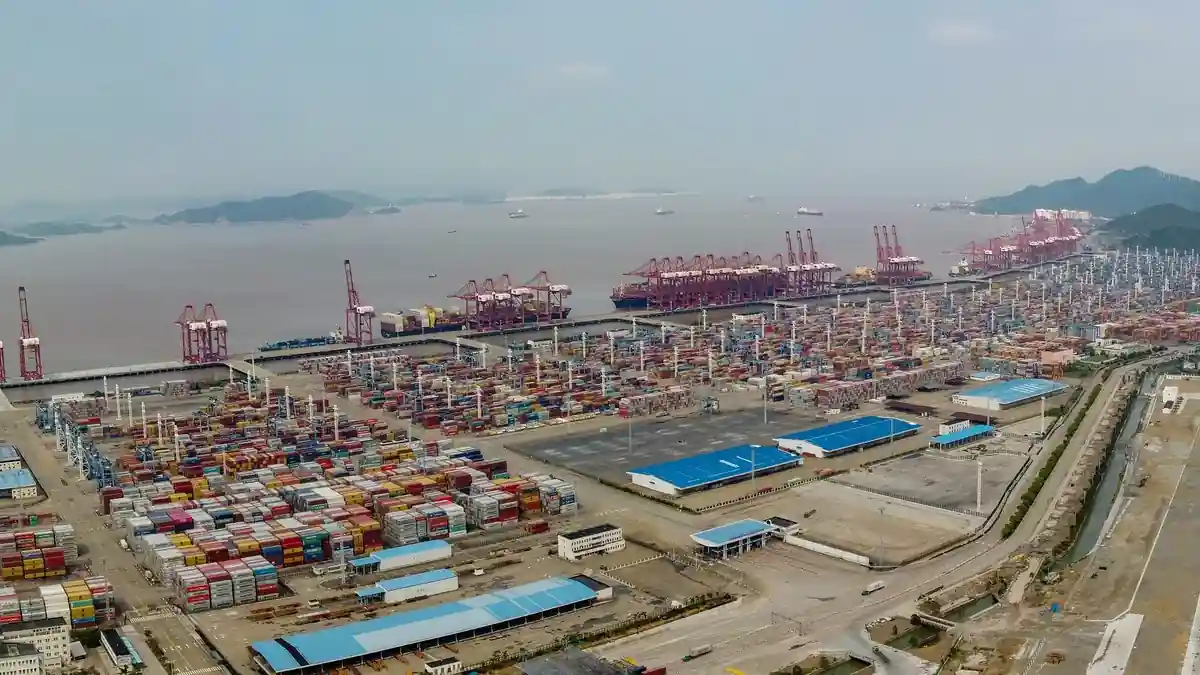
The ministry sources name three locations with piers. In the Ningbo-Zhoushan free zone Iran reportedly took control of a terminal, after helping build smaller transit facilities. In Qingdao and one more port in Shandong province it acquired secret stakes in smaller piers, near pipelines that carry crude to refineries without transshipment.
Seven tanks are also mentioned. Four are in the ports of Dalian and Huizhou and the cities of Dongying and Weifang. Three more, in the Zhoushan area, include one on Aoshan island and one at the Xiulanghu island terminals.
A central role is played by the fleet of Hossein Shamkhani, son of Ali Shamkhani, which carries Iranian oil to the piers under Iranian control. The US Treasury has sanctioned 51 vessels linked to him. Mr Bovard accuses him of buying ships with state loans but using them for Russian oil, and presents the UAE as Hossein Shamkhani’s exclusive field of activity. Washington keeps hitting such networks, as with recent sanctions on an Indian network of ships with false flags and on a shadow-fleet law firm with a presence in Piraeus.
The correspondence also shows pressure from the main customer. Even before the 40-day war, Beijing rejected a request to raise import quotas at Chinese refineries, increased purchases from Venezuela and demanded bigger discounts. Mr Shamkhani argued the per-barrel discount was 50 cents under Raisi and reached 9 dollars under Pezeshkian, figures the oil ministry disputed. Then oil minister Mohsen Paknejad was later removed, after Shamkhani’s letter.