Analysis
Treaty of Guarantee explained: what Article IV allows and what it bans
The 1960 Treaty of Guarantee protects Cyprus’s independence and territorial integrity and bans partition. Here is what each article says and how the UN Security Council applied it.

The Treaty of Guarantee is the 1960 agreement under which Greece, Turkey and the United Kingdom guaranteed the independence, territorial integrity and security of the Republic of Cyprus. Its Article IV lets each guarantor act only “with the sole aim of re-establishing the state of affairs created by the present Treaty”, and the same treaty bans both union with another state and partition of the island.
Key points
- Signed at Nicosia on 16 August 1960, in force the same day, and registered with the United Nations as No. 5475.
- Article II obliges Greece, Turkey and the United Kingdom to prohibit “partition of the Island”, not just to protect the state.
- Article IV first requires consultation; unilateral action is allowed only “in so far as common or concerted action may not prove possible”.
- The UN Security Council has since called the northern secession “legally invalid” and “incompatible” with the Treaty of Guarantee.
What is the Treaty of Guarantee?
The treaty was signed at Nicosia on 16 August 1960 by the Republic of Cyprus on one side and Greece, Turkey and the United Kingdom on the other. According to the text published in the United Nations Treaty Series (volume 382), it entered into force on the date of signature and exists in English and French, “both texts being equally authoritative”. The United Kingdom registered it with the UN Secretariat on 12 December 1960.
It is one of a set of instruments that created the republic. The UN text refers to a companion Treaty concerning the Establishment of the Republic of Cyprus, signed the same day, which governs the areas that stayed under British sovereignty.
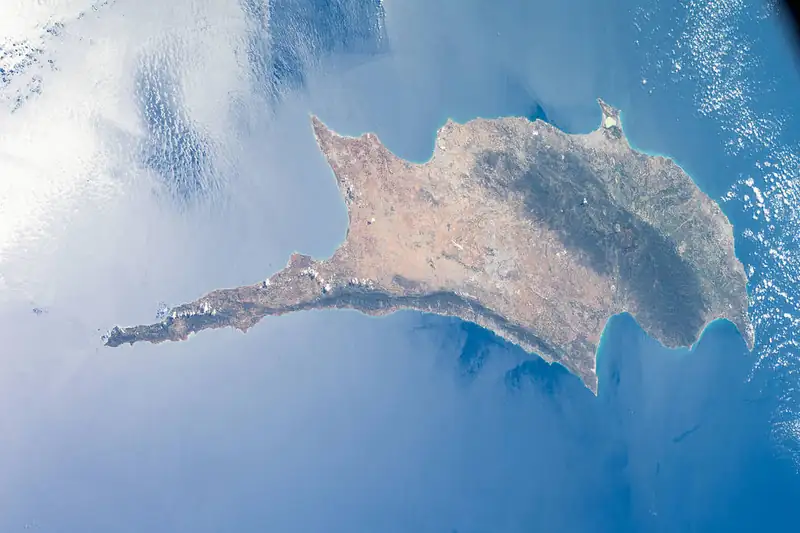
What do its articles say?
| Article | What it provides (quotations are from the UN text) |
|---|---|
| I | Cyprus undertakes “to ensure the maintenance of its independence, territorial integrity and security”, not to take part “in any political or economic union with any State whatsoever”, and prohibits any activity promoting “either union with any other State or partition of the Island”. |
| II | Greece, Turkey and the United Kingdom “recognise and guarantee the independence, territorial integrity and security of the Republic of Cyprus”, and undertake to prohibit, as far as they are concerned, any activity aimed at union with another state or at partition. |
| III | Cyprus, Greece and Turkey respect the areas retained under United Kingdom sovereignty and guarantee Britain’s rights there. |
| IV | The three powers consult if the treaty is breached; if common action is impossible, each “reserves the right to take action with the sole aim of re-establishing the state of affairs created by the present Treaty”. |
| V | Entry into force on signature; originals deposited at Nicosia; registration with the UN under Article 102 of the Charter. |
Two features stand out when the text is read closely. First, the guarantee protects the whole of the Republic, its territorial integrity as well as its constitutional order, and it names partition as something the guarantors must prevent. Second, the word “intervention” does not appear in Article IV, and neither does any mention of military force. The article speaks of “action” with one permitted purpose: restoring the state of affairs created by the treaty.
Does Article IV allow a military intervention?
That is the question the treaty is most often asked to answer. The wording sets out a sequence. Breach of the treaty triggers consultation among the three powers. Only if “common or concerted action may not prove possible” does each guarantor keep a right to act, and the aim is limited to re-establishing the state of affairs the treaty created. That state of affairs includes a single, undivided Republic of Cyprus whose territorial integrity all three guarantors had promised to protect.
The record of what followed is set out in UN texts. On 20 July 1974 the Security Council, in resolution 353 (1974), adopted unanimously, demanded “an immediate end to foreign military intervention in the Republic of Cyprus”. It also said it was concerned about restoring “the constitutional structure of the Republic of Cyprus, established and guaranteed by international agreements”, and called on Greece, Turkey and the United Kingdom to negotiate. On 16 August 1974, resolution 360 (1974) recorded the Council’s “formal disapproval of the unilateral military actions undertaken against the Republic of Cyprus”.
Readers should note what the article does and does not claim. Nothing in the treaty text authorises division, and the Security Council did not treat the 1974 operations as an exercise of Article IV. Whether any given step met the treaty’s conditions is a legal question; the UN texts quoted here record the Council’s disapproval of the unilateral actions it addressed.
What did the UN say about the northern secession?
On 15 November 1983 the Turkish Cypriot authorities declared an independent state in the occupied north. Three days later, resolution 541 (1983), adopted by 13 votes to 1 with 1 abstention, “deplores” the declaration, considers it “legally invalid” and calls for its withdrawal. Its preamble finds the declaration “incompatible with the 1960 Treaty concerning the establishment of the Republic of Cyprus and the 1960 Treaty of Guarantee”.
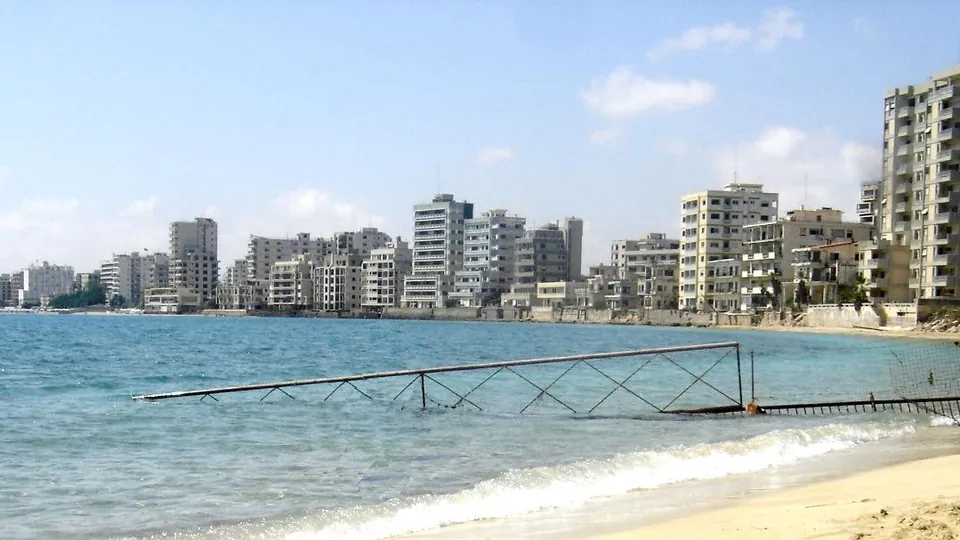
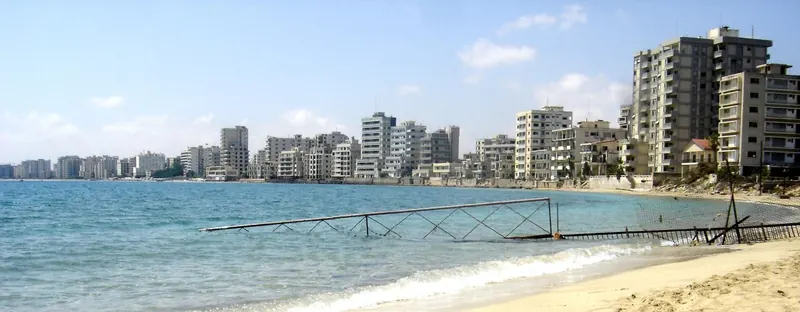
Resolution 550 (1984), of 11 May 1984, goes further. It condemns “all secessionist actions”, declares them “illegal and invalid”, repeats the call on all states not to recognise the purported “Turkish Republic of Northern Cyprus”, and describes attempts to settle any part of Varosha by people other than its inhabitants as “inadmissible”, asking for the area to be transferred to UN administration.
| Resolution | Date | What it says |
|---|---|---|
| 353 | 20 July 1974 | Demands an end to foreign military intervention; calls for negotiations among Greece, Turkey and the UK. |
| 360 | 16 August 1974 | Records formal disapproval of unilateral military actions against the Republic of Cyprus. |
| 541 | 18 November 1983 | Declaration of secession “legally invalid”; incompatible with the 1960 treaties. |
| 550 | 11 May 1984 | Condemns secessionist actions; no recognition of the purported state; Varosha settlement “inadmissible”. |
What are the human consequences recorded by international bodies?
The Committee on Missing Persons in Cyprus, a bicommunal body set up in 1981 with UN participation, states on its website that its task is to recover, identify and return the remains of 2,002 persons, 1,510 Greek Cypriots and 492 Turkish Cypriots, who went missing during the inter-communal fighting of 1963 to 1964 and the events of 1974.
The European Court of Human Rights has examined the situation in an inter-state case brought by Cyprus. In its 12 May 2014 press release the Court recalls that in its judgment of 10 May 2001 it found numerous violations of the Convention by Turkey arising from its military operations in July and August 1974, the continuing division of the island and the activities of the secessionist administration in the north. In 2014 the Grand Chamber ordered Turkey to pay EUR 30 million for the relatives of missing persons and EUR 60 million for the enclaved Greek Cypriot residents of the Karpas peninsula, sums to be distributed to individual victims under the supervision of the Committee of Ministers.
Why does the treaty still matter?
The Treaty of Guarantee is the legal text behind every discussion of Cyprus’s security arrangements, from guarantees to troop levels. Its Article II, which obliges all three guarantors to prohibit partition, is also the standard against which the UN Security Council measured the 1983 declaration. Greece and the Republic of Cyprus rely on that reading of the treaty and on the Security Council resolutions that follow it.
For the wider picture, see our explainers on Cyprus problem explained: 1960, 1974 and the UN buffer zone, The Turkey-Libya maritime memorandum explained and Treaty of Lausanne explained: borders, islands and minorities.
Sources: UN Treaty Series, vol. 382, No. 5475 (Treaty of Guarantee); UN Security Council resolutions 353 (1974), 360 (1974), 541 (1983) and 550 (1984), as published in the Council’s official resolution volumes; Committee on Missing Persons in Cyprus; European Court of Human Rights, Cyprus v. Turkey, press release ECHR 131 (2014).