Greece
On this day, November 18, 1940: the most critical day of the Greek counter-offensive at Morova and Ivan
On November 18, 1940, the fifth day of the first great Greek counter-offensive, the newly arrived 13th Division nearly broke at Morova. General Moutousis held the line, and Korçë fell on November 22.

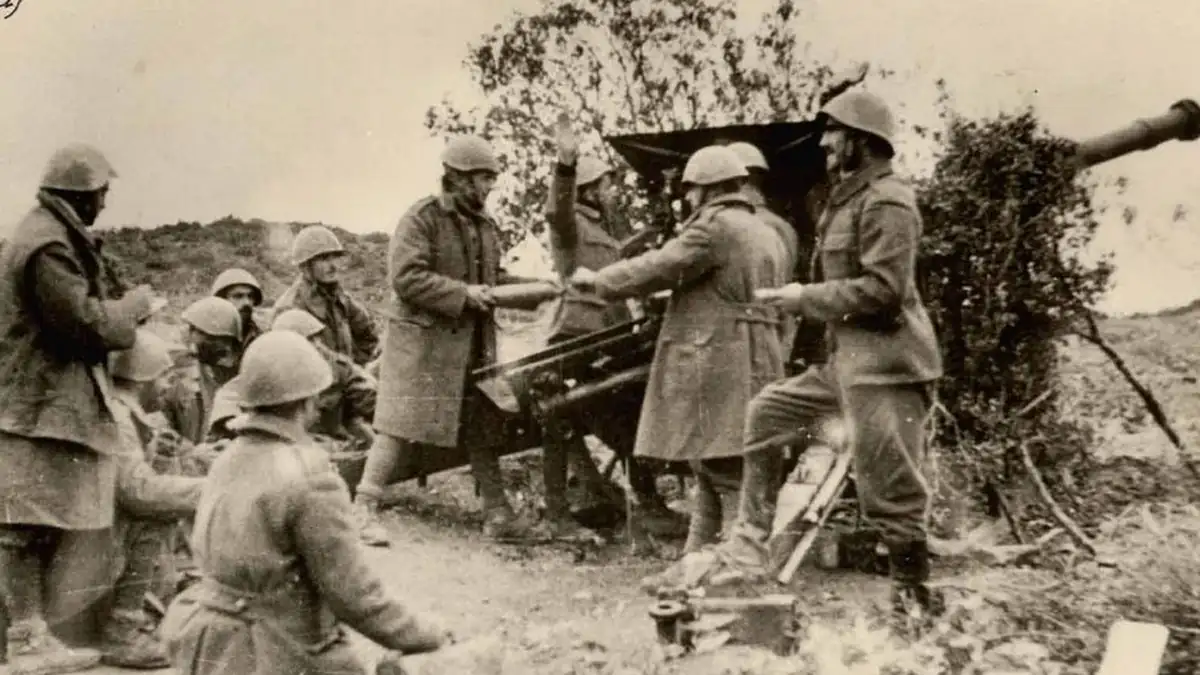
On November 18, 1940, the fifth day of the first great Greek counter-offensive of the war, the operation against the Morova (also Morava) and Ivan massifs reached its most dangerous point. Elements of the 13th Infantry Division, which had only just reached the front, panicked in an attack that lacked proper coordination, and the division came close to falling back. Its commander was replaced on the spot, and the new commander, Major General Sotirios Moutousis, forbade any further retreat and restored the front. Three days later the summit of Morova was in Greek hands, and on November 22 the 9th Division entered Korçë.
Why Morova
By November 13 the Italian invasion of Epirus and the Pindus had been repulsed, and the Italian troops had gone over to the defensive to wait for reinforcements. The plan for a Greek counter-attack in Western Macedonia had been prepared by the General Staff before the war and was finalised in the second half of September 1940, when, after the torpedoing of the cruiser Elli on August 15, an Italian attack was considered certain. Greek intelligence had correctly judged that the Italians would attack in Epirus and stay on the defensive in the Macedonian sector. That was where the Hellenic Army would strike, with a double aim: to lift the morale of the army and the country and to seize the road junction of Korçë.
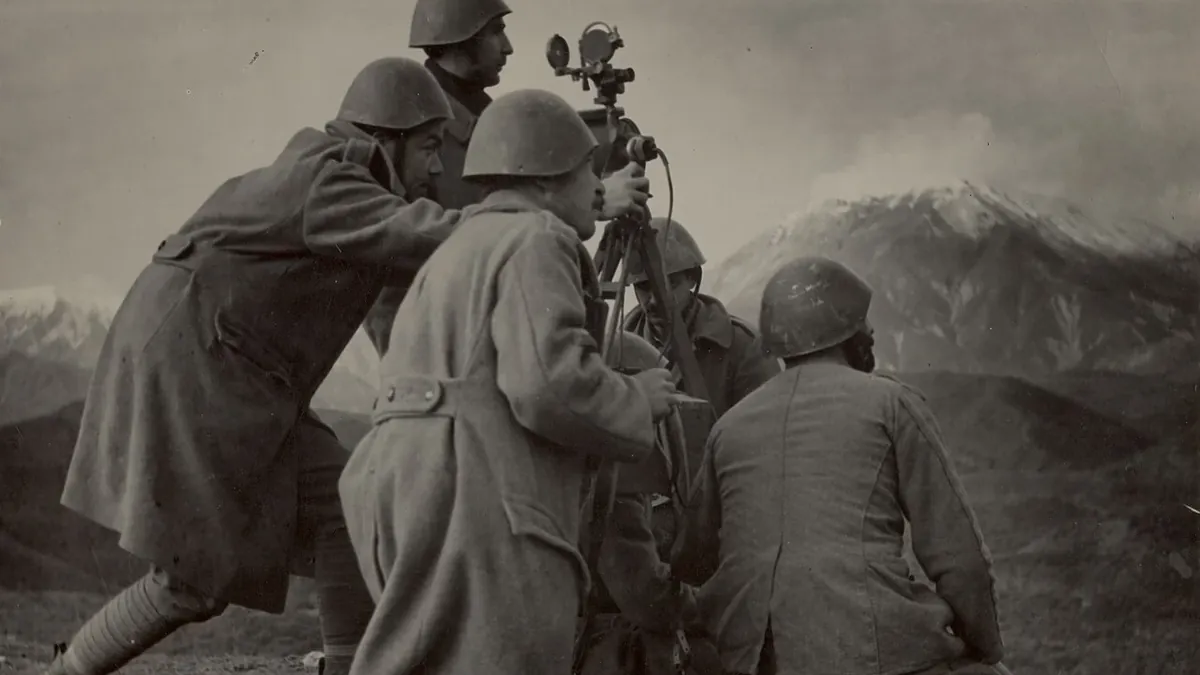
The terrain favoured the defender. The Devoll valley separated the Greek side from the Italian one. North of the valley rose Morova, a continuation of Grammos, with a maximum height of 1,808 metres, and behind it lay the Korçë plateau. Between Morova and the steep Ivan, 1,770 metres high, ran the Tsangoni pass, with a paved road towards the town. But the position had no depth. If the defence at Morova fell, there was no other line before Korçë and the whole plateau would have to be abandoned.
The forces and the plan
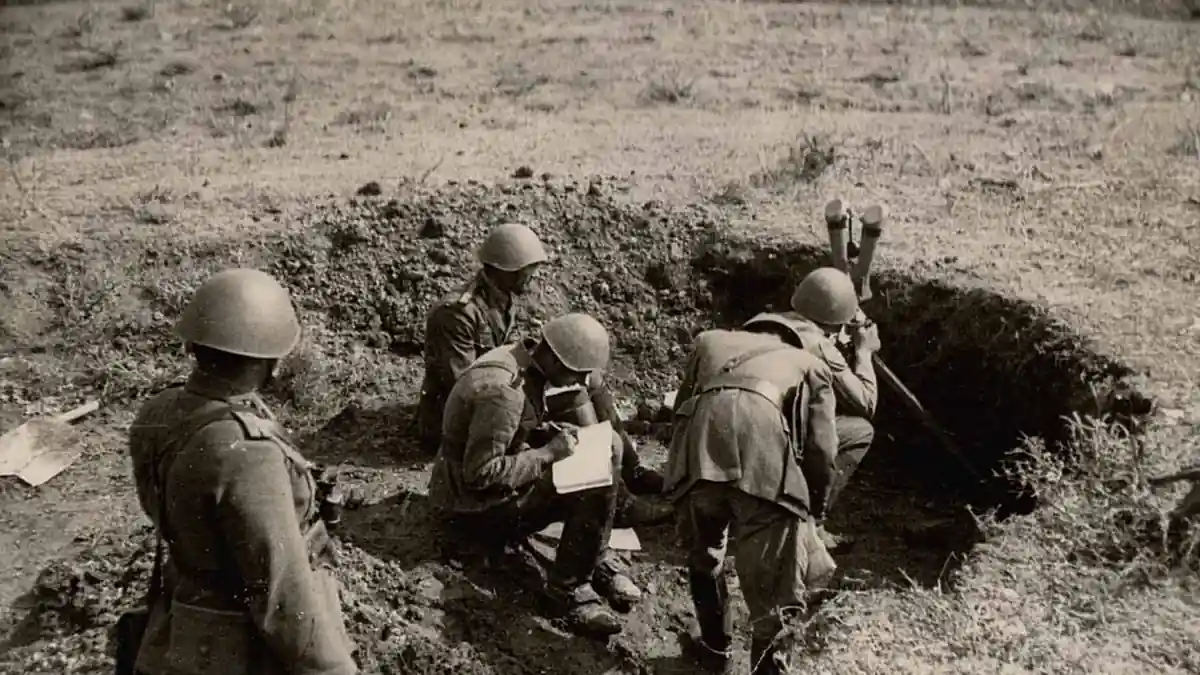
The attack was entrusted to III Army Corps under Lieutenant General Georgios Tsolakoglou, part of the Western Macedonia Army Section of Lieutenant General Ioannis Pitsikas, with the 9th, 10th and 15th Divisions. Opposite stood the Parma, Piemonte and Venezia divisions of the Italian XXVI Army Corps, soon reinforced by the 2nd Alpine Division “Tridentina”, the Arezzo division and 30 to 50 tanks of the armoured division Centauro. III Corps left five battalions to cover its rear and attacked with twenty battalions and 37 artillery batteries.
Because the Hellenic Army had neither tanks nor adequate anti-tank weapons, the plan avoided the valleys. Units would move along the ridgelines, where Italian tanks could not operate. For the same reason the main effort was not made at the relatively flat Tsangoni pass but on the left, along the mountain road from the village of Darza. The 15th Division would advance on the right towards Tsangoni, the 9th in the centre towards Morova and the 10th on the left, with the mission of penetrating by surprise and outflanking the Italian positions on the summit.
From surprise to crisis
III Corps had submitted a plan for a general attack as early as November 6, but Commander-in-Chief Alexandros Papagos judged it premature and set the start for November 14. The attack began on the morning of November 14 without an artillery preparation, precisely so as not to warn the enemy. The Italians were taken by surprise, and by November 16 the Greeks had opened breaches at several points along their line. On the first day of the attack the Royal Hellenic Air Force struck the airfields of Korçë and Gjirokastër with aircraft of the 32nd and 33rd Bomber Squadrons, while the Potez 25s of the 4th Army Cooperation Squadron flew reconnaissance and attacked Italian units.
On November 17 III Corps was reinforced with the 13th Division and on November 18 with the 11th. At the same time the 11th and 10th Divisions came under a new command, Division Group “K” (OMK) of Lieutenant General Georgios Kosmas. The 13th Division, re-formed under the mobilisation plan of December 1939 with its seat in Mytilene, was entering battle for the first time. On November 18, in an attack without adequate coordination, parts of it panicked and the whole division found itself on the verge of retreat. The division commander was removed on the spot, Major General Moutousis took over, ordered that nobody was to fall back, and the front stabilised. Moutousis was also among the Greek commanders at the battle of Lake Kastoria on April 15, 1941, against the German LSSAH brigade.
Three Blenheims over Përmet
The same day the air force scored, by coincidence, a significant blow against the Italian rear. Three Bristol Blenheims of the 32nd Bomber Squadron took off to bomb Gjirokastër. Because of heavy cloud over the area, one of the aircraft dropped its bombs on Përmet, where the Italians had gathered large quantities of ammunition, fuel and supplies. The depot burned and exploded for three days and nights. It was a loss for an army that already had difficulty getting supplies through Albania’s two ports of limited capacity, Vlorë and Durrës.
The summit and Korçë
With the 13th Division’s front restored, the pressure continued. From November 19 to 21 Greek forces took the summit of Morova. The Italians, fearing encirclement and being cut off, withdrew during the night towards the Devoll valley, and on November 22 the 9th Division entered Korçë. The same day Henschel Hs 126 aircraft spotted an eight-kilometre column withdrawing from Korçë towards Pogradec, and 15 Potez 630, Blenheim and Fairey Battle bombers destroyed it. By November 27 the Western Macedonia Army Section had taken the whole plateau, at a cost of 624 dead and 2,348 wounded. More than 1,000 Italians were taken prisoner in the battle. Further south, II Corps crossed the border and took Ersekë on November 21 and Leskovik the next day, and by November 23 I and II Corps had driven the Italians out of Greek territory.
The second phase of the war, from November 14, 1940 to January 6, 1941, was the “great general counter-offensive” that carried the Hellenic Army across the whole Albanian theatre of operations, to Korçë, Përmet, Saranda, Gjirokastër and Himara, as the Hellenic Army General Staff history page notes. At Morova, November 18 was its most critical day.
The success had international resonance. An American newspaper of the day called it the first real defeat suffered by Axis land forces, and in London the new strategic picture in the Mediterranean after the Italian retreat was analysed. On November 23, under pressure from Marshal Badoglio and General Roatta, Mussolini withdrew his October order to demobilise part of his army. The overall picture of the war from the Pindus to Kleisoura is in our analysis of the Greco-Italian War of 1940–41.
Frequently asked questions
What happened at Morova on November 18, 1940? The newly arrived 13th Division wavered in an attack without adequate coordination and nearly fell back. With the change of commander and Major General Moutousis’s order that nobody was to retreat, the front held and the attack continued to the summit of Morova.
When were Morova and Korçë taken? The summit of Morova was taken on November 19–21, 1940, and the 9th Division entered Korçë on November 22, 1940.
What were the Greek losses up to the capture of the Korçë plateau? By November 27, 1940, when the whole Korçë plateau had been taken, the Western Macedonia Army Section had 624 dead and 2,348 wounded.
Why did the Greeks move along the ridgelines? The Hellenic Army had no tanks or adequate anti-tank weapons, while the Italians had tanks of the Centauro division. The units therefore avoided the valleys and moved through the mountains.