Greece
The Greco-Italian War of 1940-41: how the Greek Army stopped and threw back the Italian invasion, from Pindus to Kleisoura
How the Hellenic Army, outnumbered and short of tanks and aircraft, stopped the Italian invasion at Kalpaki and Pindus, took Korytsa and held through the winter of 1940-41: the first Allied land victory over the Axis.

The “No” of October 28, 1940 became a victory because the Hellenic Army won the first two weeks of the war, exactly where Italy expected a quick stroll. The diplomatic side of that day, with the ultimatum Italian Ambassador Emanuele Grazzi delivered to Ioannis Metaxas at 3 a.m., is already documented through the reports of American diplomats. This article follows the war in the field: how a country with a smaller army, few tanks and very few aircraft stopped the invasion on the borders of Epirus and Pindus, went on the counter-offensive inside Albanian territory and endured a winter of war in the mountains. It was the first land defeat suffered by an Axis force in the Second World War, and the reasons for it matter for defence thinking today.
Kalpaki and Pindus: the first two weeks of the Greco-Italian War
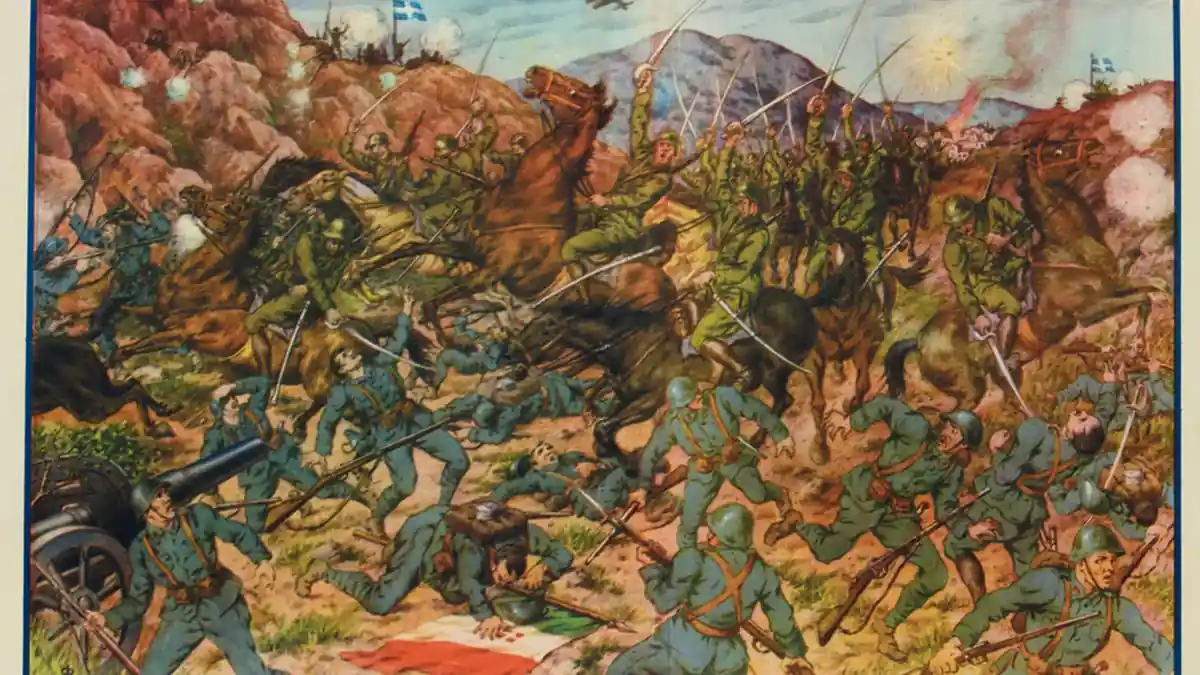
The Italian attack began at 5:30 a.m. on October 28 from Albania, before the ultimatum’s deadline had even expired. The main weight fell on Epirus, aiming at Ioannina, while the 3rd Alpine Division “Julia” moved through Pindus toward Metsovo, to cut Epirus off from Macedonia. The 8th Infantry Division under Major General Charalambos Katsimitros chose to fight on the Elaia–Kalamas line, centred on Kalpaki, rather than fall back deeper. There the Italian attacks, with infantry, artillery and armour of the “Centauro” Division, stalled against fortified positions, anti-tank obstacles and terrain that gave tanks no room to manoeuvre. The light Italian CV-33 tankettes, designed for fast movement, bogged down in the mud and ravines of the Kalamas.
Pindus was even more critical. The Pindus Detachment of Colonel Konstantinos Davakis, a small force facing an entire alpine division, fell back fighting and delayed “Julia” long enough for reinforcements to arrive. Davakis was seriously wounded on November 2, but the Italian advance, which reached Vovousa and Samarina, had spread across rugged mountains without a secure supply line. Infantry and cavalry units that climbed up from Thessaly and Macedonia counter-attacked from the flanks, and within about two weeks “Julia” was forced to withdraw with heavy losses in dead and prisoners. On the same trails, the women of Pindus and Epirus carried ammunition, food and wounded where trucks could not reach.
The Greek counter-offensive: Korytsa, Argyrokastro, Himara, Kleisoura
From November 14 the Hellenic Army, under Commander-in-Chief Alexandros Papagos, went on the offensive. The Western Macedonia Army Section struck the Morava and Ivan massif that protected Korytsa, and on November 22, 1940 Greek units entered Korytsa, the largest Italian base in south-eastern Albania. Its capture gave the Greek Army stores, guns and vehicles gathered for the invasion, and it was the first news that made Europe grasp that the war had changed direction.
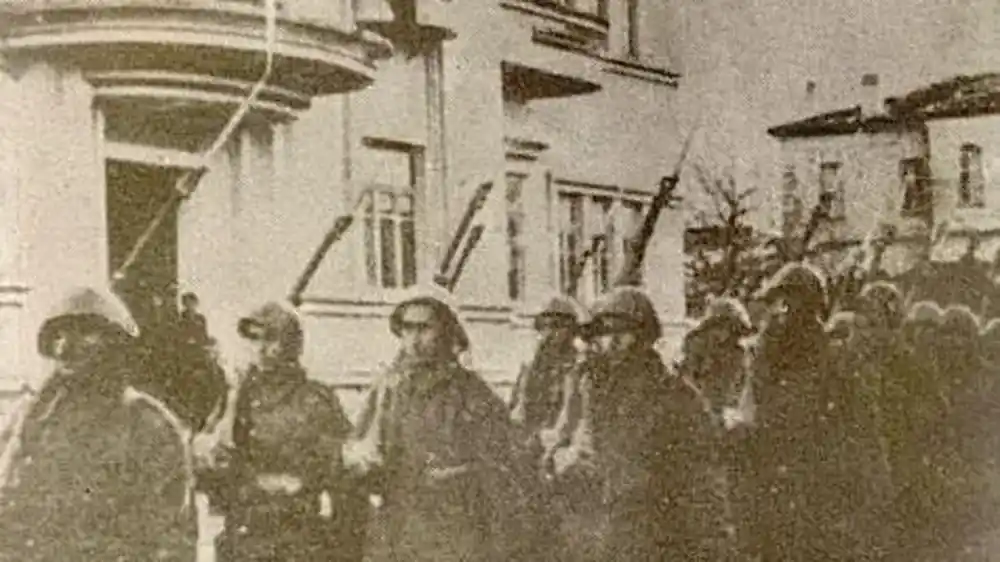
The advance continued along the whole front. Agioi Saranta fell on December 6, Argyrokastro on December 8 and Himara on December 22, while on January 10, 1941 the Kleisoura pass was taken, opening the road to the Vojussa valley and Tepelena. From there on the enemy was not only the Italian army, constantly reinforced with new divisions from Italy, but also winter. Greek units fought at altitudes above 1,500 metres, in snow and temperatures well below zero, with supplies arriving by mule and on men’s backs, and frostbite put thousands of men out of action, often more than fell to enemy fire.
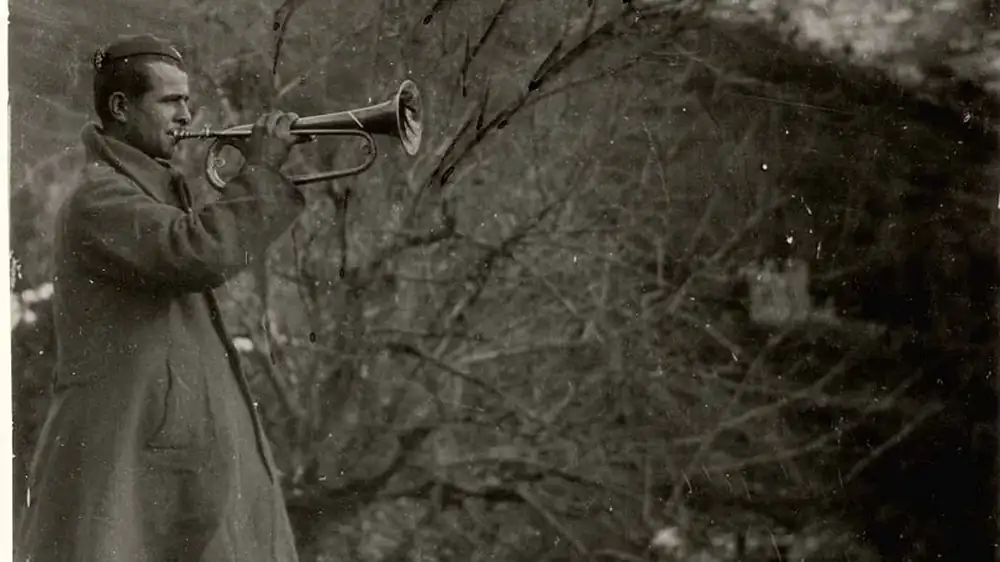
The Air Force and the Navy in the war of 1940
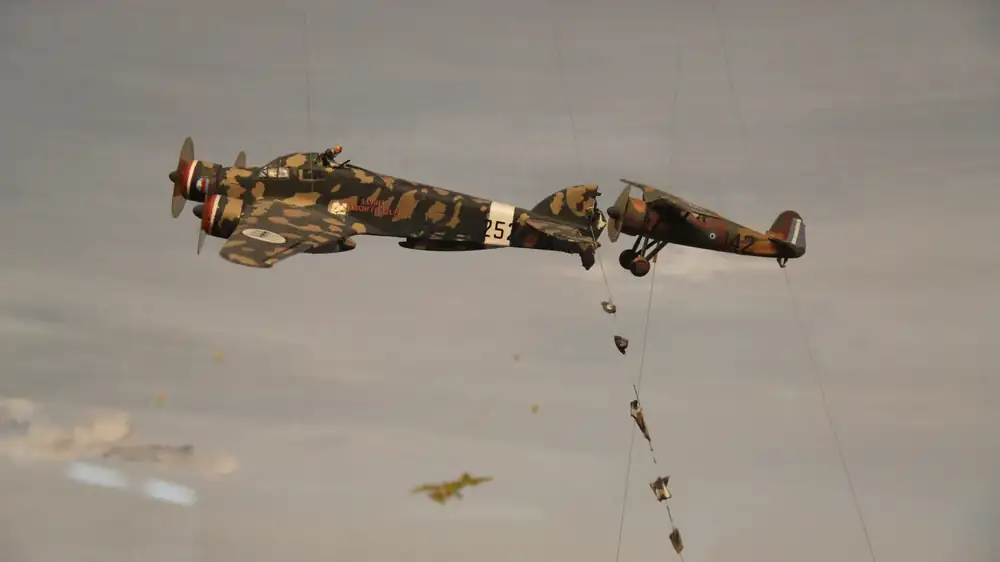
In the air the ratio was overwhelmingly in Italy’s favour. The Royal Hellenic Air Force had a few dozen front-line aircraft, such as the Polish PZL P.24 fighters and the French Bloch MB.151, against hundreds of Italian aircraft. Even so, the fighter squadrons fought over the front and the cities, and on November 2, 1940, Sub-Lieutenant Marinos Mitralexis, out of ammunition, struck the tail of an Italian bomber over Thessaloniki with the propeller of his PZL and brought it down, then landed near the wreckage and captured members of the crew. From November, squadrons of the Royal Air Force also fought alongside the Greeks.
The Navy had a less spectacular but decisive task: to carry mobilised units and supplies safely from southern Greece to the ports feeding the front, despite Italian superiority at sea. At the same time destroyers made night raids in the Straits of Otranto, through which the Italian convoys to Albania passed, and submarines attacked Italian transports in the Adriatic. The submarine “Proteus” sank the Italian transport “Sardegna” on December 29, 1940 and was lost the same day with all her crew. The memory of that Navy begins with the cruiser “Elli” at Tinos, remembered again this week, which was torpedoed two and a half months before the war.
The spring offensive of 1941 and the German invasion
Mussolini wanted to save his prestige before Germany intervened. On March 9, 1941, with Mussolini himself present at the front, the Italian army launched its spring offensive in the central sector between Aos and the Vojussa, with the weight on Height 731 and the heights of Trebeshina. The Greek units, exhausted by the winter, held their positions against repeated waves of infantry and artillery, and after about two weeks of attacks Rome halted the operation without gaining any real ground. Height 731 has remained a symbol of the Greek defence ever since.
On April 6, 1941 Germany invaded Greece from Bulgaria. The forts of the Metaxas Line, the best known being Rupel, resisted for days against one of the most powerful military machines of the age, but the rapid German thrust through Yugoslavia threatened to encircle the army still in Albania. The Hellenic Army was not defeated by Italy: it was forced to stop fighting when a second major power entered the war from its rear. The fighting that followed is covered in our explainer on the Battle of Crete.
What the Epic of ’40 teaches today
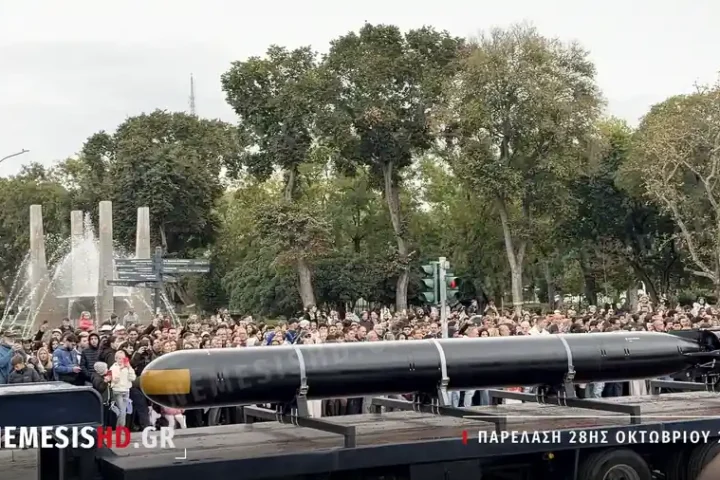
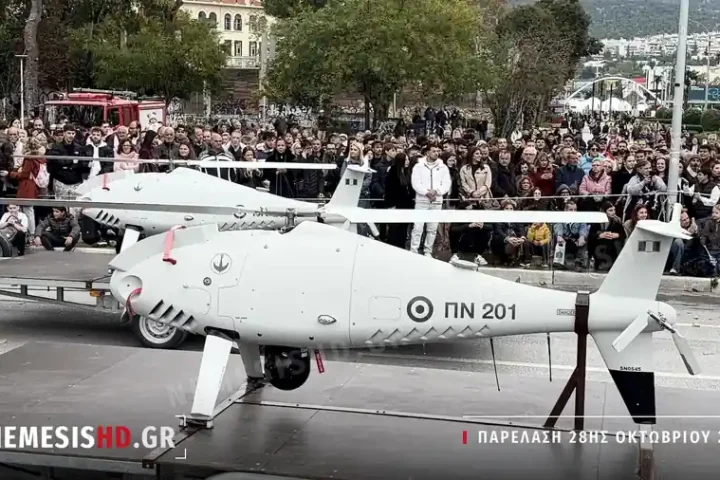
1940 was not won by heroism alone, although heroism was everywhere. It was won because mobilisation worked fast, defensive positions had been prepared, the terrain had been studied and commanders took initiative where the plan was not enough, like Katsimitros at Kalpaki and Davakis in Pindus. Italy, by contrast, underestimated its opponent, attacked at the start of winter with inadequate forces and relied on equipment unsuited to the terrain. They are the same lessons that return every time Greece is called to answer a threat, as seen at the October 28 parade in Thessaloniki: a smaller state can stand against a stronger adversary only if it is prepared before the first day of the war.
Frequently asked questions
When did the Greco-Italian War begin? On October 28, 1940. The Italian ambassador handed the ultimatum to Ioannis Metaxas at 3 a.m. and the Italian attack from Albania began at 5:30 a.m., before the deadline expired.
Where was the Italian invasion stopped? In Epirus, on the Elaia–Kalamas line centred on Kalpaki, where the 8th Infantry Division defended, and in Pindus, where Konstantinos Davakis’s Pindus Detachment and the reinforcements that followed forced the “Julia” Division to withdraw.
When was Korytsa taken? Greek forces entered Korytsa on November 22, 1940. Agioi Saranta followed on December 6, Argyrokastro on December 8, Himara on December 22 and Kleisoura on January 10, 1941.
What was the Italian spring offensive of 1941? The major Italian attack that began on March 9, 1941 with Mussolini at the front. The Greek units held their positions, mainly on Height 731, and the offensive stopped with practically no gains.
Who was Marinos Mitralexis? A sub-lieutenant of the Air Force who on November 2, 1940, out of ammunition, struck the tail of an Italian bomber over Thessaloniki with the propeller of his PZL P.24 and shot it down.