Land Forces
Who is the general Trump picked as US Army Chief of Staff: Christopher LaNeve
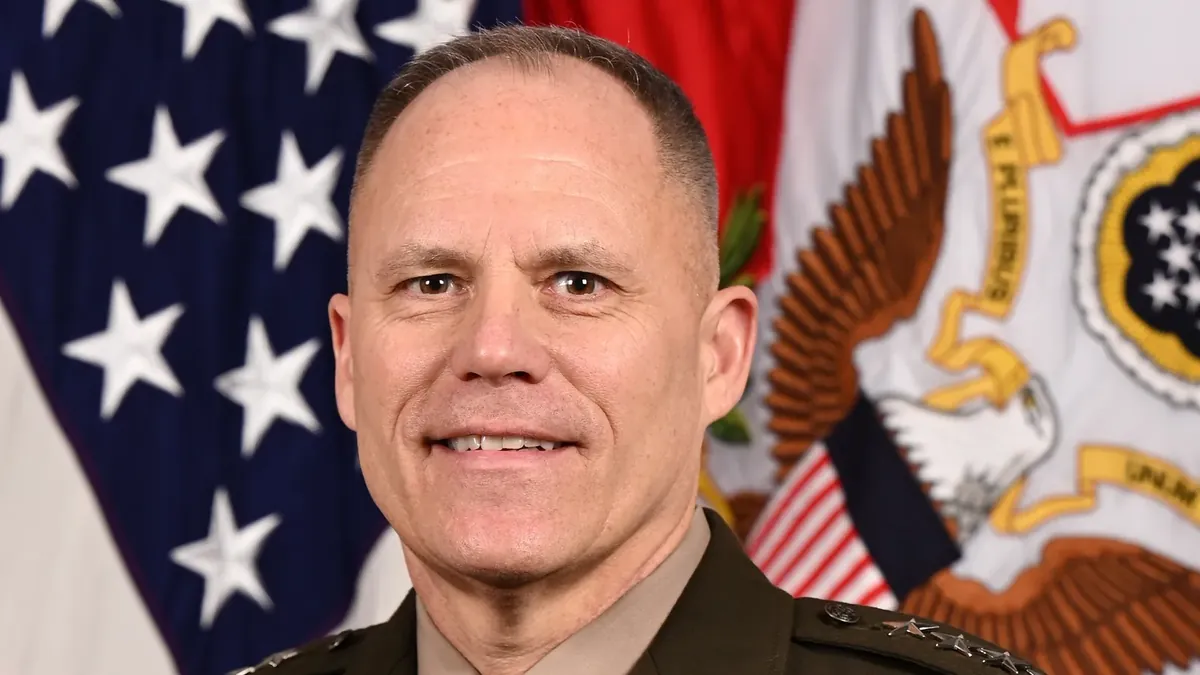
President Trump has formally nominated Gen. Christopher LaNeve, acting chief since April, as US Army Chief of Staff, and Lt. Gen. Marcus Evans as vice chief. The nominations go to the Senate Armed Services Committee.

US President Donald Trump has formally nominated Gen. Christopher LaNeve for Chief of Staff of the Army, the senior officer of the US Army. The Senate received nomination PN1509 on Monday, November 16 and referred it to the Armed Services Committee, and it became known on Tuesday, November 17. LaNeve has been performing the chief’s duties since April, when Defense Secretary Pete Hegseth unexpectedly removed Gen. Randy George without giving an explanation. With the same message to the Senate, the White House nominated Lt. Gen. Marcus S. Evans as Vice Chief of Staff of the Army, the post LaNeve himself holds.
“For 36 years I have served in the US Army, today as Vice Chief of Staff,” LaNeve said in a statement distributed by the Pentagon. “I am deeply honoured by the trust the President has shown by nominating me as Chief of Staff of the US Army and, if confirmed, I look forward to continuing to serve our soldiers, their families and our nation.” The 59-year-old infantry officer was commissioned a second lieutenant in 1990 through the Reserve Officer Training Corps (ROTC) programme of the University of Arizona. He commanded the 82nd Airborne Division and Eighth Army in Korea before becoming Hegseth’s senior military assistant. In February he was nominated for a fourth star and for the vice chief’s post.
Evans and LaNeve’s record as acting chief
Evans serves as special assistant to the commander of US Army Pacific (USARPAC). He previously commanded the 25th Infantry Division and served as chief of staff of US Special Operations Command (SOCOM). As acting chief, LaNeve issued the directive “How the Army Fights”, created a post for a head of autonomous systems programmes, and renamed the Futures and Concepts Command the Army Futures and Autonomous Systems Command, as Breaking Defense reports.
A confirmation hearing with tough questions expected
The confirmation hearing is expected to bring sharp questions in the Senate. Members of Congress, including Republicans, have expressed dissatisfaction with Hegseth’s running of the Pentagon and with the removal of experienced officers without justification. Hegseth recently survived an attempt to impeach him in the House of Representatives, which concerned in part his handling of the war with Iran. George’s dismissal was never officially explained, but the Guardian notes that the general had insisted on an inquiry into an unauthorised Army helicopter flight on March 28 near the home of the musician Kid Rock in Tennessee, which Hegseth blocked.
The timetable is tight. The current session of Congress ends in January and, if the process is not completed by then, the nomination will have to be considered by the new Congress, where Democrats will hold the majority after the midterm elections. Meanwhile the Army remains without permanent civilian leadership. Army Secretary Dan Driscoll has resigned, Adam Telle is performing the secretary’s duties and the White House has not yet nominated a successor.