Analysis
Analysis: Israeli Merkava Mk4 for Cyprus, how they would fare against Turkish occupation forces, and what the “no” to the Leopard 1A5 means for Greece
Analysis: The National Guard’s rejection of Greece’s Leopard 1A5 and its turn to Israeli Merkava tanks. How a Merkava Mk4 would compare with the Turkish M48A5T2 and Leopard 2A4 on the island, what it would cost, why the EU’s SAFE programme does not help, and what it means for Greece.

The National Guard’s “no” to Greece’s Leopard 1A5 tanks could easily be read as a cold shower for Athens. In reality it is the most candid admission Nicosia has made so far about its armour problem: a 105 mm tank, however well maintained, does not change the equation against a Turkey that keeps more than twice as many tanks in the occupied areas and has already shown that it can bring Leopard 2A4s to the island whenever it sees fit. The National Guard’s turn to Israeli Merkava tanks is the right military answer. The question is whether the Republic of Cyprus can pay for it, and how quickly.
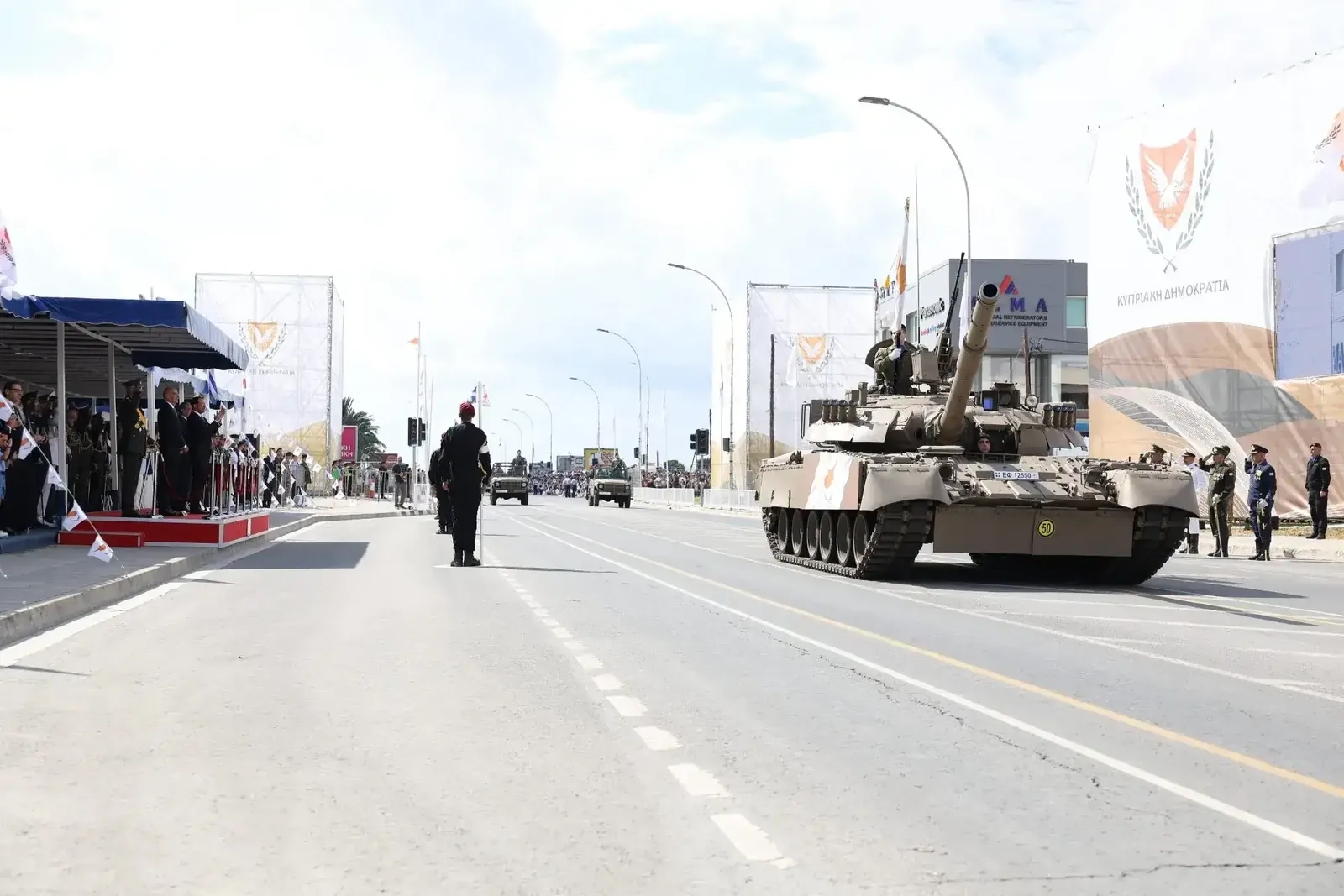
September turned the issue from a military request into a political priority. On September 10 the Merkava was discussed at the meeting between Nikos Christodoulides and Israeli President Isaac Herzog in Nicosia, where, according to Cyprus Mail, the two sides agreed to remain in contact over the equipment Cyprus could acquire, “such as the Merkava tanks being discussed as an alternative to Greece’s aging Leopard 1A5 units”. On September 25 the 2027 state budget listed “main battle tanks” among the new armament programmes, and the same day Defence Minister Vasilis Palmas, confirming the modernisation of the old AMX-30s, admitted: “At this moment there is no alternative solution as far as our tank fleet is concerned” (Cyprus Mail). No contract for Merkava has been signed. Nicosia is asking for Mk3 and Mk4 tanks, while within the Israeli government, according to Phileleftheros, opinions are divided: some agree to the transfer, others want the tanks to stay in the Israeli army’s reserves.
As NemesisHD has revealed, in previous years the National Guard went to Israel to inspect the Merkava Mk4 up close.
Why the Leopard 1A5 did not pass even as a stopgap
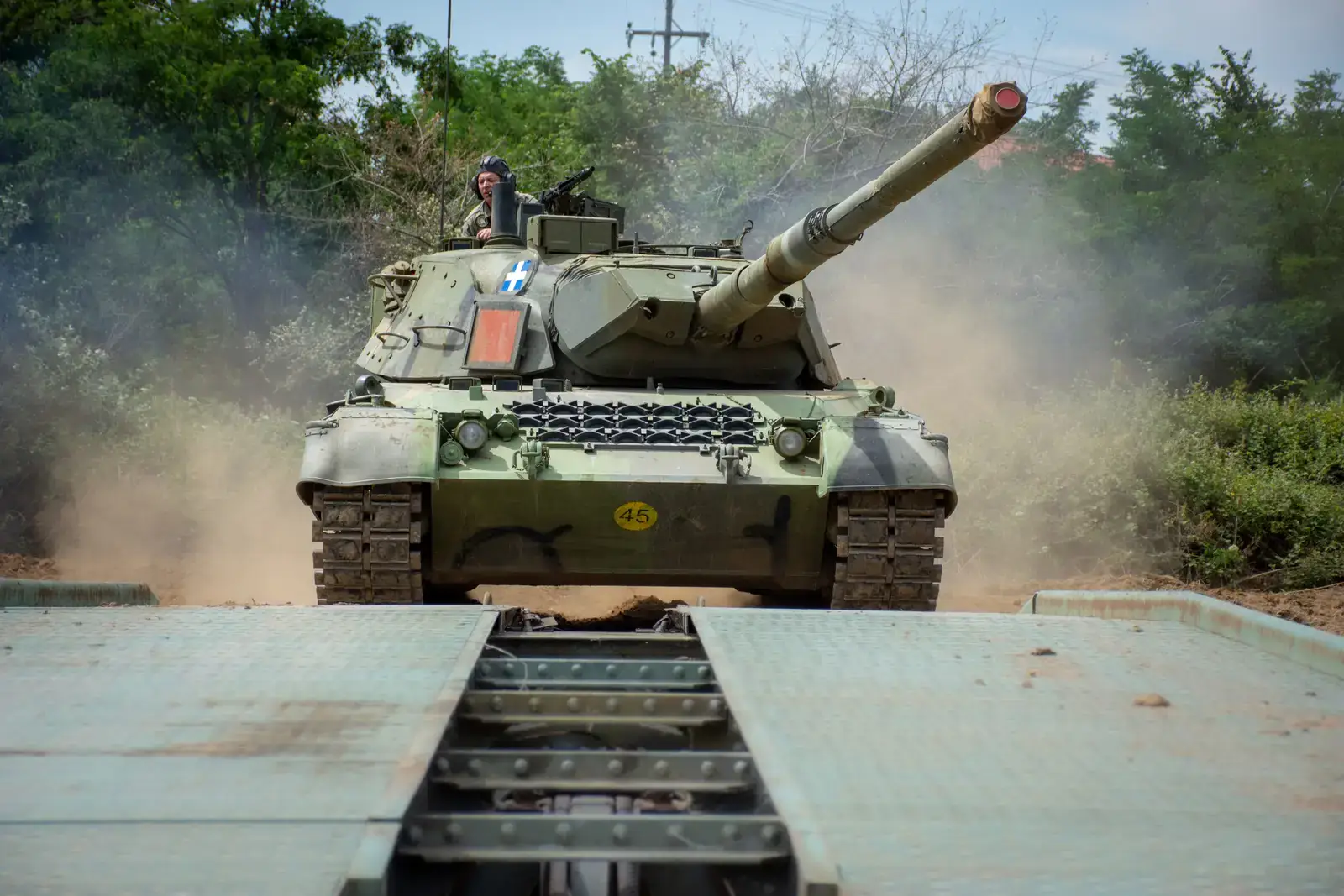
In April, Athens and Nicosia appeared to be nearing an agreement for 75 to 90 Leopard 1A5, enough for three tank battalions (epilarchies), with an armour upgrade before delivery. NemesisHD had assessed the proposal in detail at the time, along with the Leopard 1HEL upgrade offered by the Greek company EODH. On June 7, Phileleftheros revealed that a Cypriot team had inspected the tanks Athens was willing to hand over and found that they cannot meet the National Guard’s needs “even as an interim solution”. In a later report the paper added that the option was also judged uneconomical, because of the cost of bringing the vehicles back to a modern operational standard.
The rejection has a clear operational logic. The Leopard 1A5 carries the 105 mm rifled L7 gun, the same calibre as the Turkish M48A5T2 that form the backbone of the occupation forces. The National Guard would therefore have acquired a tank of the same level as its adversary, without the qualitative leap needed to offset the numerical deficit. The National Guard General Staff (GEEF) wants a 120 mm gun, modern armour and, ideally, an active protection system (APS), which detects and intercepts anti-tank missiles before they hit the vehicle: in other words a tank that can survive on the battlefield of 2030, and not merely fill the battalions. As we wrote in our previous article on the Merkava, Athens had said it could send Leopard 1A5s even without modernisation if a pressing problem arose with the T-80Us. That fallback remains open, but now as an emergency solution rather than a plan.
For Greece the “no” has a second reading. The Leopard 1A5s return to the Hellenic Army General Staff (GES) with no destination, at a time when the Army is restructuring its armoured force, and, in our assessment, the Leopard 1HEL modernisation proposal loses its most natural first customer. No official decision on their fate has been announced.
The benchmark is not the M48 but the Leopard 2A4 of Kythrea
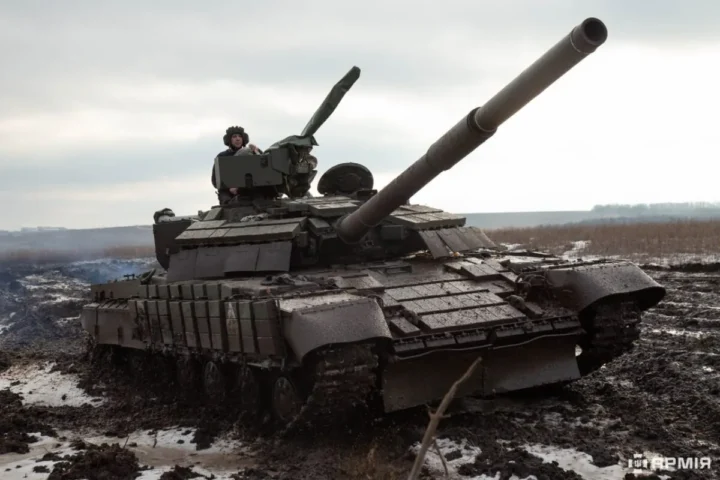
The Cyprus Centre for Strategic Studies calculates, in a May 2026 report, that Turkish forces in the occupied areas have about 2.1 tanks for every National Guard tank and 3.6 soldiers for every National Guardsman. That bulk rests mainly on the M48A5T2, the Turkish modernised version of an American tank designed in the 1950s. If the threat ended with these, even the AMX-30s, given a serious modernisation, could hold a defensive line.
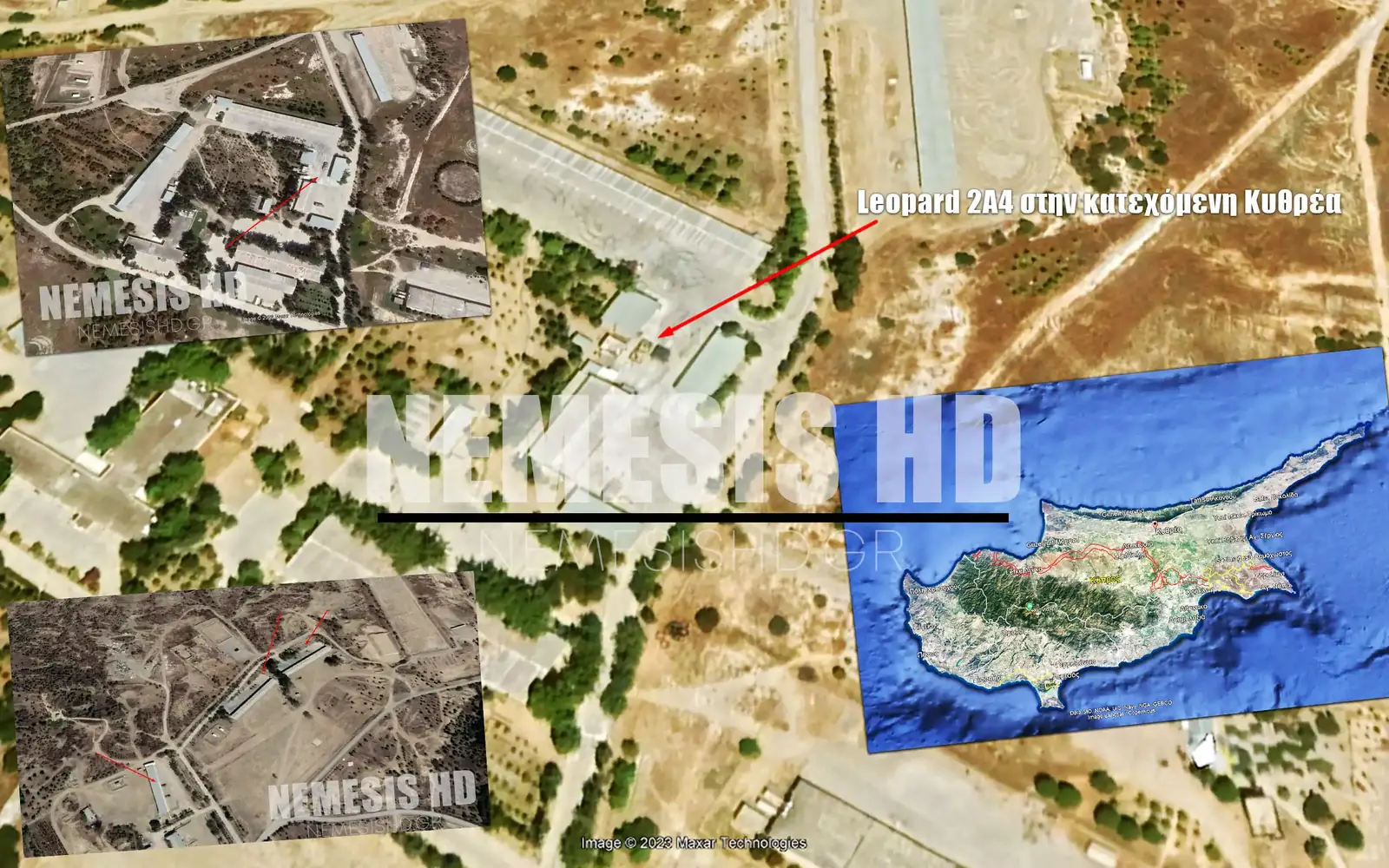
The real question, however, is what Turkey can bring over from Asia Minor. There is a precedent: 42 Leopard 2A4s were transferred to occupied Kythrea from 2018 and withdrawn in March 2021, when they were replaced by M48A5T2s (see the history). Ankara thus showed that it can upgrade its armoured presence on the island qualitatively within a short time, and withdraw it when it does not need it. The same May report notes that the occupied Lefkoniko airfield serves as a hub for Turkish unmanned aircraft, including the Akinci, which means every Cypriot tank will also have to survive from above.
The tanks of the National Guard, the candidate replacements and the Turkish tanks in the occupied areas compare as follows (situation as of October 2026):
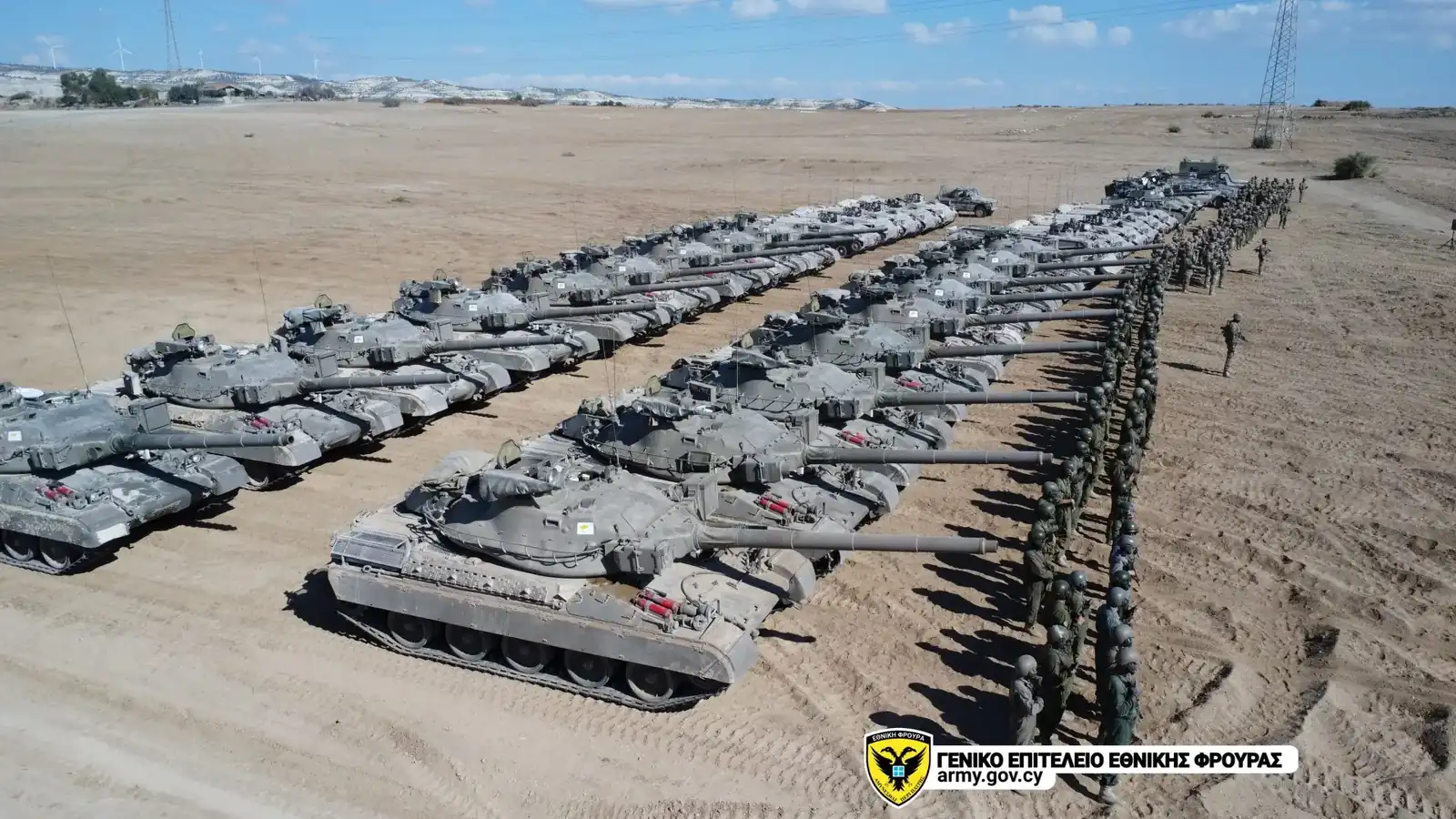
- T-80U/UK (National Guard): 125 mm smoothbore; about 82 in service, with difficult support because of sanctions on Russia.
- AMX-30B2 (National Guard): 105 mm rifled gun; limited upgrade (Palmas, September 25).
- Leopard 1A5 (Hellenic Army): 105 mm rifled gun (L7); rejected by the National Guard (June 2026).
- Merkava Mk3/Mk4 (Israel): 120 mm smoothbore; requested by Cyprus, no contract.
- M48A5T2 (Turkish army in the occupied areas): 105 mm rifled gun; the main body of Turkish tanks on the island.
- Leopard 2A4 (Turkey, Asia Minor): 120 mm smoothbore; in Kythrea 2018-2021, could return.
Merkava Mk4 and Barak: what it would bring to the National Guard and how it would fight
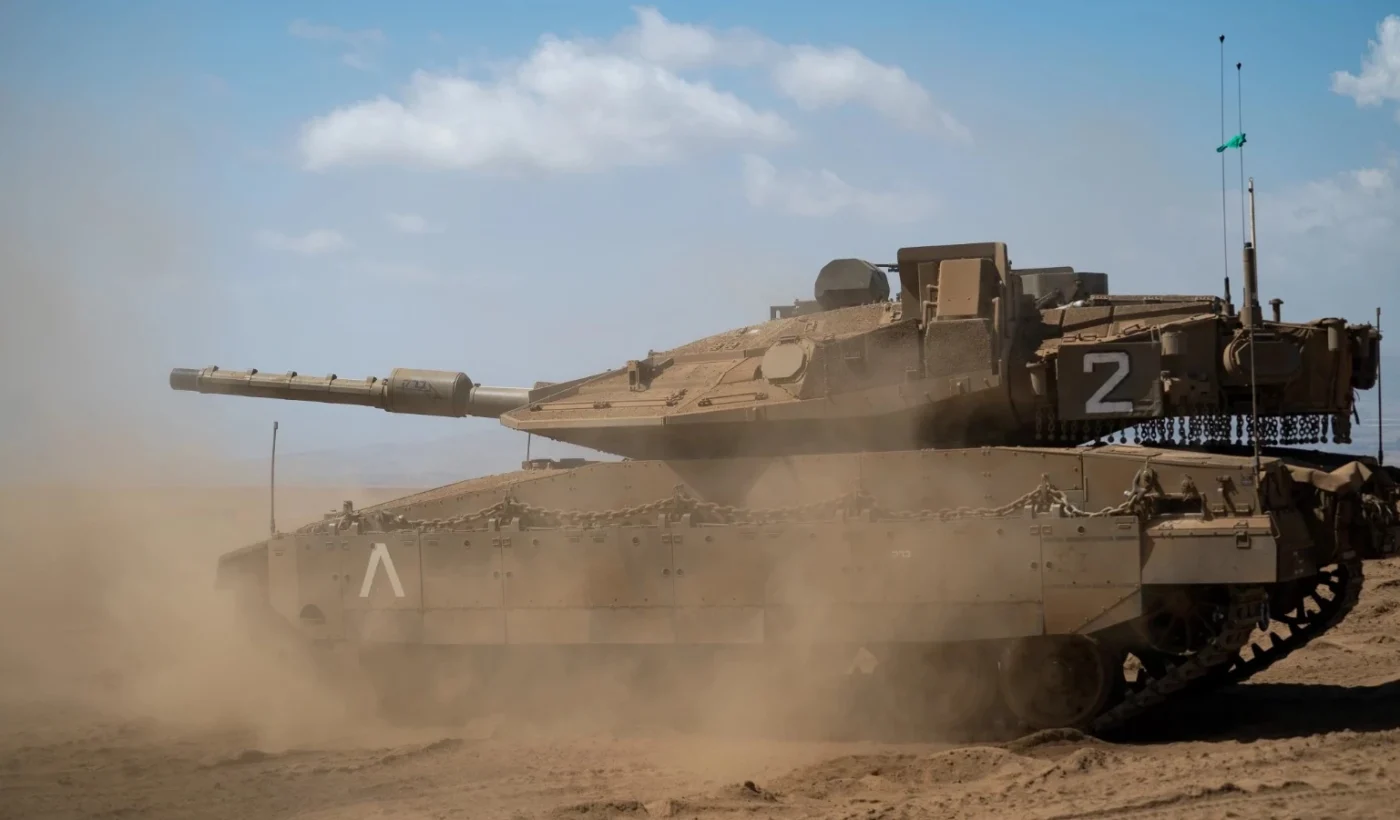
The first thing to clarify is which Merkava we are discussing. The most modern tank of the family is the Merkava Mk4 Barak (“Lightning”), presented by Israel’s Ministry of Defense in September 2023 and delivered first to the 52nd Battalion of the 401st Armored Brigade. As the Barak reaches units, the older Mk4s are moved from active-service battalions to the reserves. That is exactly the fleet Nicosia is asking for, and the one that, according to Phileleftheros, some in the Israeli government want to keep for reservists. In other words, the National Guard will most likely not get the Barak but the tanks the Barak replaces, which is why the difference between Mk3 and Mk4 matters more than it seems.
The versions relevant to the National Guard debate compare as follows:
- Merkava Mk3: in service since 1990; 120 mm MG251 smoothbore gun; 1,200 hp engine; no active protection in the basic configuration; classic sights; requested for Cyprus (second-hand).
- Merkava Mk4 / Mk4M: in service since 2004; 120 mm MG253 smoothbore gun, which also fires LAHAT; 1,500 hp engine; Trophy on the Mk4M; modern fire-control system; requested for Cyprus (second-hand).
- Merkava Mk4 Barak: in service since 2023; 120 mm MG253 smoothbore gun; 1,500 hp engine; Trophy; IronVision 360° helmet and AI-enabled sensors; under discussion for Cyprus.
The Mk3 carries the 120 mm MG251 smoothbore gun and a 1,200 hp engine, without an active protection system in its basic configuration. The Mk4 raises power to 1,500 hp and carries the MG253 gun, new modular armour and a fire-control system, while the Mk4M version adds Rafael’s Trophy. Our assessment is clear: for the National Guard only the Mk4 with Trophy justifies the cost. A Mk3 without active protection would be better than the M48s, but would not solve the problem of drones and modern anti-tank weapons, which is the real problem of today’s battlefield.
The engine is at the front, as an extra layer of protection for the crew, and the rear door allows ammunition resupply and casualty evacuation without the crew leaving the vehicle, which is valuable in a prolonged defence from prepared positions, as described in our analysis of the Merkava.
Phileleftheros adds the similarity of the terrain in Cyprus and Israel and the proximity, which allows spare parts and ammunition to reach a Cypriot port immediately and a broken-down tank to be repaired in Israel within a few weeks. On the open plain of the Mesaoria, the Merkava can also fire the IAI LAHAT anti-tank missile from its gun, which according to the manufacturer hits targets up to 8 kilometres away with laser guidance, even with the target illuminated by a drone or another vehicle.
Against the M48A5T2, the superiority of an Mk4 is overwhelming in armour, fire control and mobility. The real test is the Leopard 2A4, if Ankara sends it back to the island. Both tanks carry a 120 mm gun, but the Turkish 2A4 is a design of the 1980s without active protection, with losses to anti-tank weapons in Syria, in the battle of al-Bab in 2016 and 2017. An Mk4 with Trophy would give the National Guard a tank superior to the M48A5T2 and superior to a Turkish Leopard 2A4.
The big threat, however, comes from above. Turkey has used the occupied Lefkoniko airfield for unmanned aircraft since December 2019, when the first Bayraktar TB2 landed there, and the Akinci appeared later. Trophy was designed against anti-tank missiles and rockets: its first operational interception took place in March 2011 on the Gaza border, and in 2014 it intercepted anti-tank missiles in Operation Protective Edge. In October 2023, however, Hamas destroyed Merkavas with grenades dropped from commercial drones, falling vertically over the vehicle, where the system had a blind spot. Rafael has since upgraded Trophy against low-altitude threats, while Israeli units have fitted cages over turrets. As we have analysed for tanks against drones and anti-tank weapons, and as Lebanon showed, where not even the Merkava was invulnerable to FPV drones, the Merkava will need its own counter-drone umbrella.
The cost: EUR 10 million for a Merkava Mk4, outside SAFE
The cost per vehicle for the upgraded Merkava Mk4 version is expected to run above EUR 6 million, an amount that may include Trophy, ammunition, spares, training and technical support. Phileleftheros puts it at close to EUR 10 million. By way of indication, in 2023 an Israeli army Merkava 4M cost about $3.5 million, which strengthens the estimate that the Cypriot price includes a full package. NemesisHD had learned of an indicative price above EUR 6 million, depending on configuration, in an earlier report. For comparison, in December 2024 Czechia signed a contract of about EUR 161 million for 14 refurbished Leopard 2A4s with ammunition and support, which is about EUR 11.5 million per tank. A Merkava Mk4 with Trophy at the price of a used Leopard 2A4 is, by that measure, an extremely advantageous purchase, offering similar capabilities against much more expensive European offers.
The bill remains unforgiving for Cypriot proportions, however. One tank battalion needs about 40 tanks, so at EUR 10 million a tank the cost reaches about EUR 400 million. Politis reported that appropriations for the purchase of weapon systems amount to EUR 430.15 million in 2027 and EUR 425.15 million in each of 2028 and 2029, about EUR 1.28 billion over the three years, with the detailed breakdown remaining classified. A single battalion of Merkavas would absorb almost the whole annual allocation, which must also cover attack helicopters and anti-tank weapons. It is no coincidence that Christodoulides told Nikos Dendias on October 1 that the largest budget increase concerns defence.
Here lies the real trap. Cyprus has access to up to EUR 1.18 billion from the European SAFE programme, whose rules cap the value of components from non-EU countries at 35%. The French Jaguar and Griffon that the National Guard is considering fit comfortably within that framework, the Merkava does not, and the purchase, if it happens, will be paid from the Ministry of Defence’s armament budget. Cheap European money thus pushes Nicosia towards wheeled vehicles, while the tank it really needs has to be paid for in cash. That is why we estimate that the number of Merkavas eventually acquired will be decided more by the funds that are released than by operational requirements. The move from the 125 mm of the T-80U to the 120 mm of the Merkava will require new ammunition stocks, crew retraining and adaptation of infrastructure. The T-80Us, according to NemesisHD information, will most likely be sold to Serbia. The National Guard’s “Armatiada” (tank saga) still has a long way to go.
Time is no more friendly. The contracts are expected to start being implemented from 2028 onwards, because of demand on the global market, while the delay lies with Israel and the extensive use of Merkavas by the Israeli army, which has manned all available tanks, even with reserve units. That also explains Palmas’s decision to modernise the AMX-30B2s with thermal cameras so that, in his words, they “can continue to serve the needs of the National Guard until we renew our tank fleet”. It is a limited upgrade, with thermal cameras and individual systems: of the EUR 25 million that had been reported (by the daily Alithia), a little over EUR 4 million concerns the tanks themselves.
What Greece gains from an Israeli tank in Cyprus
Nicosia’s choice of an Israeli tank is not a Greek defeat but a consequence of a strategy Athens itself follows. Greece is investing in Israeli systems for the Achilles Shield, Cyprus already has the Barak MX, and in December 2025 the three countries signed in Nicosia a trilateral military cooperation plan for 2026, with joint exercises, training and exchange of know-how on drones and electronic warfare, according to the Israeli army spokesman. The discussion of the Merkava at heads-of-state level is the first time this axis touches the heavy land systems of the Army and not only air defence and naval cooperation.
The benefits for Athens are specific. The Merkava’s 120 mm smoothbore gun has the same calibre as the Leopard 2s of the Hellenic Army, which opens, at least in theory, a path to cooperation on ammunition. A modern Cypriot armoured corps strengthens the planning of the Unified Defence Area and the mission of ELDYK, the Greek force in Cyprus. And above all, Greece will not have to take tanks away from its own units, which with Leopard 2s would have left gaps at Evros. The “no” to the Leopard 1A5 closes a chapter that would not have solved Cyprus’s problem and opens another, more expensive but militarily sound, in which Athens has every reason to stand beside Nicosia.
Frequently asked questions about Cyprus’s Merkava
Has Cyprus bought Merkava tanks?
Not yet. No contract has been signed. Nicosia is asking Israel for Merkava Mk3 or Mk4 tanks, the issue was discussed with President Herzog on September 10, 2026, and the 2027 budget provides funds for “main battle tanks”. The major armament programmes are expected to be implemented from 2028.
What is the most modern Merkava?
The Merkava Mk4 Barak, presented in September 2023, with an IronVision helmet for 360-degree vision, AI-enabled sensors and Trophy. Cyprus is not asking for the Barak but for second-hand Mk3 or Mk4 tanks, which move to the Israeli reserves as the Barak arrives.
Why did the National Guard reject Greece’s Leopard 1A5?
According to Phileleftheros (June 7, 2026), a Cypriot team inspected the tanks in Greece and judged that they do not meet the National Guard’s needs even as an interim solution, while upgrading them was judged uneconomical. In addition, the 105 mm gun is the same calibre as the Turkish M48A5T2 and would not provide a qualitative advantage.
How much does a Merkava Mk4 cost?
According to Phileleftheros, close to EUR 10 million per vehicle for the upgraded Mk4 version, an amount that may include Trophy, ammunition, spares and training. NemesisHD had learned of an indicative price above EUR 6 million, depending on configuration. For comparison, Czechia paid about EUR 11.5 million per refurbished Leopard 2A4 in 2024.
Why can’t the Merkava be financed from SAFE?
The European SAFE programme, to which Cyprus has access of up to EUR 1.18 billion, caps the value of components from non-EU countries at 35%. An Israeli tank does not fit within that limit and has to be paid for from the national budget.
What tanks does Turkey have in the occupied areas?
Mainly M48A5T2s with a 105 mm gun. From 2018 until March 2021, 42 Leopard 2A4s were also deployed in Kythrea. According to the Cyprus Centre for Strategic Studies, the tank ratio is about 2.1 to 1 in Turkey’s favour.
What will happen to Greece’s Leopard 1A5?
There is no official decision. They remain with the Hellenic Army and could be sent to Cyprus as an emergency solution if a problem arises with the T-80Us.