Defense Industry
EPC2: Fincantieri, Navantia and Naval Group sign the consortium agreement for the second phase of the European corvette
The three shipbuilders signed the EPC2 consortium agreement at Euronaval 2026 in Paris, moving the European Patrol Corvette from design toward a ship ready for construction.

The European patrol corvette is moving from its initial design into the phase that will take it to production. Italy’s, Spain’s and France’s three big shipbuilding groups, Fincantieri, Navantia and Naval Group, signed on November 4, at the Euronaval 2026 exhibition in Paris, the consortium agreement for the second phase of the European Patrol Corvette programme, known as EPC2.
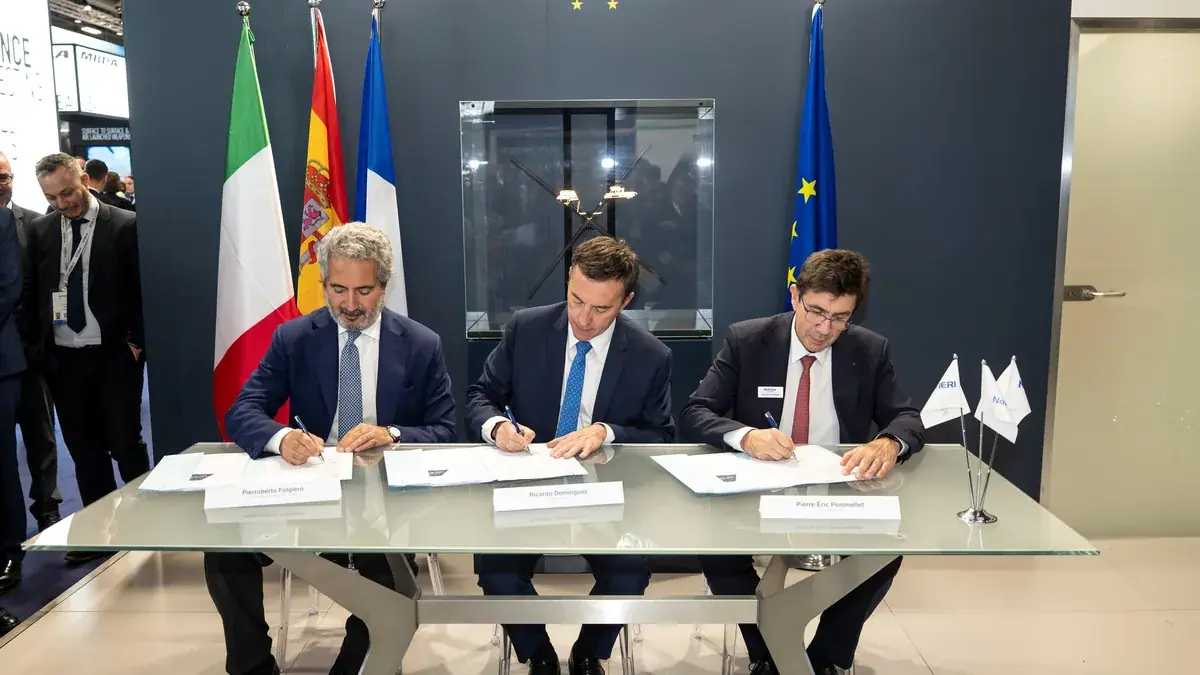
The signing, attended by representatives of the Organisation for Joint Armament Cooperation (OCCAR), was done by Fincantieri CEO Pierroberto Folgiero, Navantia chairman Ricardo Domínguez and Naval Group CEO Pierre Éric Pommellet. Navantia publicised the agreement on November 4 and Fincantieri the next day, in a joint press release from the three companies.
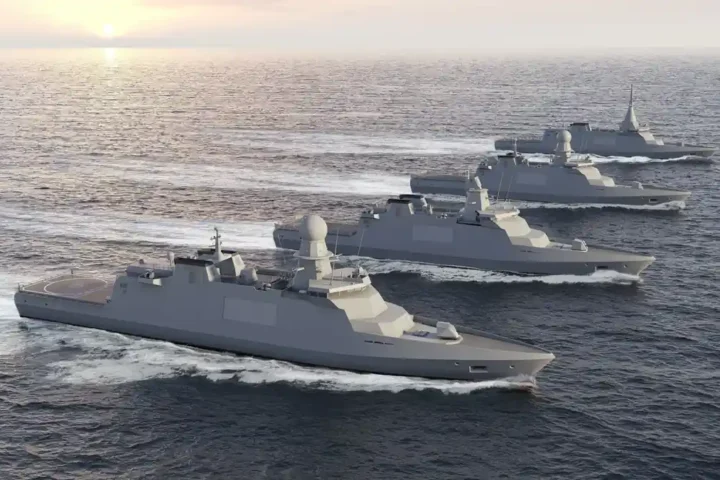
The aim of the second phase is to take the programme from initial design to a ship ready for construction, a future class of Modular and Multirole Patrol Corvettes (MMPC). EPC2 will complete the preliminary and detailed design, incorporating new technologies. It continues the work of EPC1, which covered the concept studies, the preliminary design of the ship, the development of critical technologies and the definition of common standards, methods and requirements.
One platform, many national versions
The basis of the new class will be a common Full Combat Multipurpose (FCM) platform. The modular design allows each navy to adapt the ship to its own operational needs, without losing interoperability and the common base of components among fleets. The companies describe an affordable and flexible vessel, for missions ranging from maritime surveillance and open-sea patrols to escort, maritime security and protection of critical sea lines of communication.
The programme began in 2019 under the European Union’s Permanent Structured Cooperation (PESCO), has been coordinated by OCCAR since 2022 and is funded by the European Defence Fund (EDF). The three builders present it as an example of European industrial cooperation that strengthens Europe’s strategic autonomy, supply chain and the competitiveness of European shipyards. At Euronaval the corvette had its own stand, where the programme’s latest milestones were presented, as Navantia’s announcement also notes.
The same companies, with the Naviris joint venture as coordinator, had submitted the first joint proposal for the Euro-corvette in December 2021. Greece has taken part in the PESCO EPC project from the start, together with Italy, France and Spain. At the same exhibition, OCCAR’s leadership met a delegation of Greece’s defence procurement directorate (GDAEE) about possible Greek participation in later phases of the MMPC, led by Director General Major General Ioannis Bouras.