Middle East & North Africa
Trump: a new strike on Iran is “extremely unlikely” if Tehran signs a deal – three carriers ready, 38 bridges in the crosshairs
In a CNN interview, Donald Trump said new US attacks on Iran are “extremely unlikely” if Tehran signs a “very strong” deal, while stressing three carriers are armed and ready.

Donald Trump considers it “extremely unlikely” that a new round of American attacks on Iran will be needed, provided Tehran signs a “very strong deal.” The US president said so on Sunday, November 8, in a 20-minute telephone interview with CNN, in which he also gave his own figures on what remains of the Iranian arsenal. “It is extremely unlikely it will be needed. I would do it if it were necessary, but we hit them very hard,” he said.
Mr Trump described Iran as a state that is “collapsing” and “withering economically,” citing inflation of 301% over the year. “We have hit them militarily. We could finish them off,” he added, concluding that Tehran “wants very much to make a deal.”
Three carriers and 38 bridges
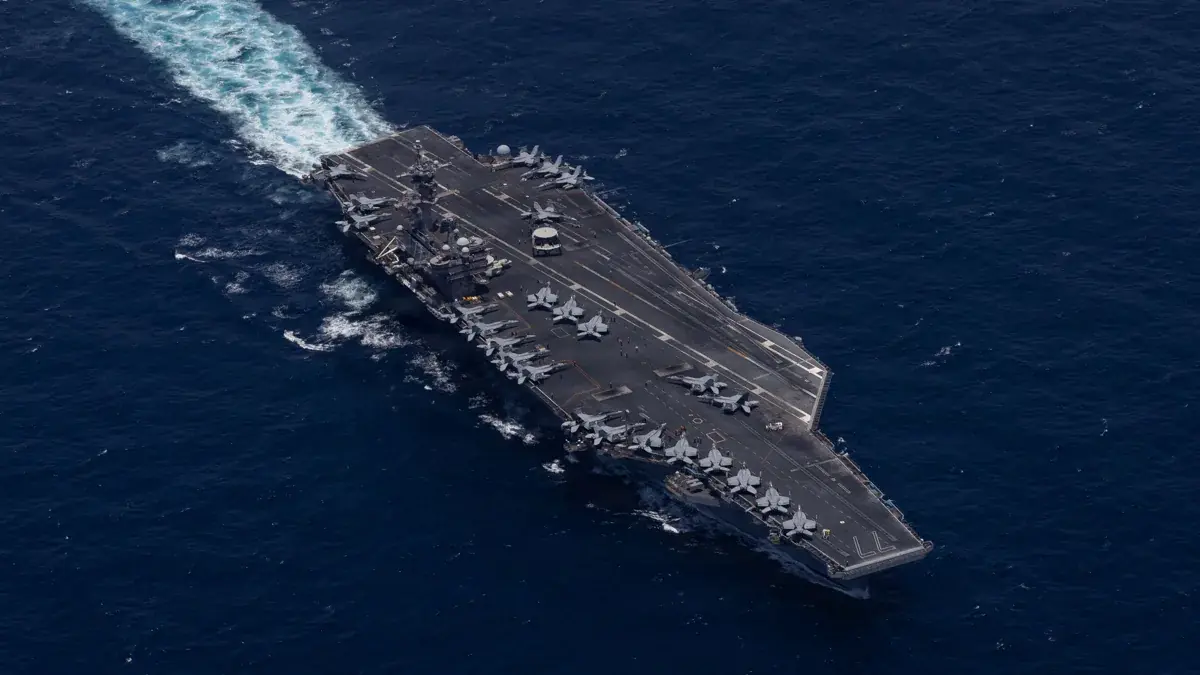
Despite the reassuring tone, the American president made clear that US forces remain in a combat posture. “We are ready. I have three aircraft carriers here, the last one just arrived. They are fully armed and ready,” he said. He said Washington has identified targets in infrastructure inside Iran, such as power plants and bridges, should operations resume. “We have 38 bridges in the crosshairs, which we can literally bring down within an hour,” he claimed.
He said, however, that he prefers not to get there, because rebuilding would take ten years. “I don’t like to knock down bridges. Nothing is harder to build than a bridge,” he remarked, describing himself as a “good builder.”
On Tehran’s defensive capabilities, Mr Trump claimed that Iran’s air defence has been completely destroyed and that the regime retains about 10% of its missile capacity and 15% of its drone capacity, because “many of their factories have been destroyed.” These percentages are his own estimates and have not been independently confirmed. For their part, the Revolutionary Guards recently said the limit on the range of Iranian missiles has been “lifted”.
Diplomatic activity after the midterms
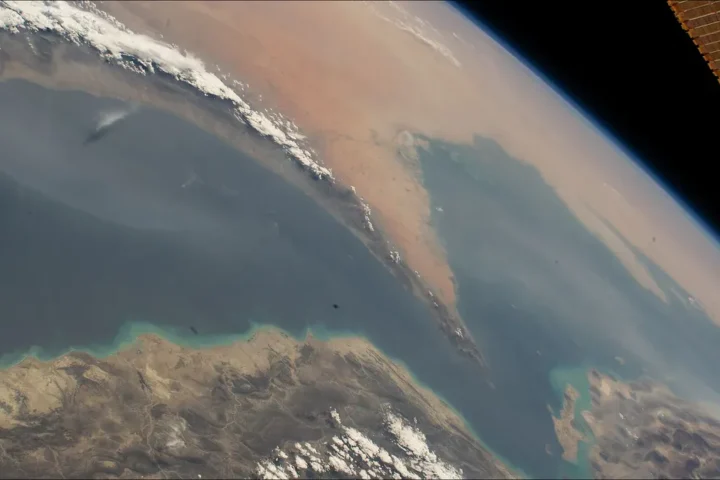
Eight months after the war began, the two sides are at an impasse, with limited military action and no substantive diplomatic progress, while tankers passing through the Strait of Hormuz come under Iranian attack. The US, Iran and Qatar, which is mediating, are giving no details on the course of the talks. Hardliners in Tehran see the result of the American midterm elections as a sign that Mr Trump has been weakened and will more easily accept the continuation of the Iranian nuclear programme and Tehran’s control of the Strait.
Contacts in the region intensified after Tuesday’s elections. Qatar announced on Friday that Mr Trump phoned the Emir, Sheikh Tamim bin Hamad Al Thani, about de-escalation. A day earlier, Iranian Foreign Minister Abbas Araghchi had spoken with his counterparts from Saudi Arabia, the United Arab Emirates, Oman, Pakistan, Kuwait, Jordan, Turkey, Cyprus and Qatar. The interview comes a day after the “small” American strikes on Iranian air defences at Qeshm, while Tehran had sent a nuclear proposal with seven conditions via Qatar.