Europe
France publishes defence energy strategy to 2030, planning for a major war and a fuel-hungry battlefield
The French armed forces ministry has updated its defence energy strategy to include the possibility of a major engagement, keeping liquid fuel at the core while adding synthetic fuels and more electrical power.

France’s Ministry of the Armed Forces and Veterans has published an updated defence energy strategy to 2030, written for the possibility of a major war. In a statement dated 12 October 2026, the ministry says the document is meant to ensure the armed forces can withstand a serious crisis or a large-scale commitment, while still using the opportunities of the energy transition to adapt their infrastructure and equipment.
The new text revises the first defence energy strategy, adopted in 2020, which aimed to prepare the ministry for the energy transition and turn it into an operational advantage. What changes, according to the ministry, is the explicit assumption of a major engagement.
Liquid fuel stays at the core
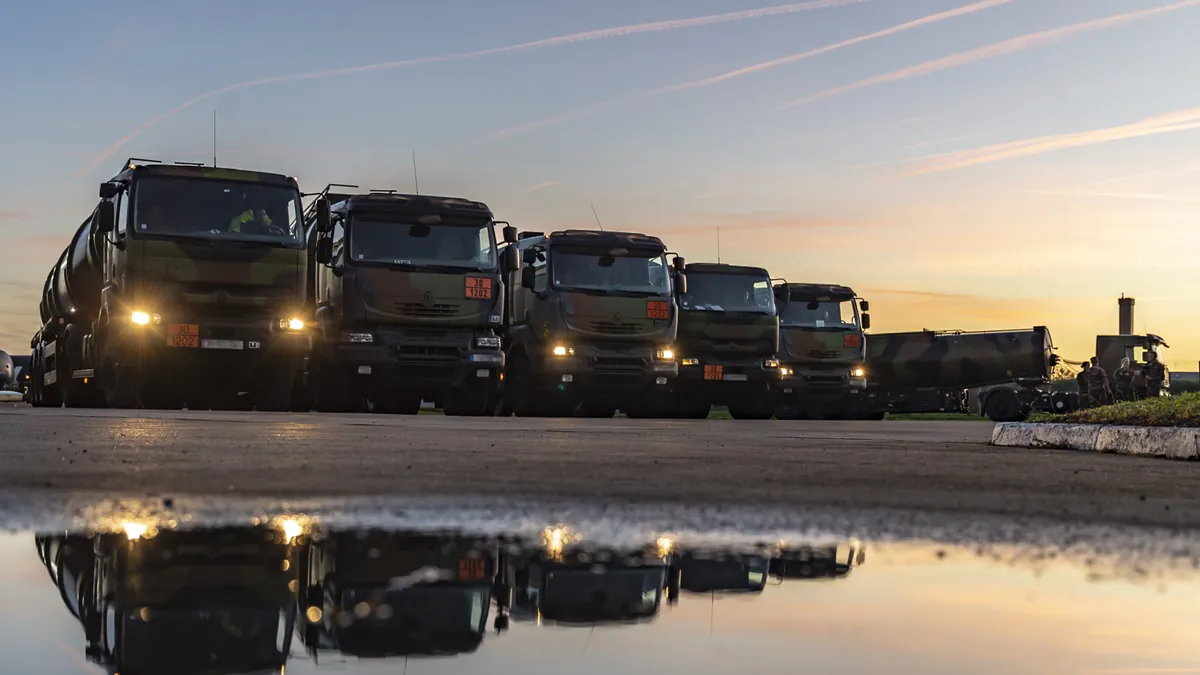
The ministry is blunt about the present: the armed forces’ consumption rests on fossil fuels. It describes them as having an energy density ten times that of lithium-ion batteries and as the only mature technology able to power its ships, aircraft and heavy vehicles. Recent events, it says, show that the fuel needs of forces engaged in high-intensity combat will be clearly higher than in French operations over recent decades.
For that reason the strategy treats the single-fuel policy and robust logistics chains as indispensable. Because equipment lasts a long time, liquid fuels will remain unavoidable in the medium term, the ministry says, but synthetic fuels are to be added progressively to the mix, which it expects to increase the forces’ autonomy and lower their carbon footprint.
Electricity on the battlefield
The statement also points to the growing use of electricity at the front. It lists drones, robots, communications, jamming, detection, light vehicles and directed-energy weapons among the systems that need power. The ministry says it will invest more in identifying emerging technologies that are mature enough for producing, storing, distributing and managing electrical energy.
Five lines of action
The strategy is organised around five axes, each illustrated in the statement with an example:
- a proven and resilient energy supply along the whole chain, for instance larger fuel stocks and a re-examination of the rules for using them;
- energy built into the planning and conduct of operations, including identifying exploitable weaknesses in French energy infrastructure and developing countermeasures;
- greater resilience and energy autonomy for military sites, with controlled consumption and sustainable mobility, such as electrifying some vehicle families;
- energy constraints and opportunities taken into account in armaments programmes, for example letting weapon systems run on synthetic fuels;
- active participation in national and international initiatives, including the definition of NATO and European standards for fuels and batteries.
The ministry adds that energy is an issue that goes beyond a single ministry or even France, hence the need for national and international cooperation. It has published a summary brochure, dated 8 October 2026, and a press note on the strategy; both can be reached from the ministry’s announcement.