Analysis
What weapons has Greece ordered from 2019 to 2026: every armament programme and its cost, one by one
Since 2019 Greece has contracted or approved new fighters, frigates, helicopters, air defence and long-range artillery. A programme-by-programme account of what is signed, what is only approved, and what each costs, with the stage of each.

Since 2019 Greece has contracted or approved new fighters, frigates, helicopters, air defence and long-range artillery, after a decade in which armament programmes were almost frozen by the financial crisis. If one adds only the largest signed contracts (FDI, F-35, Achilles Shield, Rafale, the Kalamata training centre, Black Hawk, PULS, KC-390 and Spike), the sum exceeds €15 billion, by our own calculation and at the exchange rates of the time of each signature for what is paid in dollars. The sum does not show the full picture, however, because behind every “order” lies a different legal and financial weight. A contract signed with the manufacturer, a letter of offer and acceptance (LOA) with the US government, an approval by the Government Council for Foreign Affairs and Defence (KYSEA) or by the Parliament’s Armaments Committee, and a DSCA notification to Congress are not the same thing. That is why below we record each programme by branch, with the amount that emerges from an official source and the stage it has reached.
Before the programmes, four terms you will meet often. A contract is the commitment with the supplier and has a final price. An LOA (Letter of Offer and Acceptance) is the form the contract takes when we buy from the US government through the Foreign Military Sales (FMS) programme, and its value may differ from the initial estimate. A DSCA notification, from the Pentagon agency that manages military exports, gives the maximum estimated cost of a package approved by Washington, not what is finally signed. Finally, a government-to-government (G2G) agreement is a contract between two governments, like those with Israel, where the seller is the Israeli Ministry of Defense through its defence export agency SIBAT, or with Portugal, which buys the aircraft from Embraer and transfers them. The French contracts, by contrast, were signed directly by the General Directorate for Defence Investments and Armaments (GDDIA) with the companies.
Air Force: Rafale, F-35, M-346, KC-390 and strike weapons
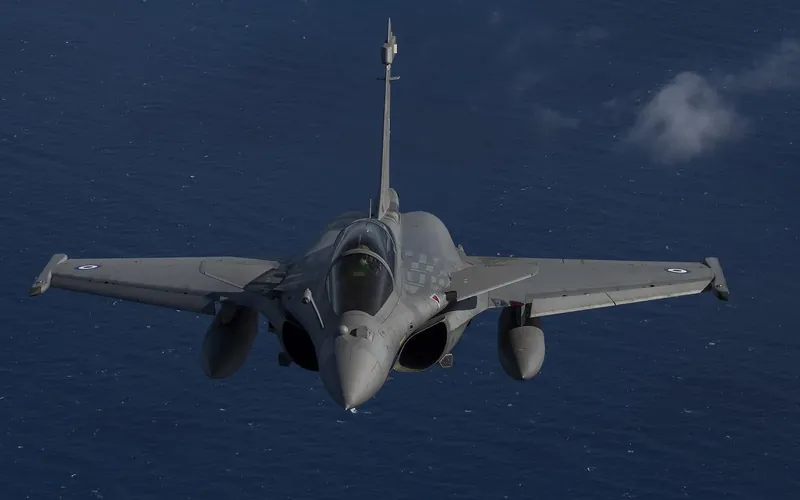
The first big step of the period was the Rafale. The contract for 18 aircraft was signed in Athens on January 25, 2021 by the GDDIA and Dassault Aviation, in the presence of the defence ministers of Greece and France. Twelve were used aircraft from the French Air and Space Force and six were newly built. According to the Ministry of National Defence, the aircraft cost €1.92 billion before deductions and their weapons €400 million before deductions, for new Meteor missiles and for upgrading existing MICA, SCALP and Exocet missiles for use on the Rafale. A separate support contract was signed the same day. In September 2021 the prime minister announced six more aircraft, and the second contract was signed on March 24, 2022 by Dassault chairman Éric Trappier and Vice Admiral Aristeidis Alexopoulos, Director General of Defence Investments and Armaments. The same day MBDA signed the contract for the same weapons for the six new Rafales. For the second batch no official cost breakdown like that of 2021 was published. The twenty-fourth aircraft landed at Tanagra on January 9, 2025 and completed the programme, with all Greek Rafales at the F3R standard.
In training, the International Flight Training Centre in Kalamata is a services contract and not simply a purchase of aircraft. The project was awarded in 2021 under a government-to-government agreement to Israel’s Ministry of Defense and Elbit Systems, which announced in April 2021 a contract of about $1.65 billion (€1.375 billion) lasting about 20 years with a price-adjustment clause. It includes 10 Leonardo M-346 advanced trainers, replacing the T-2E Buckeye, the upgrade and support of the T-6, simulators and the running of the school. The first two M-346s landed at Kalamata in May 2023. That is why the amount is spread over two decades and also covers the supply chain.
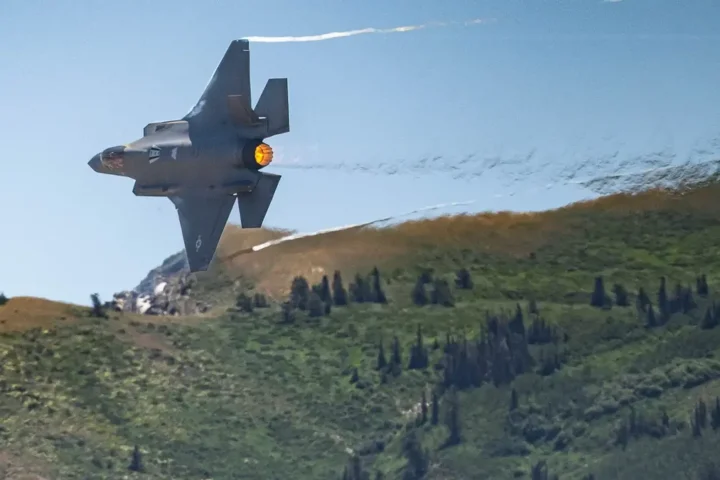
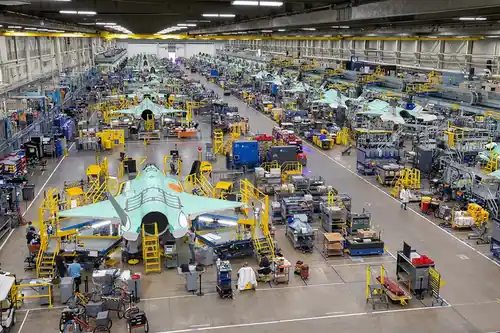
The Air Force’s biggest commitment is the F-35A. The DSCA notified Congress in January 2024 of a possible sale of up to 40 F-35s and 42 F135 engines, with an estimated cost of $8.6 billion. KYSEA approved the procurement on July 16, 2024 and the LOA for the first 20 was signed on July 25, 2024, at a cost, with support, of about $3.5 billion according to the Greek government. The option for another 20 has not been exercised. KYSEA has also approved €290 million for the Andravida infrastructure, while according to the government the first aircraft reaches Greece in November 2029. The F-35’s weapons have not yet been contracted. After US Secretary of State Marco Rubio’s visit to Athens on October 7, 2026, Greece agreed in principle to spend up to $4 billion on US weapons and upgrades, an amount that has not been turned into an LOA.
On the F-16, the big contract, the modernisation of 84 aircraft to Viper (F-16V), was signed in 2018 and so belongs to the previous period, although deliveries run through the years under review. The new chapter is the upgrade of about 40 more Block 50 F-16s to Viper, which passed the Parliament’s Armaments Committee in March 2026. Minister of National Defence Nikos Dendias said then that the country will acquire “over 100 F-16 Vipers”. In October 2026 the modernisation of 37 F-16 Block 50s was included in the agreement in principle of up to $4 billion with the US, but no contract has been signed and no separate official cost announced. Fleet support is covered by the following DSCA notifications: $165 million for spare parts for the air fleets (May 2021), $270 million for continued support of the F-16s, with training devices, LANTIRN and reconnaissance pods and MIDS terminals (August 2021), $233 million for depot-level maintenance of the F100-PW-229 engines (January 2022), $160 million for F-16 engine support (November 2024) and $101 million for spare parts and repairs of aircraft equipment (September 2026). All these are maximum estimated amounts and not final contracts. On October 1, 2026 KYSEA also approved continued support of the C-130s and the support and upgrade of the eight C-27Js, with no amounts announced.
For guided strike weapons, the Air Force signed with Israel the government-to-government contract 009Γ/23 for SPICE 1000 and 2000 guidance kits on the F-16s, worth €130 million. In unmanned systems, Greece leased from Israel in 2020 the Heron in naval configuration for three years, with an option to buy at the end of the period, as announced by Israel’s Ministry of Defense. On July 23, 2026 KYSEA approved one more HERON 1 system with a future armed capability and, on October 1, 2026, the support and upgrade of the HERON 1, with no amounts announced.
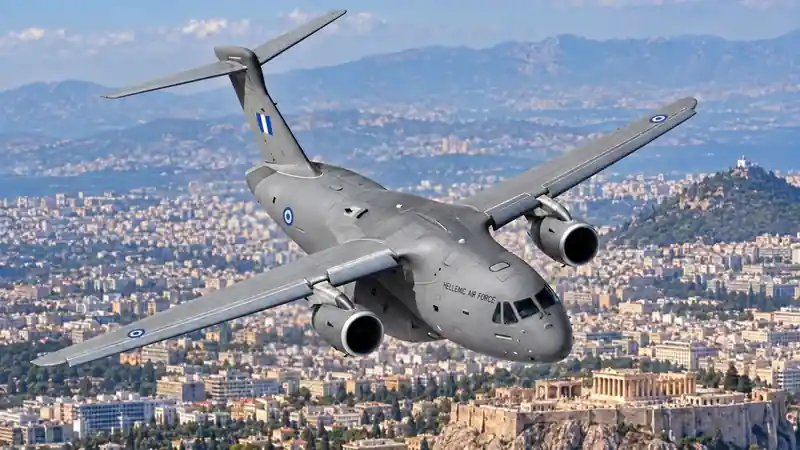
The Air Force’s newest programme is Embraer’s KC-390 Millennium, which does transport and aerial refuelling. KYSEA approved three aircraft on July 23, 2026 and the government-to-government agreement with Portugal was signed in Athens on November 2, 2026, with Embraer announcing three aircraft and three more as an option. Portugal buys the aircraft and transfers them. According to the Portuguese cabinet decision (RCM 207/2026), the expenditure is borne entirely by Greece: €532.9 million for the three aircraft with the entry-into-service support package and €57.1 million for a second item of the same decision, a total of about €590 million before VAT. The first arrives in 2027. The KC-390 refuels by the probe-and-drogue method, which suits the Rafale and Mirage 2000-5, while the F-16 and F-35 take fuel from a rigid boom. The Minister said at the signing that “a year from now” the F-16s will also be refuelled, without the technical solution being announced.
Navy: FDI frigates, MH-60R, MEKO modernisation and missiles
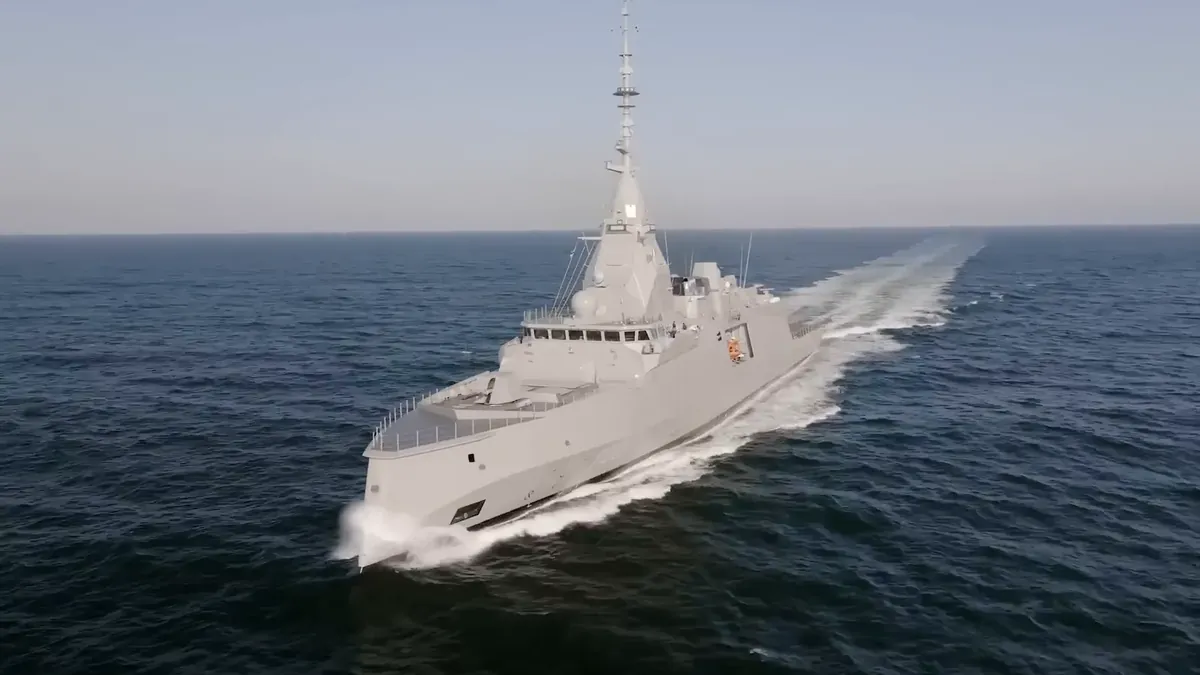
The Navy’s biggest programme of the period is Naval Group’s FDI HN frigates. The contract for three ships, with an option for a fourth, was signed on March 24, 2022, and the fourth frigate was ordered in November 2025. The prices are known exactly, because the full text of the amended contract was ratified by Law 5235/2025 (Government Gazette A 173/7.10.2025). “Kimon” costs €659.5 million, “Nearchos” €654.5 million and “Formion” €639.455 million in the basic Standard 1 configuration. The additional Standard 2 capabilities, namely the system of 16 extra Aster missiles, the RAM and the air-defence decoy launching system (AAW DLS), cost €68.315 million per ship. The contract also includes 15 MU90 torpedoes for €41 million and 54 CANTO decoys for €6 million. Together with spares, studies and training, and after the discount provided for, the three-ship part reaches €2,255.2 million. The fourth frigate, “Themistoklis”, is delivered directly in Standard 2+ and its total part is €791.375 million, with a Naval Group commitment to 25% Greek participation. Support (FOS) adds €138 million for the initial period and €56.2 million for the additional one. By simple addition, the programme of the four frigates with their support reaches €3.24 billion. “Kimon” was delivered on December 18, 2025 and “Nearchos” on October 30, 2026.
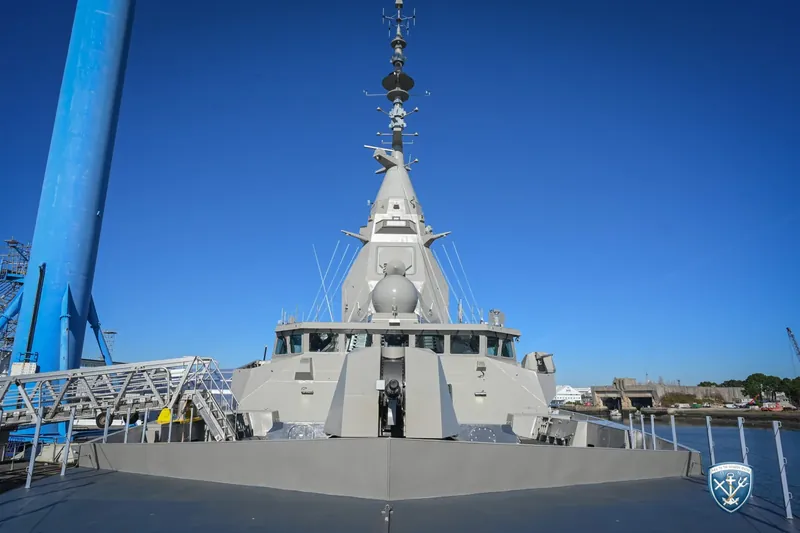
The frigates’ missile stocks were bought under a separate contract. On March 24, 2022 MBDA signed with the GDDIA a contract for Aster 30 Block 1 and Exocet MM40 Block 3C for the three frigates, with an option for the fourth, without the value being announced. In February 2026 Schiebel announced a contract for Camcopter S-100 unmanned helicopters that will operate from the first three frigates.
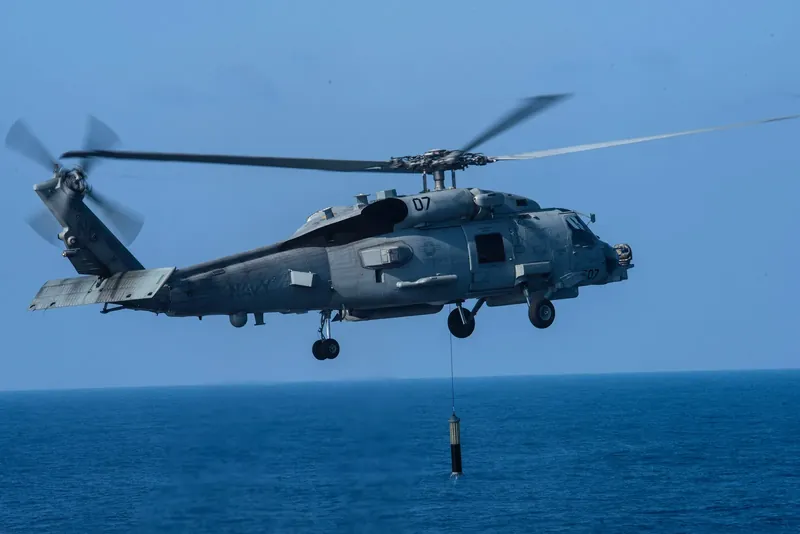
In helicopters, the DSCA notified Congress in July 2019 of the sale of up to 7 MH-60Rs at an estimated cost of $600 million. Greece signed an LOA for 4 MH-60Rs in July 2020 and then activated the option for 3 more, bringing the number to 7. The first two arrived at Elefsina in February 2024, the third followed a few days later and the three entered service officially on March 20, 2024. In July 2020 an LOA was also signed for the targeted modernisation of the S-70B6 “Aegean Hawk”, while their follow-on support is a separate case, which the DSCA notified in 2022 as expanding to $162.07 million.
The modernisation of the four MEKO 200HN of the “Hydra” class had been decided as far back as 2014 and went through many forms. In December 2021 the DSCA had notified Congress of an American solution with an estimated cost of $2.5 billion, the same day as the $6.9 billion package for four new MMSC frigates, and neither proceeded. KYSEA approved the European package in July 2025, which also includes ESSM Block II missiles. In 2026 the main contracts were signed with European and Greek contractors: with Thales Nederland for €248.7 million (May 22, 2026) for the mission systems, with Greece’s SSMART for €11.55 million (contract 001Β/26 of May 29, 2026, with the GDDIA) for weapon-system integration, and with the Skaramangas Shipyards for €19 million (003Β/26, July 2, 2026) for work on the ships, all before VAT. Intracom Defense has submitted the technical bid for the communications systems, with a budget of up to €9.98 million. The three main contracts total about €279 million, excluding the missiles and the rest of the package’s systems. On July 23, 2026 KYSEA also approved the modernisation of the anti-submarine systems of the four frigates. The package includes a new M660 hull sonar from GeoSpectrum, a subsidiary of Elbit.
Next for the Navy are the two Italian FREMM frigates “Carlo Bergamini” and “Virginio Fasan”. After the declaration of intent of September 2025 and KYSEA approval in May 2026, the implementing agreement for their transfer was signed in Rome on September 8, 2026. The Ministry has not officially announced either the cost or the delivery dates.
Among the Navy’s other items, in April 2025 Greece and France signed for 16 Exocet MM40 Block 3C, with no announcement of the value. The GDDIA’s 2023 table earmarked 16 Exocets for the two newer “Roussen”-class missile boats. The Special Forces are acquiring 10 VICTA swimmer-delivery craft, which move on the surface and submerged, from Britain’s SubSea Craft, approved by KYSEA on July 23, 2026 at a cost of about €145 million. Eight will be built at the Skaramangas Shipyards and two in the UK, with six going to the Underwater Demolition Command’s unit and four to the Raiders’ unit. In unmanned systems, the November 2021 contract with ALTUS LSA brought five small A900 helicopters of Spanish design, and on November 11, 2026 Shield AI announced that the NATO Support and Procurement Agency (NSPA) had ordered additional V-BAT for the Navy and the Army. On October 1, 2026 KYSEA approved maintenance and restoration work on the Type 214 submarines and maintenance on the Type 209, with no amounts announced. The corvette programme, for which the GDDIA table submitted to Parliament in 2023 gave an estimated cost of €2,122,880,000, has not yet reached a contract.
Army: Black Hawk, PULS, Spike NLOS and unmanned systems
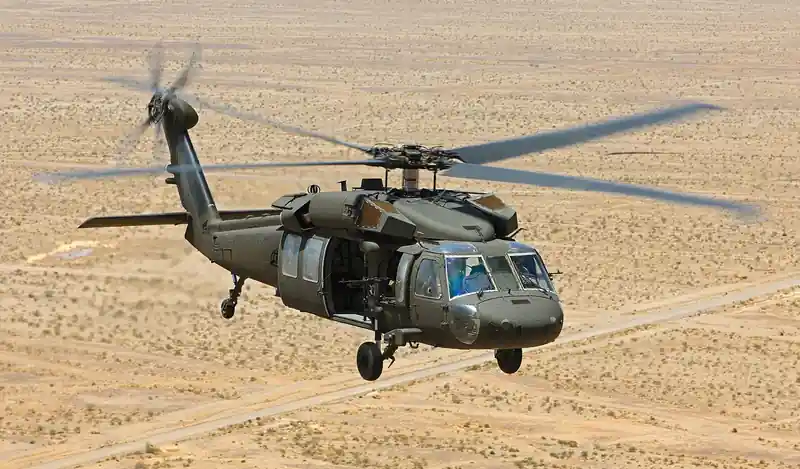
The Army’s biggest programme is 35 UH-60M Black Hawks. The DSCA notified Congress on December 15, 2023 of the possible sale of the 35 helicopters, with 80 T700-GE-701D engines and a full self-protection suite, at a maximum estimated cost of $1.95 billion. Parliament’s Armaments Committee approved the procurement at about €1.15 billion and the LOA was signed through FMS on April 5, 2024. In April 2026 the DSCA corrected the original notification, classifying 54 M240H machine guns as major defence equipment, with no change in the maximum amount of $1.95 billion.
Long-range artillery acquired Elbit Systems’ PULS. On April 6, 2026 the GDDIA and Israel’s SIBAT signed the government-to-government agreement 009Α/26 for 36 launchers for €690 million, with Elbit announcing a contract of about $750 million. From the same launcher PULS fires rockets and missiles of different calibres, with a range of up to 300 km. Three years earlier, in April 2023, Israel’s Ministry of Defense had announced the government-to-government agreement for Rafael’s Spike missiles, about €370 million, with Spike NLOS for land, air and sea platforms. Part of the same agreement was dozens of Aeronautics’ Orbiter 3 unmanned aircraft for target location. The Army Aviation’s AH-64A Apaches went through a limited Elbit upgrade, which according to the company was completed with airworthiness certification in June 2026, while on July 23, 2026 KYSEA approved the procurement of laser-guided Hellfire missiles.
For Army drones, Shield AI announced on June 2, 2026 that the Hellenic Army had signed to expand its V-BAT fleet, KYSEA approved ten more systems on July 23 and the new November order through NSPA followed. Through NSPA, under a June 2023 contract, the Army also got four larger Safran Patrollers with their ground stations. From the US, the DSCA notified Congress in July 2026 of a possible sale of 350 Switchblade 300 Block 20 loitering munitions with 35 fire-control systems, together with Switchblade 600, estimated at $80.1 million, with no LOA announced. In helicopters, the FMS case for T55 engines and a maintenance programme for the CH-47D Chinooks was expanded in 2022 to $284 million, and in December 2025 a €50 million support contract was signed with NHIndustries for the fleet of 20 NH90s. The M1117 wheeled vehicles came as US excess defense articles (EDA), but their support case was expanded to include Aerosonde unmanned aircraft, with the DSCA notifying in December 2024 of a new estimated cost of $130 million.
In armour, in 2022 Greece gave Ukraine BMP-1s and received from Germany 40 Marder 1A3s through the German government’s circular exchange (Ringtausch), the first six arriving in October 2022. In March 2023 the DSCA notified Congress of a possible sale for the Marines: 63 AAVP-7A1 amphibious vehicles, 9 command and 4 recovery, estimated at $268 million, of which $25 million from US foreign military financing (FMF). No LOA has been announced. On October 7, 2026 the joint statement of the Greece–US Strategic Dialogue mentioned for the first time the “provision of Stryker vehicles”, with no number, versions or cost. Finally, on March 26, 2025 framework agreement 002Α/25 was signed for SAKO TRG M10 sniper rifles, with a maximum amount of €6.12 million and a first implementing contract for 90 rifles, while on October 1, 2026 KYSEA approved two “Modern Fighter” programmes, for individual protection and for communications.
The “Achilles Shield”: the biggest defence agreement with Israel
Air defence is the largest agreement Greece has signed with Israel. On July 23, 2026 KYSEA approved the “Achilles Shield”, a multi-layer dome of anti-aircraft, anti-ballistic and anti-drone protection, and on August 31, 2026 the government-to-government agreement was signed in Tel Aviv. According to Israel’s Ministry of Defense its value is about €3 billion. It includes David’s Sling for tactical ballistic missiles, cruise missiles and aircraft at long distances, Barak MX for the medium layer, SPYDER for the low one, ELTA multi-mission radars (MMR) and a new national command and control system. The Minister of National Defence announced Greek industrial participation of over €700 million, said Greece keeps the source code of the command and control system, which after the signing was disputed by the head of Israel’s defence export agency, and that the new batteries will be fully operational in 35 months, gradually replacing the S-300s. In a separate €26 million contract Greece also acquired Rafael’s Drone Dome, while the Greek anti-drone systems “Kentavros” and “Hyperion” enter the lower layer.
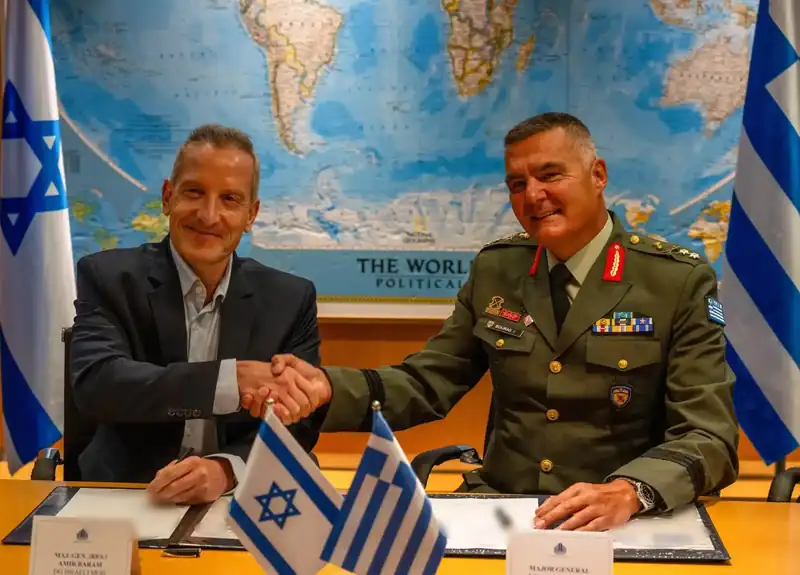
If one adds the Shield, PULS, the Spikes, the SPICEs and the Drone Dome, contracts with Israel from 2023 onward exceed €4.2 billion, without counting the Kalamata training centre. For the Patriots, by contrast, there is no new contract: no sale of PAC-3 MSE missiles to Greece has been signed or approved by the US, and on October 1, 2026 KYSEA extended for a month the stay of the Greek battery in Saudi Arabia. For what exactly each system does, see our article on the Israeli weapons of the October 28 parade.
The overall amounts: how much Greece spends and what comes next
The table below collects the main programmes, with the amount that emerges from an official source and the stage each has reached.
| Programme | Branch | Stage | Cost and source |
|---|---|---|---|
| Rafale (18) and weapons | Air Force | Contract, 25/1/2021 | €1.92bn aircraft and €400m weapons, before deductions (Ministry) |
| Rafale (6) and weapons | Air Force | Contract, 24/3/2022 | No official breakdown published |
| Kalamata Training Centre (10 M-346) | Air Force | Government-to-government with Israel, Elbit contract 2021 | About $1.65bn (€1.375bn) over about 20 years (Elbit) |
| F-35A (20) | Air Force | LOA, 25/7/2024 | About $3.5bn (Greek government), and €290m infrastructure (KYSEA) |
| SPICE 1000/2000 for F-16 | Air Force | Government-to-government 009Γ/23 | €130m |
| KC-390 (3, plus 3 option) | Air Force | Government-to-government with Portugal, 2/11/2026 | About €590m before VAT (RCM 207/2026) |
| F-16 Block 50 to Viper (37) | Air Force | Committee approval 3/2026, agreement in principle with US 10/2026 | Not announced separately |
| FDI HN frigates (4) and support | Navy | Contract 24/3/2022, 4th 11/2025 | About €3.24bn (Law 5235/2025) |
| Aster 30 B1 and Exocet MM40 B3C for FDI | Navy | MBDA contract, 24/3/2022 | Not announced |
| MH-60R (7) | Navy | LOA 7/2020 for 4, option for 3 | Up to $600m (DSCA 2019) |
| MEKO 200HN modernisation | Navy | Contracts 2026 | About €279m for the three main contracts, before VAT |
| FREMM “Bergamini” and “Fasan” | Navy | Implementing agreement, 8/9/2026 | Not officially announced |
| VICTA (10) | Navy | KYSEA approval, 23/7/2026 | About €145m |
| UH-60M Black Hawk (35) | Army | LOA, 5/4/2024 | About €1.15bn at parliamentary approval (DSCA: up to $1.95bn) |
| PULS (36 launchers) | Army | Government-to-government 009Α/26, 6/4/2026 | €690m |
| Spike and Orbiter 3 | Joint | Government-to-government with Israel, 4/2023 | About €370m |
| Switchblade 300 (350) | Army | DSCA notification, 7/2026 | Up to $80.1m |
| AAV-7 (76) | Army | DSCA notification, 3/2023 | Up to $268m |
| Achilles Shield | Joint | Government-to-government with Israel, 31/8/2026 | About €3bn (Israeli Ministry of Defense) |
| Drone Dome | Joint | Contract | €26m |
The framework within which the next ones will come is the 12-year Long-Term Defence Equipment Programme. The prime minister spoke in Parliament on April 2, 2025 of €25 billion. By July 2025 the total had reached €28.8 billion and, with the country’s inclusion in the European SAFE programme, rose to €30 billion, with a target of 25% Greek participation. In March 2026 air defence, the F-35 infrastructure and the F-16 Block 50s passed through the Armaments Committee, and in July KYSEA followed, which also approved a constellation of SAR microsatellites. The full list has not been published. The SAFE loan has a maximum amount of €787.7 million according to the European Commission, and the first disbursement, €118.2 million, was made in July 2026.
The next programmes already show in the transparency portal DIAVGEIA. On October 22, 2026 ten multi-year commitment certificates of the Ministry of National Defence were posted, totalling €6.95 billion for the years 2027–2039. Nine concern contracts already being executed, while one, €2.02 billion, is intended for new Navy and Air Force contracts. On November 11 another €507.9 million was added for a new Air Force programme, as covered in our Armaments Radar report. No document names the programmes, which will become known when the contracts are signed.
In seven years Greece has contracted or approved the renewal of the Air Force’s cutting edge, part of the surface fleet, the Army’s helicopters and air defence, with most deliveries coming by 2030. Most of the commitments involve three countries, France, the US and Israel. The coming years will be decided at two points: the gaps in weapons and support left by the big platforms, such as the F-35’s weapons and ammunition stocks, and the share of Greek industry in the €30 billion of the 12-year programme.
Frequently asked questions about Greek armaments
What are Greece’s biggest armament programmes since 2019? Among the biggest are the FDI HN frigates (about €3.24 billion for four ships with support), the 20 F-35As (LOA about $3.5 billion), the “Achilles Shield” (about €3 billion), the 24 Rafales, the Kalamata flight training centre (about $1.65 billion or €1.375 billion over 20 years) and the 35 UH-60M Black Hawks (about €1.15 billion at parliamentary approval). For ships, the two Italian FREMMs are added, with no official cost.
How much did the Rafales cost? According to the Ministry, the first 18 Rafales of the January 2021 contract cost €1.92 billion before deductions and their weapons €400 million. For the 6 of the March 2022 contract no equivalent official breakdown was published.
How much do the FDI frigates cost? Based on the contract ratified by Law 5235/2025, the part for the first three ships is €2,255.2 million and for the fourth frigate €791.375 million. Support adds €138 million and €56.2 million.
Has a contract been signed for the F-35’s weapons? No. The July 2024 LOA concerns the 20 aircraft. In October 2026 Greece agreed in principle to spend up to $4 billion on US weapons and upgrades, with no LOA signed for any specific weapon.
What did Greece buy from Israel? The “Achilles Shield” (about €3 billion), 36 PULS launchers (€690 million), Spike missiles (about €370 million), SPICE kits for the F-16s (€130 million) and the Drone Dome (€26 million). With Elbit the Kalamata flight training centre also operates.
What is the difference between a DSCA approval and a contract? The DSCA notification to Congress gives the maximum estimated cost of a package approved by the US government. Greece’s commitment begins with the signing of the LOA, which often has a smaller value, as with the F-35, where the notification concerned up to 40 aircraft and $8.6 billion and the LOA 20 aircraft and about $3.5 billion.
How much money does the 12-year armament programme have? The prime minister announced in Parliament in April 2025 a €25 billion programme. By July 2025 the total had reached €28.8 billion and, with Greece’s inclusion in SAFE, rose to €30 billion.