Africa
Greek command at sea in Operation IRINI: Captain Stavros Polydorou takes over for six months with the frigate Navarinon as flagship
Command at sea of the EU naval operation IRINI, which monitors the UN arms embargo on Libya, has passed into Greek hands, with Captain Stavros Polydorou aboard the frigate Navarinon.

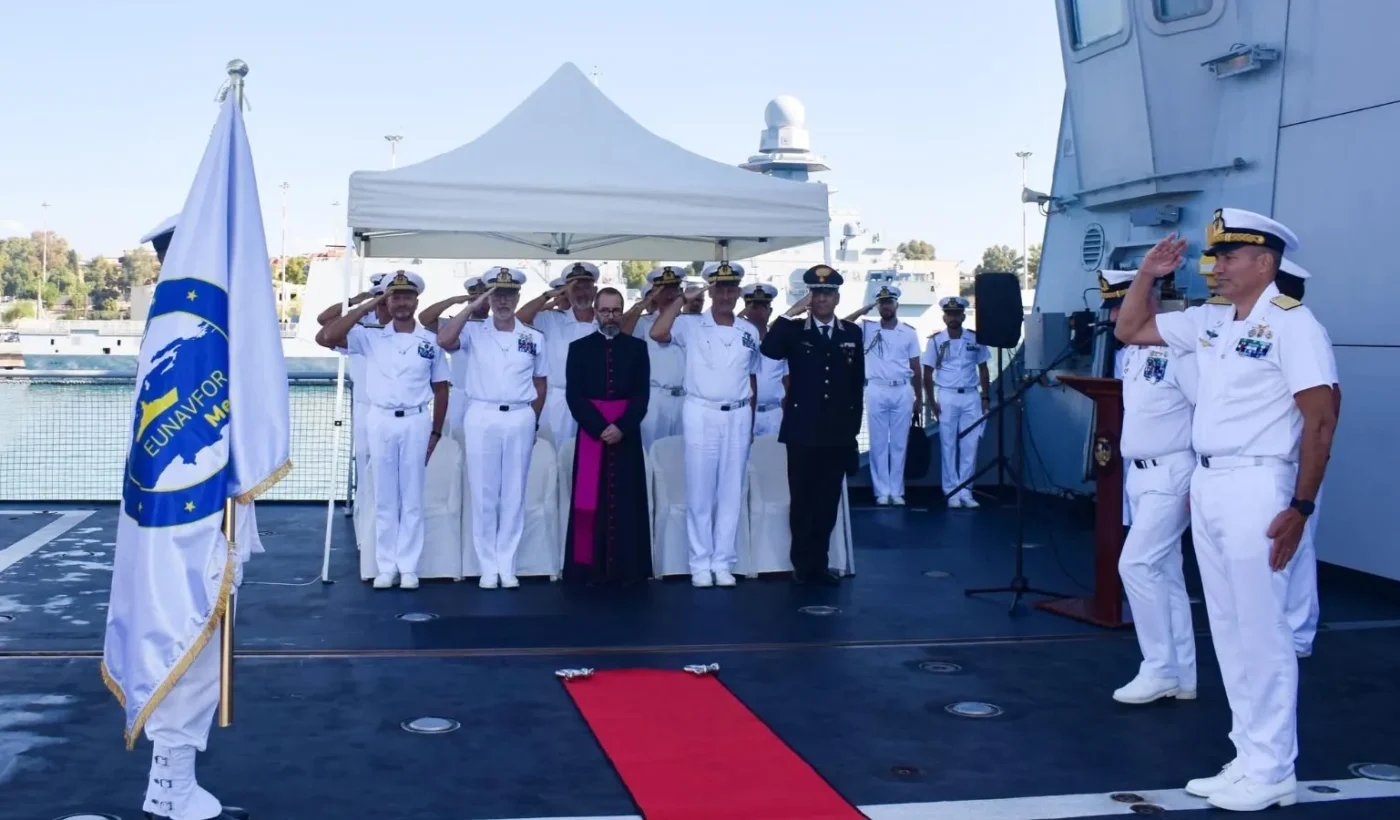
Command at sea of the European naval operation IRINI, which monitors the UN arms embargo on Libya, has passed into Greek hands. According to a Hellenic Navy announcement, the handover of the duties of the Commander at sea (COM FHQ) from Italian Rear Admiral Andrea Bielli to Captain Stavros Polydorou of the Hellenic Navy took place on October 1 at the Taranto Naval Base. The operation’s Italian commander, Rear Admiral Marco Casapieri, attended the ceremony.
Captain Polydorou will serve for the next six months, with the frigate Navarinon as the commander’s flagship. He will be supported by the operation’s staff at sea (FHQ), which also includes Greek officers.
What IRINI does
EUNAVFOR MED IRINI began in 2020 under the EU’s Common Security and Defence Policy, with the main task of enforcing the arms embargo imposed on Libya by the UN Security Council. Its ships and aircraft monitor the sea lanes to the Libyan coast, spot suspicious cargoes and, under UN resolutions, can inspect vessels on the high seas. It also gathers information on oil smuggling and human trafficking networks. The operational headquarters is in Rome, while the command at sea rotates between Italy and Greece.
For Greece the mission also has a national dimension. Libya lies opposite Crete, and the flow of weapons and mercenaries into the country is tied to Turkey’s military presence in Tripoli and to the Turkish-Libyan maritime memorandum, which Athens considers void. Greece coordinates on the issue with Cyprus and Egypt.
The Navarinon and cooperation with Italy
The Navarinon (F-461) is an Elli-class frigate and will be the command centre of the European forces in the central Mediterranean for six months. The handover comes during close naval cooperation with Rome: the Hellenic Navy is acquiring two FREMM frigates from Italy (see our analysis of the Bergamini frigates), and a few days after the ceremony the Hellenic Navy chief, Vice Admiral Dimitrios Kataras, also met the IRINI commander in Venice, on the margins of the 15th Seapower Symposium (see Hellenic Navy chief in Venice).
IRINI is also a field of political friction with Ankara, which has in the past refused inspections of ships bound for Libya. Turkey’s attitude towards European missions also comes up in discussions on its participation in EU defence programmes.