Europe
Grynkewich in Warsaw: “If we are attacked, we are ready to fight tonight”; Poland took a third of SAFE and wants Patriot lines in Europe
“If we are attacked, we are ready to fight tonight, but we are not complacent,” NATO’s Supreme Allied Commander Europe, General Alexus Grynkewich, said on Monday, October 12, at the Warsaw Security Forum.

“If we are attacked, we are ready to fight tonight, but we are not complacent.” With these words NATO’s Supreme Allied Commander Europe (SACEUR), General Alexus Grynkewich, presented the alliance’s “theory of victory” against Russia on Monday, October 12, at the Warsaw Security Forum, according to the Polish Ministry of Defence. He spoke in a discussion with the forum’s president, Katarzyna Pisarska, titled “Theory of victory: how to achieve military success in deterrence and defence against Russia”.
“NATO is a defensive alliance. But nobody should confuse our defensive character with weakness or lack of resolve,” he said. “If the adversary threatens escalation, brandishing the sword, or actually decides to escalate during a conflict, that will not split our Alliance. On the contrary, it will unite us even more.” Operation Eastern Sentry began under his command after Russian drones violated Polish airspace.
SAFE, 5% and a US base
Deputy Prime Minister and Defence Minister Władysław Kosiniak-Kamysz opened the panel “How can Europe build the military power it needs?”. He recalled the 2025 decision at The Hague on defence spending of 5% by 2035 and said Poland is the “absolute pioneer” in the EU’s SAFE programme: EUR 44 billion, almost a third of the total, went to Warsaw, and two thirds of it has already been allocated to Polish defence industry. He called for the military mobility issue to be resolved quickly, so that troops can move without separate permits from regions or federal states.
“The more American soldiers there are in Poland, if we have a permanent base, the more responsibility we can take for the eastern flank,” he noted. He proposed that a “NATO 3.0” strategy include a defence industrial strategy, with production lines and support centres moved to Europe, “for example for Patriot missiles”. On the sidelines he met the US permanent representative to NATO, Matthew Whitaker, the chairman of the Military Committee, Admiral Giuseppe Cavo Dragone, and the defence ministers of the Netherlands and Hungary.
Four conditions for foreign suppliers
Deputy minister Magdalena Sobkowiak-Czarnecka said Warsaw hopes the US administration and companies will agree to co-production in Europe and that, beyond price and quality, it is weighing four conditions: a support centre, co-production, local suppliers or at least investment in training. “There is no way someone sells us something without investing in the region,” she stressed.
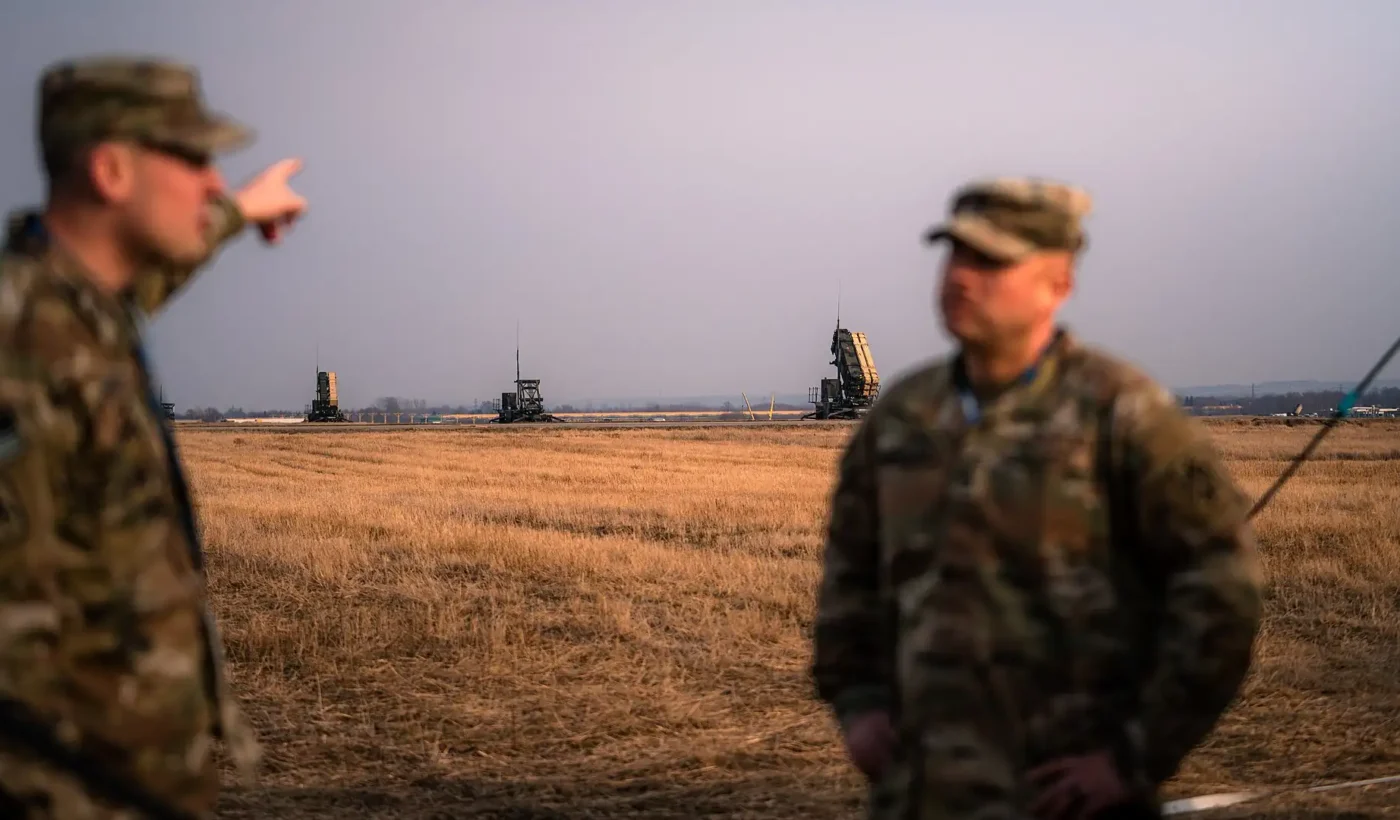
The procurement problem was visible at the same forum. The commander of Poland’s Operational Command, General Ireneusz Nowak, said deliveries of American weapons will be delayed and that this is “very visible” for the Patriot PAC-3 MSE missiles, which “will certainly be delayed”. Poland is at the same time strengthening civil defence and its Patriot batteries (see Poland: EUR 24 billion for shelters and civil defence to 2031).