Drones
Hellenic Army drones: the mobile FPV production unit, the Hummer teams and the M1117 with a drone at the parade
The most “Ukrainian” part of the October 28 parade: drone operators on Hummers, a mobile FPV production unit and an M1117 with its own drone. What the Hellenic Army showed and the production targets behind it.

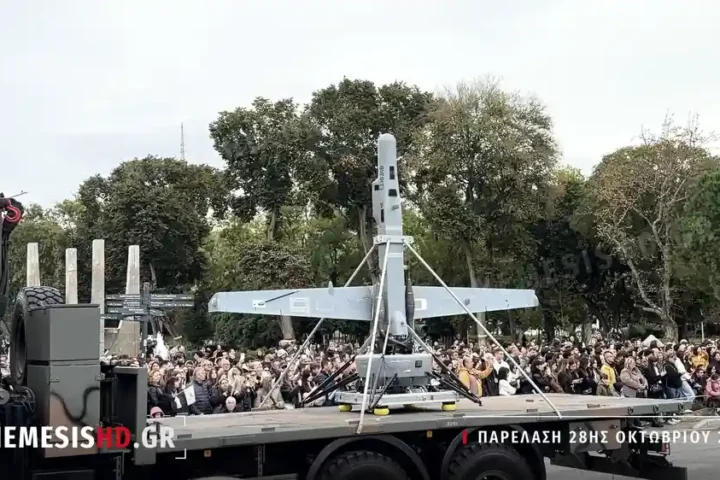
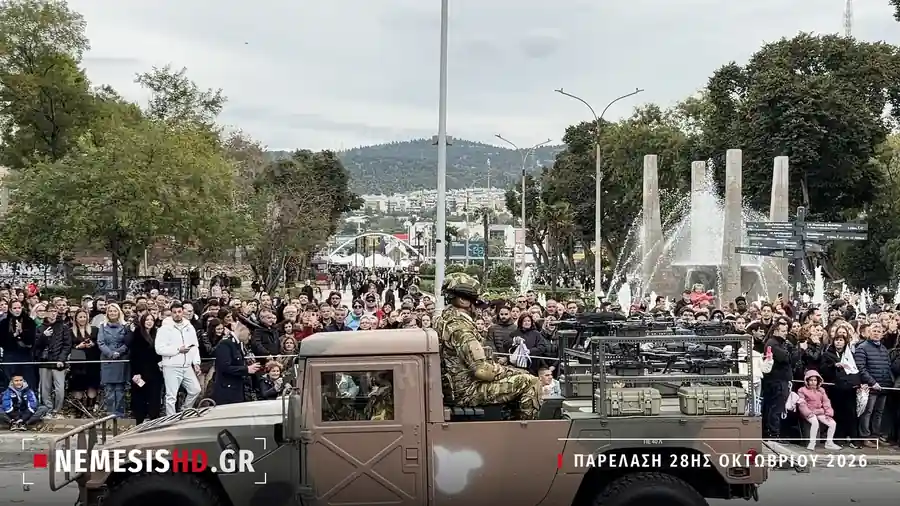
The most “Ukrainian” part of this year’s parade was not an expensive weapon but the cheap ones: drone operators on Hummers with racks full of multicopters, an armoured M1117 with a sensor mast and its own drone, and the mobile FPV drone production unit built by the military’s own factories. In the military parade of October 28, 2026 in Thessaloniki the Hellenic Army showed that the drone is no longer a specialised asset of a few units but an expendable tool of the platoon, which must be produced, repaired and replaced near the field, at the rate at which it is lost. That is the real lesson of Ukraine, and the parade gave a clear public picture of how Greece is applying it.
The drone teams on Hummers: surveillance and strike
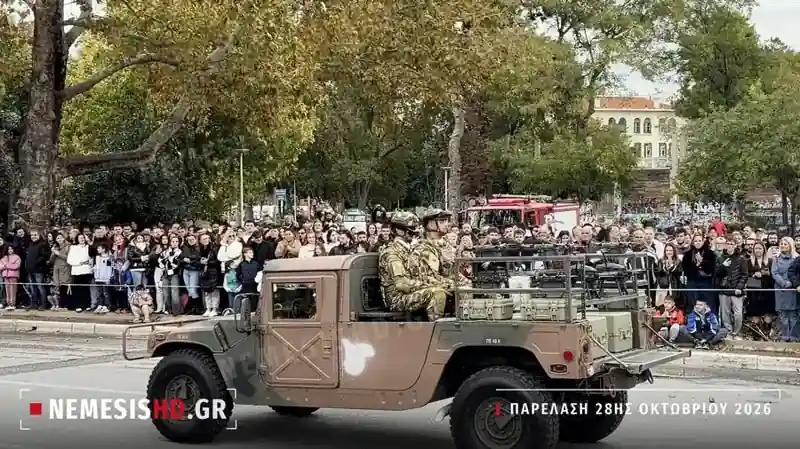
According to the official description of the parade’s systems, the Hummer M998 vehicles with drone operators carry multicopters for surveillance, reconnaissance and strikes on targets. The last word is the important one. The same team that sees the adversary with a small quadcopter can, with an FPV (first-person view, a drone the operator flies by looking through its camera, with goggles) loaded with explosives, hit him within minutes, without waiting for artillery or aircraft. In Ukraine such teams became one of the main sources of losses in tanks and armoured vehicles. In the photographs the equipment is organised for rapid deployment from the vehicle, with the drones in open racks and the rest of the gear in hard cases.
The mobile FPV drone production unit
The mobile unmanned-systems production unit is, according to the official description, a unit that builds drones in the field. The FPV system it produces is the work of the 306 Telecommunications Base Plant (306 EBT) in Acharnes and the 316 Area Technical Workshop (316 SPTH) at Toxotes in Xanthi and can be used operationally day and night. The mobile units are self-contained workshops that build, repair, tune and test drones close to the front line, and the Ministry of National Defence’s goal is for every Army brigade to have its own production capability. The logic is simple: an FPV lives a few minutes, jamming technology changes every few weeks, and a unit waiting for its drones from a central factory in Attica will always be behind the adversary.
Behind the mobile units is a production base that is growing fast. Defence Minister Nikos Dendias announced in September 2026 that the 306 EBT and the 316 SPTH together have a capacity of about 5,000 drones a year, and that with the completion of the third plant, the 309 Unmanned Systems Manufacturing Plant at Malakasa, whose foundation stone was laid on June 12, 2026, the target is 15,000 a year by the end of 2026. Longer-term planning speaks of more than 100,000 drones a year in a year and a half to two years and of more than a million by the end of 2030. These are capacity figures, not stockpiles.
The M1117: an armoured vehicle with its own drone
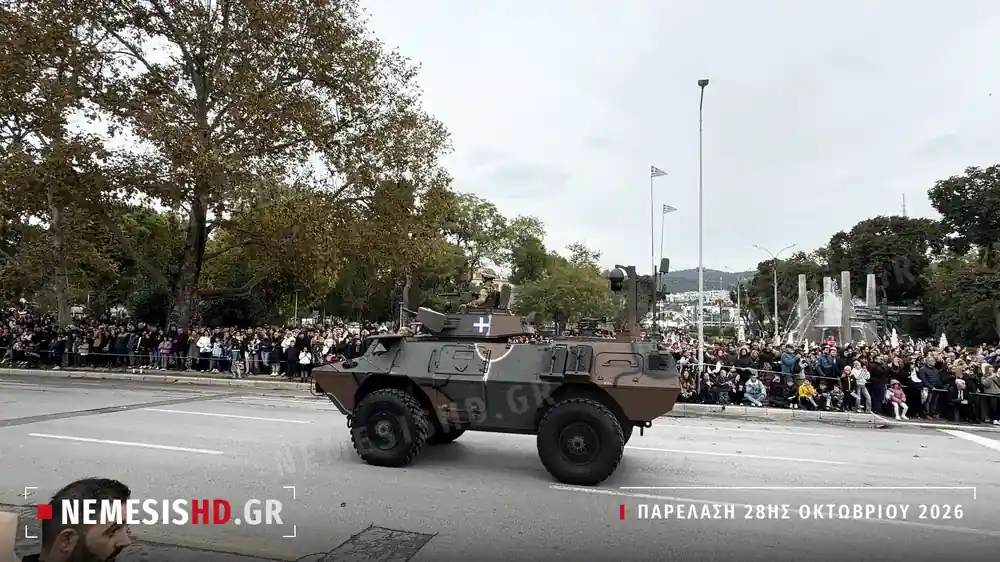
The third part of the picture was the M1117 reconnaissance vehicle, an armoured wheeled vehicle fitted with electronic surveillance means: an infrared camera on a mast, an antenna to relay data to the command element and a drone that extends the range of information gathering beyond the vehicle’s horizon. The data reach the command in real time, which gains a live picture of the operations area. It is a good example of how an existing vehicle gains a new role without radical changes: the M1117 no longer needs to approach the adversary to see him, because the drone goes ahead while the crew stays behind armour. In the same section of the parade passed the Greek “Antaios” ground robot and the “Arpyia” mini cruise missile, showing that Greek industry now works across the whole spectrum, from the platoon’s FPV to the deep-strike missile.