Military & Defense
Leonardo DRS wins a contract for a new infrared sensor for the THAAD missile defense interceptor
Leonardo DRS will develop a next-generation infrared focal plane array for the THAAD seeker under a contract from BAE Systems, while adding capacity to roughly quadruple seeker production.

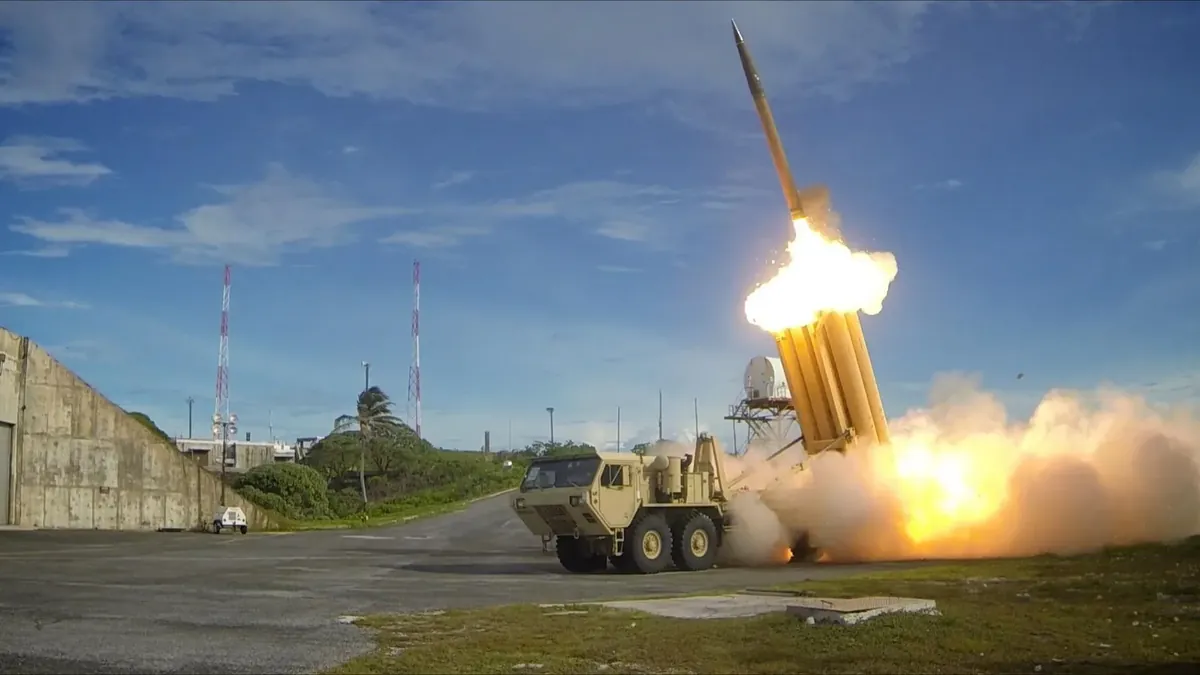
Leonardo DRS has been tasked with developing a new infrared focal plane array for the THAAD (Terminal High Altitude Area Defense) air defense missile. The company announced on the evening of Thursday, November 19, in a press release from Arlington, Virginia, that the contract was awarded by BAE Systems. The array is the sensor of the missile’s seeker.
The company expects the new next-generation sensor to improve the missile’s ability to counter threats that are evolving and growing more complex. Leonardo DRS calls THAAD a critical part of US missile defense. The new award, it stresses, continues its long involvement with infrared sensors and its existing partnership with BAE Systems.
Dallas foundry and production
Development is already under way at Leonardo DRS’s sensor foundry in Dallas, a 200,000-square-foot facility (about 18,600 square meters). The company is adding production capacity there to support the program’s goal of roughly quadrupling seeker production compared with historical levels. The new array, in other words, should not only deliver better performance against more complex threats, but also be built in far larger numbers than before.
Jerry Hathaway, senior vice president and general manager of Leonardo DRS’s Electro-Optical and Infrared Systems business, said the company “continues to expand its role in the munition seeker market”. He said its contracts in the field cover both cooled and uncooled detectors, sensors and subsystems. “THAAD is an important strategic program for our company and we are proud to support this vital missile defense mission,” he added.
Hathaway argued that the combination of high performance with scalable, cost-effective production makes Leonardo DRS a strong partner for many operational requirements. The company is listed on Nasdaq under the symbol DRS.
A wider demand for seekers
Demand for air defense missile seekers has also shown up in other programs, such as Boeing’s contract to triple production of the PAC-3 MSE seeker.