Greece
Greece’s space debris tracking radar (HSTR): what its first transmissions showed
The first transmissions of Greece's new Hellenic Space Debris Tracking Radar detected several objects in Earth orbit, the Hellenic Space Center announced, the first tangible result of the national space situational awareness project.

The first transmissions of Greece’s new space debris radar, known as HSTR, were successful: the system detected several objects in orbit around Earth. The news was announced on November 19 by the Hellenic Space Center (HSC) on its website. Greece is thus building its own Space Situational Awareness (SSA) infrastructure, and the test is the first tangible result of the project. The full name is Hellenic Space Debris Tracking Radar.
The first test: beam park
The first test took place on Friday, November 13, 2026 in beam park mode. The radar “parks” its beam in a fixed direction and waits: every object in low Earth orbit (LEO) that crosses the beam sends back an echo and is recorded. No specific body needs to be tracked, which is why the method suits a first check that the system really “sees” space. The HSC accompanied the announcement with a diagram showing how far away one of the detected objects was (range profile).
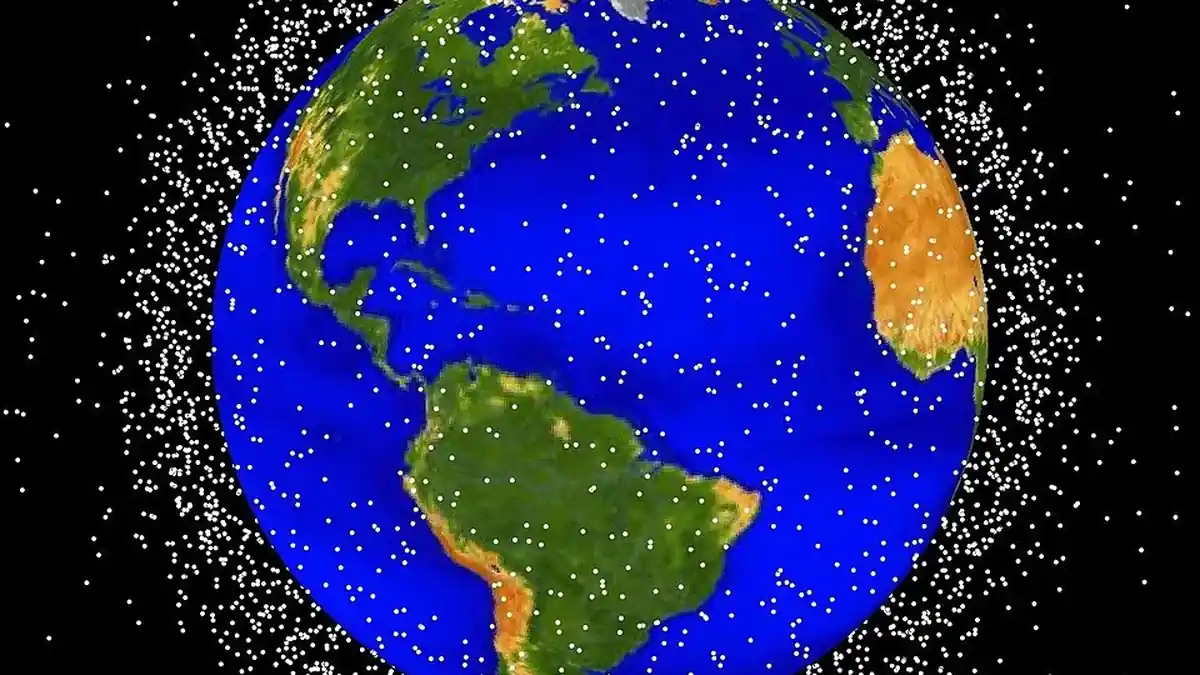
Space debris means inactive satellites, rocket fragments and collision remnants. They threaten active satellites and crewed spacecraft, and as traffic around the planet grows, early tracking becomes more useful. For the HSC, every step toward better surveillance helps keep activities in space safe and sustainable in the years ahead.
Who is building it
The radar belongs to the National Microsatellite Programme, funded by the EU’s Recovery and Resilience Facility and implemented by the General Secretariat of Telecommunications and Posts of the Ministry of Digital Governance. It is managed by the ESA Space Debris Office, and the HSC supports it. According to the programme page on the HSC website, the radar is being built in the Hymettus area and will track objects as small as 5 centimetres at a distance of 1,000 kilometres. It will thus contribute to pan-European forecasting of objects re-entering the atmosphere and to avoiding collisions in orbit.
The contractor is Spain’s Celestia TTI, in a consortium with GMV and OHB Hellas. They were assigned the design, development, installation and validation of the system. Construction of the radar was completed in late July 2026. The antenna was erected by HITEC Luxembourg S.A., while ORION S.A. took on the infrastructure and civil engineering. FDS Italy Srl will then add a radome, a protective dome that covers the antenna and shields it from weather. In a photograph accompanying the HSC announcement the dome is seen next to the radar before it is fitted.
What comes next
New tests will follow in the coming months. The system will be handed over for operational use by March 2027 at the latest, when its operation passes to the HSC. The project had been presented publicly since October 2025, when Manolis Mylonakis, a specialist scientist of the HSC, spoke about it at the 2nd Space Symposium on October 8.
The news is part of a broader turn by Greece toward space, which includes ESA’s HELLAS-SPACE 2.0 competition for Greek optical-observation satellites, and the NAVISP Work Plan 2027 in which Greece can take part. Space surveillance also matters for defence: the United States, for example, also draws on commercial providers, as the Space Force’s six CASR agreements for a commercial space-surveillance reserve show. The HSC also places the second HELLAS-SPACE 2.0 competition, which opened on Tuesday, November 17, within space domain awareness.