Greece
November 22, 1940: the Greek Army liberates Korytsa and Metaxas announces the victory
On November 22, 1940 the Greek 9th Division entered Korytsa (Korçë) after the Italians withdrew overnight, 25 days after the Italian ultimatum. Prime Minister Metaxas announced the victory to a crowd in Athens.

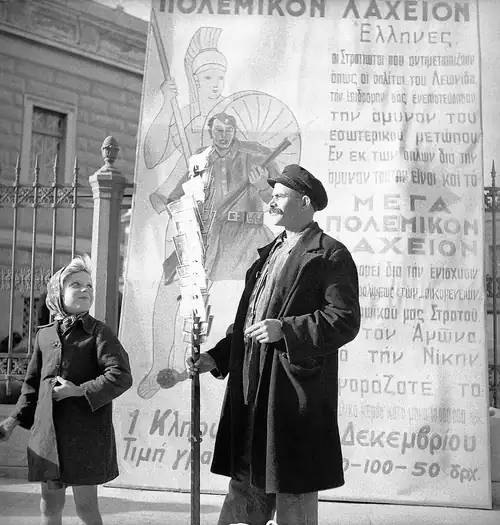
On November 22, 1940, the 9th Division of the Greek Army entered Korytsa (Korçë), after the Italians withdrew from the city overnight. In Athens, Prime Minister Ioannis Metaxas announced the news to a crowd gathered at Syntagma Square. The US Minister, Lincoln MacVeagh, cabled Washington that the British military attaché called it a “great victory”. It came 25 days after the Italian ultimatum of October 28.
How Korytsa fell
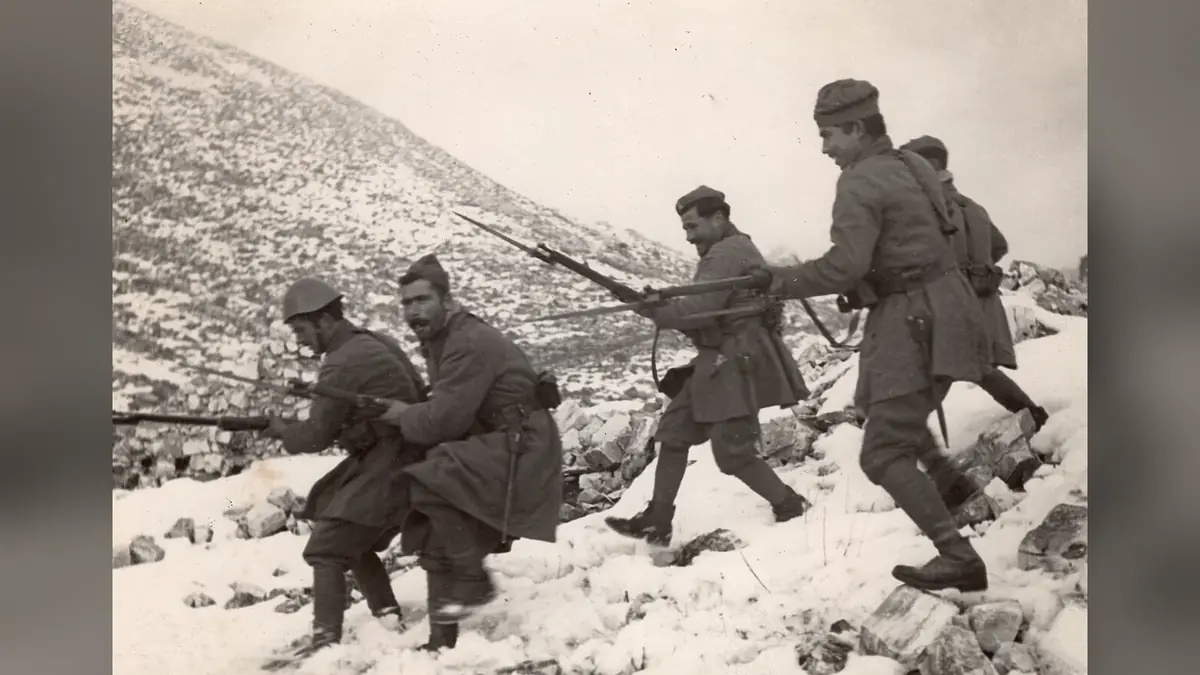
The Korytsa plateau controls access to the Devoll valley, and the Italians had built their defence on the Morova and Ivan mountains. The attack was led by III Corps under Lt. Gen. Georgios Tsolakoglou and the Western Macedonia Army Section under Lt. Gen. Ioannis Pitsikas, with Alexandros Papagos as Commander-in-Chief. It began on November 14 without artillery preparation, with troops advancing along the ridgelines and no tanks. Greek bombers of the 32nd and 33rd Squadrons hit the Korytsa and Argyrokastro airfields.
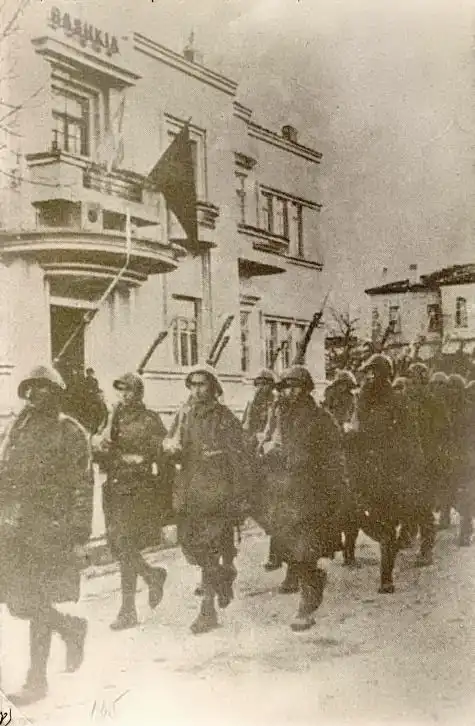
The 13th Division was reinforced on November 17 and the 11th on the 18th. That day the 13th wavered until Maj. Gen. Sotirios Moutousis banned any retreat. The summit of Morova was in Greek hands between November 19 and 21. The Italians withdrew at night, and on the 22nd a battalion of the 9th Division entered Korytsa. Aircraft hit a retreating column toward Pogradec, and more than 1,000 Italians were taken prisoner. II Corps took Ersekë on November 21 and Leskovik on the 22nd, and by November 23 no Italian soldier remained on Greek soil.
The news in Athens
In his 8 pm telegram of November 22, MacVeagh reported that the King’s aide confirmed the spoils were significant. The British attaché believed the Italians had thrown nearly their whole Albanian army into the battle and that their retreat would be hard. A Romanian ambassador told him Germany would soon give some help, and on November 23 the US chargé in Berlin reported that the German press had stopped detailing Italian difficulties.
A city with Greek history
The Greek Army had first taken Korytsa in December 1912, in the First Balkan War. The Florence Protocol of December 1913 awarded it to Albania, and the Corfu Protocol of May 1914 placed it in Autonomous Northern Epirus. It was under French administration from 1916 to 1920 and then stayed in Albania, until the Italians occupied it in 1939.
In his radio statement Metaxas said: “We fight not only for our existence but also for the other Balkan peoples, and for the liberation of Albania.” The Greek Foreign Ministry’s director-general told MacVeagh that a provisional Albanian government seated in Korytsa was unfeasible, and MacVeagh recorded that the Greeks hoped to regain southern Albania.
From Korytsa to the winter campaign
On November 23 Mussolini revoked the demobilisation order. By November 27 the whole plateau was Greek, at a cost of 624 dead and 2,348 wounded for the Western Macedonia Army Section. Moschopolis fell on November 24 and Pogradec on November 30. Greek headquarters chose Avlona over Elbasan as its objective. Agioi Saranta fell on December 6, Argyrokastro on December 8 and Himara on December 22. Korytsa remained in Greek hands until the German invasion, and the Italians reached it again on April 14, 1941.
Frequently asked questions
When was Korytsa liberated? On November 22, 1940, when the 9th Division entered the city.
Who announced it? Prime Minister Ioannis Metaxas, to a crowd at Syntagma Square in Athens and in a radio statement.
Why was it important? The plateau controls the Devoll valley, and its fall ended the Italian presence on Greek soil and opened the way into Albania.
How long did it stay Greek? Until the German invasion, when the Italians returned on April 14, 1941.