Drones
USA: Four laser and microwave weapons selected to protect US bases from drones
The Pentagon announced on October 5 the four directed-energy weapons – three high-energy lasers and one high-power microwave system – that will be tested at US military bases against drones in a one-year pilot requested by Congress.

The US Department of Defense announced on Monday, October 5, the four directed-energy weapons that will be deployed and tested at military bases on US soil to counter drones. They are three high-energy lasers and one high-power microwave system, the first to join the pilot program requested by Congress.
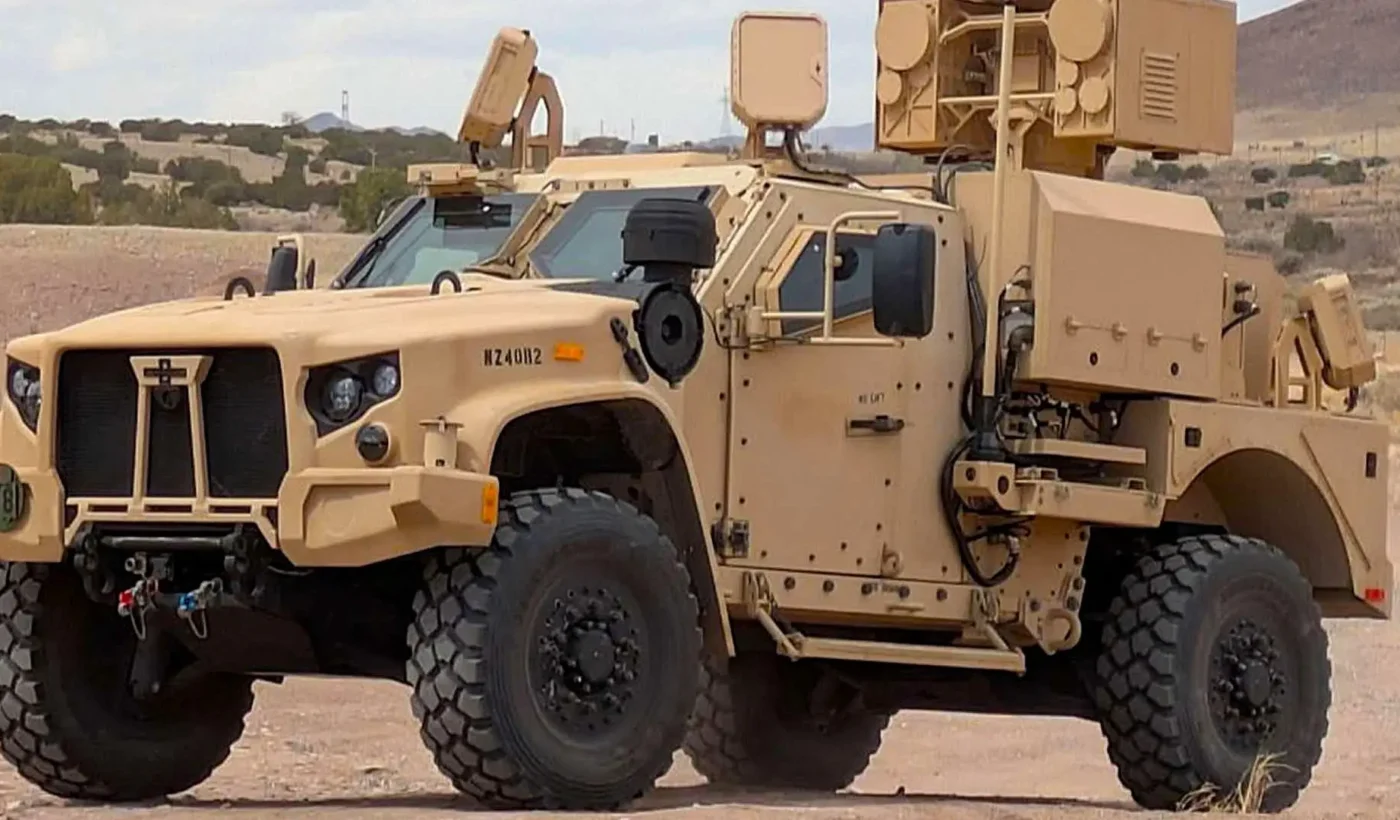
The systems selected are AeroVironment’s Palletized High-Energy Laser, Epirus’s Leonidas microwave system, the Firefly laser from Kord, a subsidiary of KBR, and Boeing’s Compact Laser Weapon System (CLWS). The program is run by Joint Interagency Task Force 401 (JIATF-401), the organization under the US Army that was set up last year to coordinate counter-drone defense across the armed forces and other federal agencies. According to Defense News, its director, Brig. Gen. Matt Ross, said in the release: “High-energy lasers and high-powered microwave systems are tools that can be effectively used in a layered drone defense. This pilot program will test these capabilities in an operational environment so we can understand how best to integrate and sustain them to defend the homeland.”
Five bases, one year of testing
According to the Pentagon, the program will gather real-time data on the systems’ performance, cost, and operating and maintenance requirements. It will last one year, with military personnel operating and maintaining the weapons, as Ross said in August. Five sites were chosen in May: Fort Huachuca in Arizona, Fort Bliss in Texas, Naval Base Kitsap in Washington state, and the Grand Forks Air Force Base in North Dakota and Whiteman Air Force Base in Missouri. The announcement does not say which system will go to which base, how many will be deployed or what the cost will be.
AeroVironment’s system is the LOCUST laser in a palletized configuration, so that it can be moved by truck or ship and set up wherever it is needed. In September the US Army awarded the company a $464.8 million contract to produce the 30-kilowatt LOCUST X3, and the same month AeroVironment announced the first international order for the LOCUST. Firefly is offered with power from 5 to 40 kilowatts, while Boeing’s CLWS is a lower-power laser. Leonidas, the only microwave system in the program, is the basis of the prototype the Army is developing to counter drone swarms. Epirus has announced that in a test in September 2025 the system disabled all 61 target drones, among them a swarm of 49 drones, with a single emission.
The use of lasers in US airspace has already caused problems. In February the Federal Aviation Administration (FAA) briefly closed the airspace over El Paso when a counter-drone laser was used near Fort Bliss without coordination with the agency. After a live-fire demonstration at White Sands Missile Range in March, the FAA announced on April 10 that the systems tested, with appropriate safety measures, “do not pose undue risk to passenger aircraft.”
The Pentagon will continue to evaluate other directed-energy technologies and in December will host comparative firings at the Dugway Proving Ground in Utah for additional laser and microwave systems.