Opinion Greece
Opinion: The cultural gap in Greek-Turkish relations reaches all the way to Thrace
Columnist Marios Aidonidis argues that Greek and Turkish perceptions draw on two opposite historical foundations, and that this gap now shows in Thrace, where Ankara promotes a single “Turkish” identity for the whole Muslim minority.

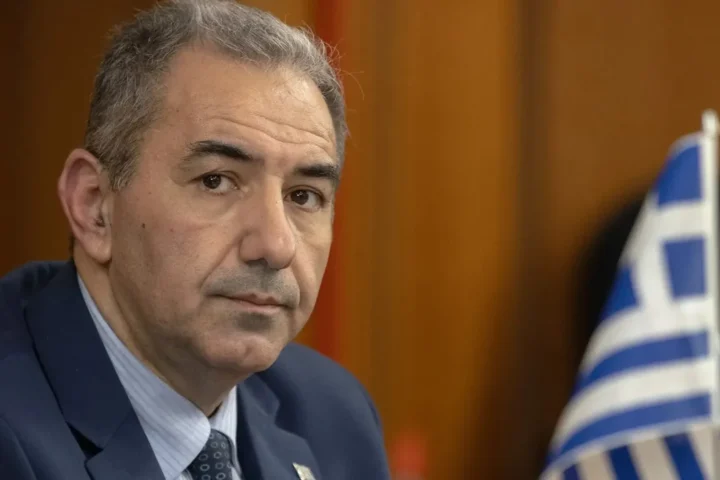
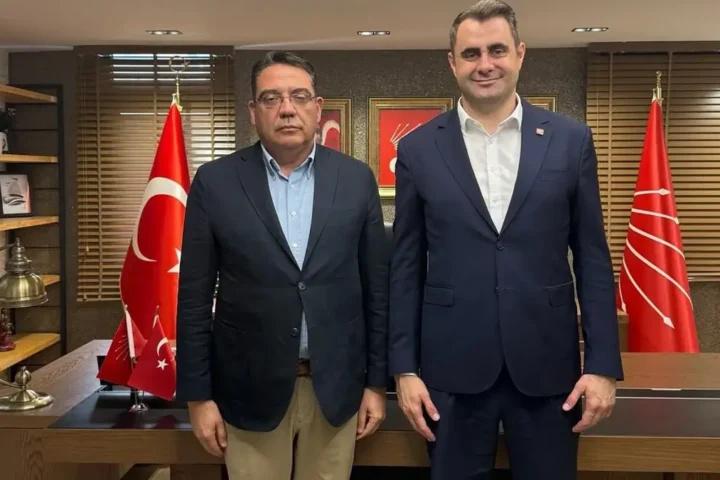
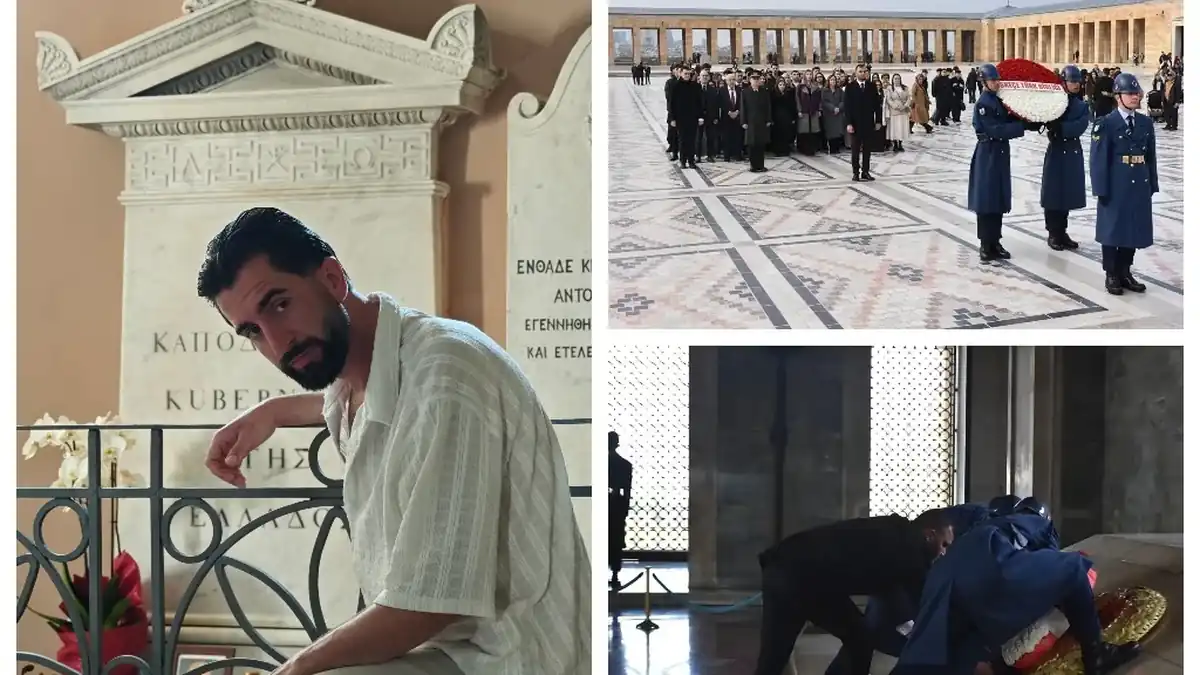
Collage: the author, and the delegation of the Turkish Union of Xanthi at Anıtkabir in Ankara, November 2026. Photos: Marios Aidonidis / NEMESIS HD.
By Marios Aidonidis, columnist and researcher
I have referred repeatedly to the concept of the cultural gap, precisely because the two poles of perception, the Greek and the Turkish, draw their outlook from different historical and cultural components.
Two worlds of perception
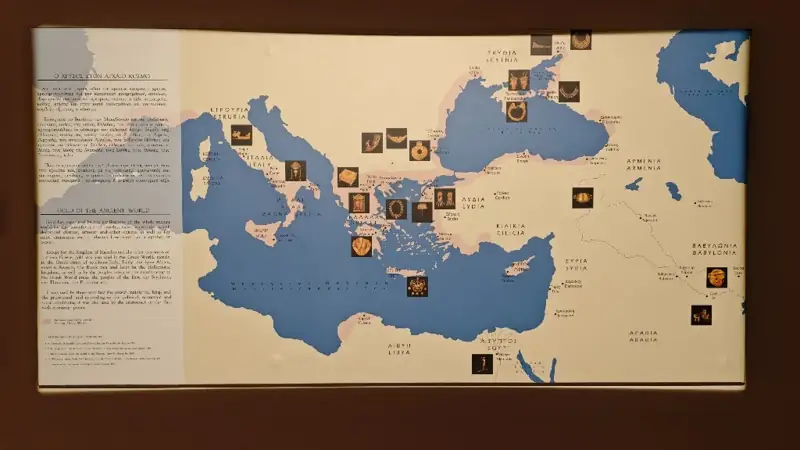
On one side stands the Greek perception, the Greek spirit, which reaches back to foundational figures of history, drawing information about Greek reality. From antiquity, with the ancient Greek philosophers and historians, from Socrates to Aristotle, from Herodotus to Thucydides, all the way to modern history, with Adamantios Korais and Rigas Velestinlis. All of them national and spiritual benefactors, among many others Ioannis Kapodistrias as an architect of this edifice, saviors of Greekness.
People who lean toward Hellenism perceive and experience themselves as part of an unbroken historical and cultural continuum, of which Hellenism is the fundamental core. This is the broader geographical space within which Greek civilization was born and spread as a cultural influence, shaping its presence throughout the region over time.
On the other side stands Mustafa Kemal Atatürk, founder and first president of the modern Turkish Cumhuriyet (Türkiye Cumhuriyeti), the Turkish “kingless” regime, and not a Democracy. (A subject for a future analysis: the distinction between “Cumhuriyet” and Democracy, of which Mr. Dimitrios Stathakopoulos is an excellent documenter.)
According to the modern Turkish national perception consolidated by Mustafa Kemal with the founding of the new state, the populations that come from the broader Ottoman imperial fabric and space and make up the modern Republic of Turkey are presented as the natural heirs of this land.
They overlook, however, that they live in the historical space of the Hittites, the Armenian kingdoms, the Phoenicians and the Ionians. Far from, and at the very edge of, the geographical cradle of the Turkic tribes (a result of Turkish advances and conquests). From the course of historical developments and the incorporation of features and institutions of the Hellenistic Eastern Roman Empire (likewise a result of the Roman conquest) and of elements of the local population such as traditions, eating habits, cognitive and cultural values, all this is considered part of a single, continuing historical path that the Turks take as their inheritance, perhaps forgetting that they adopted all of it.
The point of contact and the complex reality of identities
So we are confronted with these two opposite poles, between which lie the mixed populations, the crossing cultural influences, but also the bodies that try to co-opt or appropriate those influences, placing them unilaterally in one national narrative or the other.
This is precisely the great divide. Citizens at the boundary of different cultural influences often face confusion or inner conflict over their own self-definition:
On one hand, they see that a neighboring country such as Turkey shares with them the same religious bonds, Islam, a later branch of the Biblical-Abrahamic religions, after the expansion of Arab influence and its spread by Muhammad in the 7th century AD.
On the other, they belong to a distinct ethno-cultural community, such as the Pomaks, whose cultural and demographic presence extends beyond borders. An area that includes part of the Greek state but also the southern part of Bulgarian territory, divided on purely geographical criteria, separating the two states between the natural obstacles of the Rhodope mountain range. After the population exchange between them (1920–1932), the Pomaks of this geographical area were excluded from it, so that despite the cross-border split a broader zone of cultural contact and mixed cultural identity remained, where different historical, linguistic and cultural influences were preserved and their reach continued to cross the de facto borders set by the international treaties.
Likewise, the Roma community is an integral part of this complex demographic and cultural reality. At the same time there is also the population component with no other exclusive cultural identity, which therefore self-identifies as Turkish or of Turkic origin, creating confusion and even disputed issues, since if we look more closely, even inside Turkish territory there are citizens divided into different ethnic and linguistic identities, the most characteristic being the Kurdish population, known as the largest ethnic group in the world without a state of its own.
To a degree, self-definition is a matter of personal choice and freedom for each person. The Greek position, as officially formulated in the 1923 Treaty of Lausanne, is that a Muslim religious minority is recognized in Thrace, which does not mean it matches how each individual perceives reality, but is certainly fully identical with what the internationally recognized Treaty states. By comparison, the minority in Constantinople, Imbros and Tenedos is referred to as Greek, clearing up the picture through other co-religionist Christian populations and narratives.
Political expressions
A result of this situation is that we observe in practice phenomena reflecting this ideological and cultural shift. A characteristic example is the recent visit of the Turkish Union of Xanthi (İskeçe Türk Birliği) to the mausoleum of Mustafa Kemal Atatürk (Anıtkabir) in Ankara, as a sign of respect for a historical political leader with whom its members choose to identify.
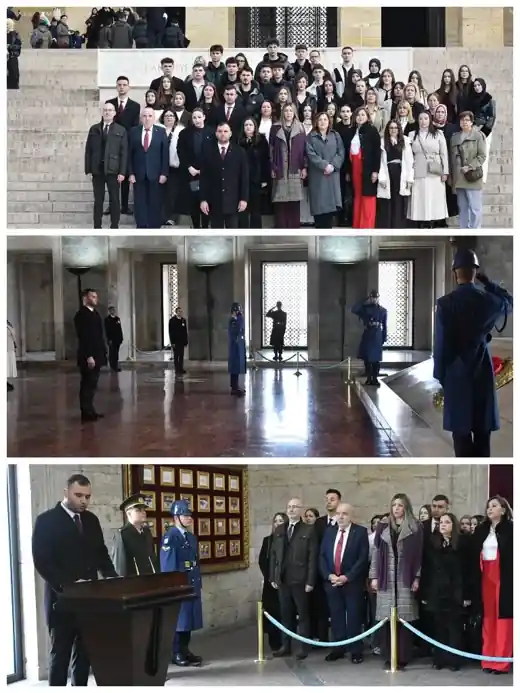
The visit, held on November 16 and 17, 2026, was accompanied by an official wreath-laying ceremony with the inscription “Turkish Union of Xanthi” by the Union’s president and a signing of the mausoleum’s guest book. The delegation’s statement makes explicit reference to “Turks of Western Thrace” and to continuing Atatürk’s legacy and ideas.
For those who love history and are deep readers, this awakens memories of the National Pact (Misak-ı Millî) that Mustafa Kemal delivered in his lengthy speech (Nutuk): according to Article 3, the legal status of Western Thrace should also be determined by the free vote of its inhabitants, while Article 5 refers to the freedoms of minorities outside Turkish territory. With the various barbs this leaves, since the agreements of that period and the political decisions of the time are in an outdated state in relation to today, and especially in the modern geopolitical firmament and Turkey’s continuing and also absurd claims (a subject for a future analysis: which historical omissions these claims are owed to). After all, let us not forget where Mustafa Kemal was born and raised. This easily becomes a cause of revisionist and irredentist claims by itself.
Not a few are the cases of organizations and political bodies that systematically promote and adopt the Turkish narrative, whether through the Equality, Peace and Friendship Party (DEB / Dostluk Eşitlik Barış Partisi), with a strong political presence in Komotini and the wider Thrace area, or through the Turkish Union of Xanthi, promoting the idea of a “single Turkish identity” for the whole Muslim minority, overlooking the phenomena that lead us to faits accomplis. (A relevant historical reference: for those who know, this development awakens memories of the history of Cyprus.)
Let us not forget what became of the recognized Greek minority after the Turkish state’s methodical plan to have a willing minority member (a plant) commit a provocation, an event that triggered the barbaric uprooting of the Greeks of Constantinople in 1955, with the national liberation struggle of the Cypriots in view.
In contrast to this approach, we find associations such as the Cultural Association of Pomaks of the Xanthi Prefecture and the blog of the newspaper “Zagalisa”, which promote and claim a distinct Pomak cultural identity with its own autonomous historical and linguistic continuity. The association has developed cultural activities and published books, dictionaries and records of traditional songs, while highlighting the Pomak language as a vehicle of memory, customs and local history.
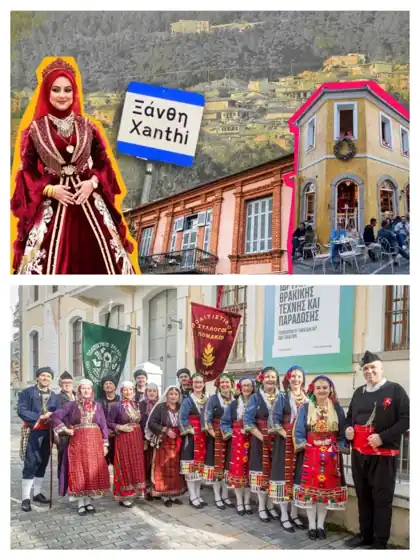
This is an identity that is entitled to keep its autonomy, but also not to slide toward adopting and joining the narrative of the other side, which seeks to establish its ideas inside the national territory.
Epilogue
This is exactly the essence of the cultural gap in Thrace: the clash of two different perceptions of historical heritage, cultural continuity and the identity of the populations living in the same geographical space.
In this complex environment, what is critical is not the clash of different cultural elements but understanding and peaceful coexistence, along with accepting a larger, surviving reality: the reflection of the intense presence of the Great Cultural Influences that shaped modern reality.
Highlighting the Pomak and Romani particularity, as well as that of the Alevis/Bektashis and of those with a rough cultural identity, a footprint, but always within the framework of Greek citizenship and the European acquis, is the natural answer to attempts at their assimilation by Turkish nationalism. Preserving the linguistic, cultural and historical autonomy of the communities does not undermine Greek state unity; on the contrary, it consolidates it, proving that polyphony can coexist with a clear and unified national identity. After all, that is what Hellenism was: the establishment of ideas and values.
Marios Aidonidis