Cyprus
Cypriot NAVTEX for KOBI RUEGG’s surveys for the East to Med Corridor cable – second counter-NAVTEX from Antalya over a “Turkish continental shelf”
Cyprus issued a NAVTEX for geophysical surveys by the vessel KOBI RUEGG in its EEZ for the East to Med Corridor cable, and Antalya answered with a second counter-NAVTEX the same day, claiming the area as Turkish continental shelf.

Cyprus has issued a NAVTEX for geophysical surveys by the research vessel KOBI RUEGG inside the Cypriot EEZ, for the East to Med Corridor (EMC) submarine cable system. According to NAV WRNG 302/26 of the Larnaca Joint Rescue Coordination Centre, issued on October 15 and published in the active NAVTEX messages of the Cypriot authorities, the vessel “will carry out geophysical survey operations for the East to Med Corridor (EMC) cable system within the EEZ of the Republic of Cyprus from October 21, 2026 to November 2, 2026.” The NAVTEX expires on November 3.
The work will be carried out along two lines with a corridor width of 10 nautical miles, five on each side, and passing ships are asked to keep five nautical miles away. From the coordinates, the two lines start west of Cyprus, at roughly 30°34′–30°50′ east, and head south-east to 32°22′ east and 33°41′ north. This is a sea area west of the 32nd meridian, which Ankara claims as part of its own continental shelf.
The Turkish reaction came the next day. In its notice no. 1020/26, the Antalya NAVTEX station of the Turkish hydrography service argues that the area announced by an “unauthorised station” lies inside the Turkish NAVTEX area of responsibility and on the Turkish continental shelf in the Eastern Mediterranean, whose outer limits were notified to the UN on March 18, 2020 (document A/74/757). Ankara repeats that the “Cyprus” of the NAVTEX is not the state of 1960 and that the efforts of the “Greek Cypriot Administration of Southern Cyprus” to legitimise “illegal claims” are void and not accepted. It is the second counter-NAVTEX of the same day, after the one for the exercise south of Crete.
The cable linking Saudi Arabia with Europe
The EMC is the fibre-optic project that will connect Saudi Arabia with Europe. According to the announcement of the contract with Alcatel Submarine Networks in May 2023, EMC West will link Hakl in Saudi Arabia with Genoa and Marseille “via Cyprus and Greece”, with branches in Cyprus, Crete and Athens, and the aim of making Greece and Cyprus the “EU’s Eastern Data Gateway”. The project company includes center3 of the stc group, PPC (ΔΕΗ) and TTSA. The original start date, the first quarter of 2026, has been missed. According to Middle East Eye, Riyadh wants to route the cable through Syria instead of Israel, Greek and Saudi banks would finance 60%, and Turkey is opposed.
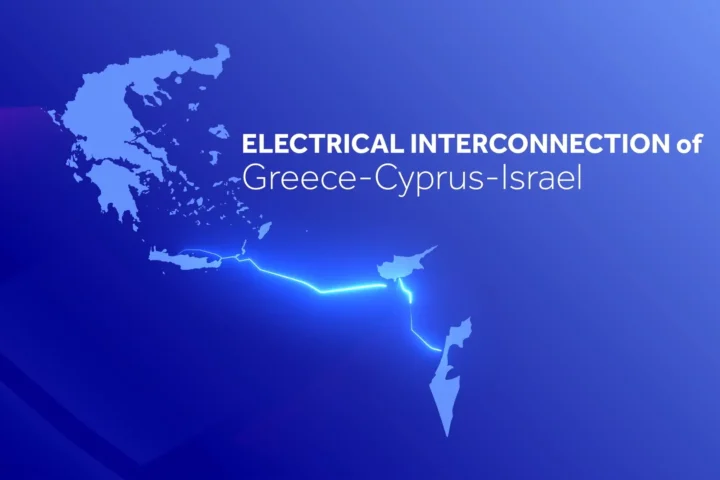
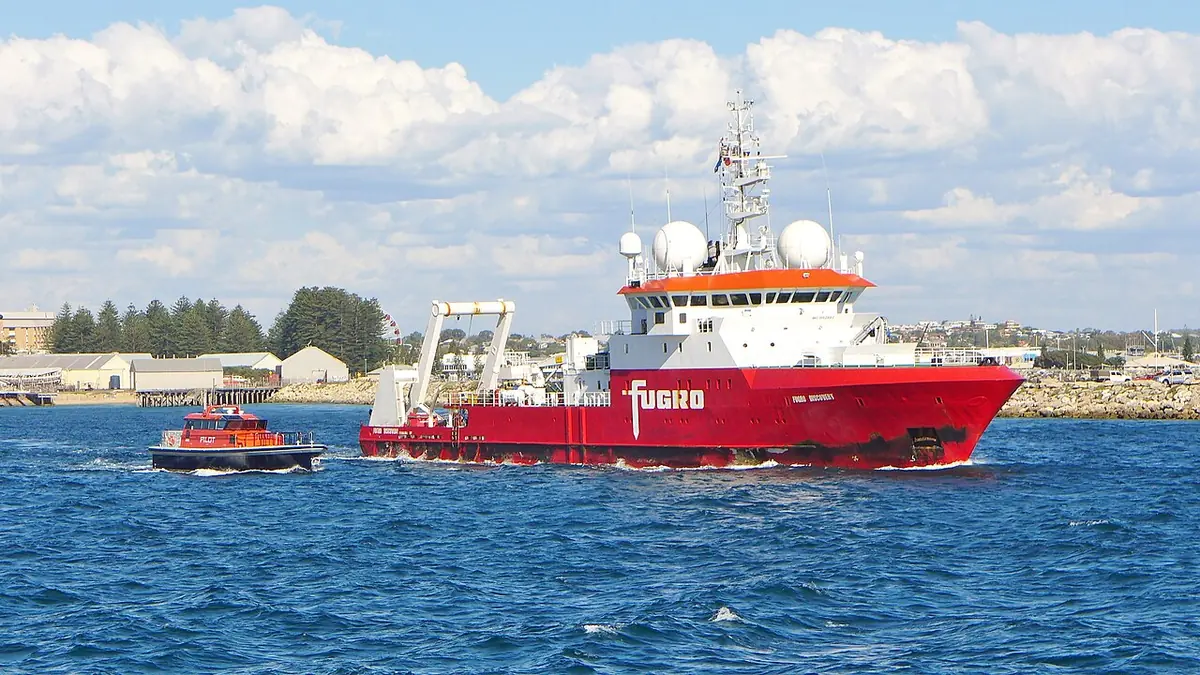
KOBI RUEGG (IMO 9713753) is a 58-metre multi-role survey vessel of the Dutch company Fugro, equipped for geophysical survey, geotechnical sampling and a remotely operated underwater vehicle. According to a Fugro announcement, it is based at Abu Qir in Egypt and covers the Eastern Mediterranean and the Red Sea. Turkish pressure on cable projects in the region is not new, and the question of what Greece would do if Turkey obstructed work on the Cyprus–Greece electricity interconnection remains open.