Greece
Egypt reopens its embassy in Tripoli after 12 years – what Abdelatty told Dbeibah about the Turkish-Libyan memorandum – sources
Egypt’s foreign minister reopened the historic embassy building in Tripoli, closed for 12 years, and in all his meetings restated Cairo’s “standing legal position” on the Turkish-Libyan memorandum.

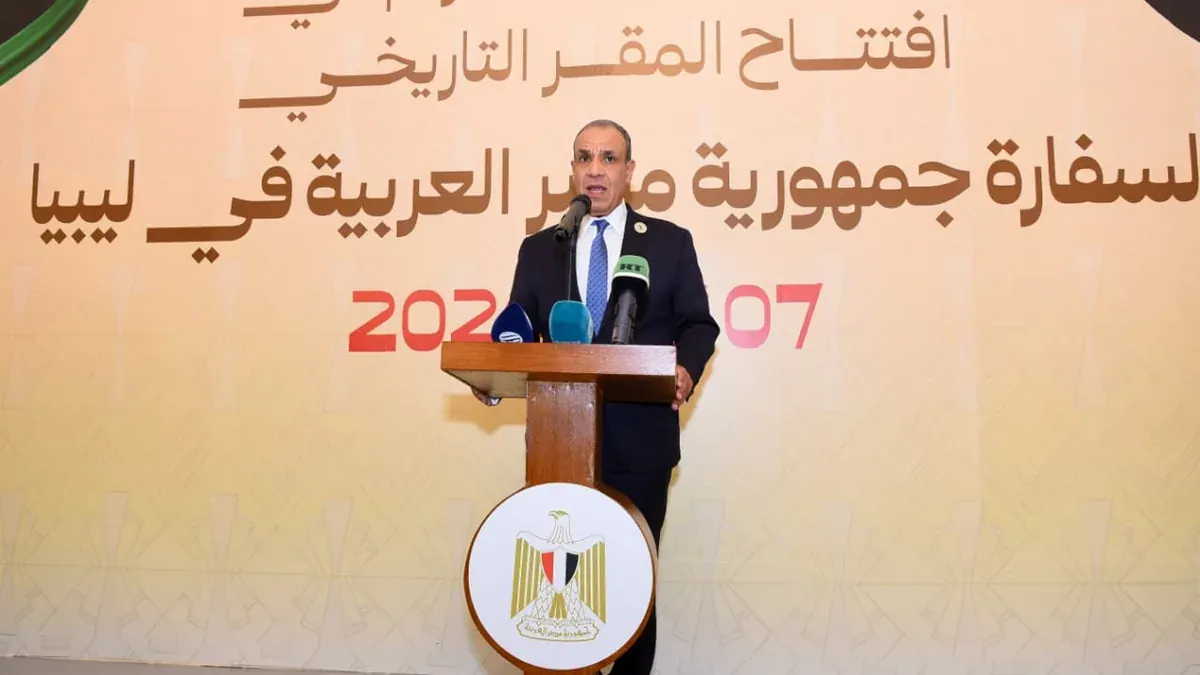
Egypt has returned diplomatically to Tripoli. Foreign Minister Badr Abdelatty on Saturday, November 7, inaugurated the historic building of the Egyptian embassy in the Libyan capital, which had stood closed for twelve years for security reasons. Tahir al-Baour, acting foreign minister of the Tripoli government, attended the ceremony.
In the Egyptian foreign ministry statement, spokesman Ambassador Nader Zaki relays Mr Abdelatty’s words: the building is “an integral part of Tripoli’s memory,” and its use again as the embassy’s seat gives its history “a living continuity.” The Egyptian minister thanked the Libyan authorities for supporting the maintenance and renovation work.
The Turkish-Libyan memorandum on the table
The visit was not limited to the inauguration. Mr Abdelatty met the same day Prime Minister Abdulhamid Dbeibah of the Government of National Unity, Presidential Council chairman Mohamed al-Menfi and Mr al-Baour. In all three meetings he raised the same issue: Cairo restated its “standing legal position” on the Turkish-Libyan maritime zones memorandum, which Athens considers illegal.
In the meeting with Mr Dbeibah, Mr Abdelatty asked that Egyptian concerns over the delimitation of maritime borders be taken into account, on the basis of international law and the UN Convention on the Law of the Sea (UNCLOS). The Egyptian side notes there was agreement on this. It is a position that matches the Greek one, as was evident at the third round of Greece-Egypt consultations on Libya in Athens in October.
The move also matters for the balance in Libya. For years Cairo was seen as a backer of the eastern administration and of Khalifa Haftar, while Tripoli has ties with Ankara. Only in October, during the visit of Ibrahim Kalin to Tripoli, the Libyan foreign ministry welcomed approval of the memorandum. An Egyptian embassy in the capital now gives Cairo a direct channel to the government that signed the memorandum with Turkey.
Trade, investment and the role of Egyptian companies and workers in reconstruction were also discussed with Mr Dbeibah. Mr Abdelatty asked for facilitation for Egyptians living in Libya, including extended deadlines and the cancellation of accumulated fines, as well as for students. The two sides are preparing the next session of the Supreme Joint Committee.
The energy side was discussed at the embassy building with the responsible minister for oil and gas, Khalifa al-Sadiq. Mr Abdelatty asked for faster construction and interconnection of gas pipelines between the two countries, refining of Libyan oil in Egyptian refineries for re-export, rehabilitation of Libyan refineries and an electricity interconnection. The Libyan minister announced a visit to Cairo for talks with his Egyptian counterparts on oil and electricity.
In the meetings with Mr Dbeibah, Mr al-Menfi and Mr al-Baour, Mr Abdelatty stressed that Egypt supports a Libyan-owned and Libyan-led political solution without foreign interference, referring to the Skhirat Agreement and aiming at the unity of the country and its institutions.