Cyprus
The French note verbale to Ankara over the cable: a notification or something more? – Without the document, NAVTEX remains Greece’s official position
The French note verbale delivered in Ankara over the Abeille Marengo surveys became the main political issue around the Greece-Cyprus cable. Athens says it was a notification, not a request for permission.

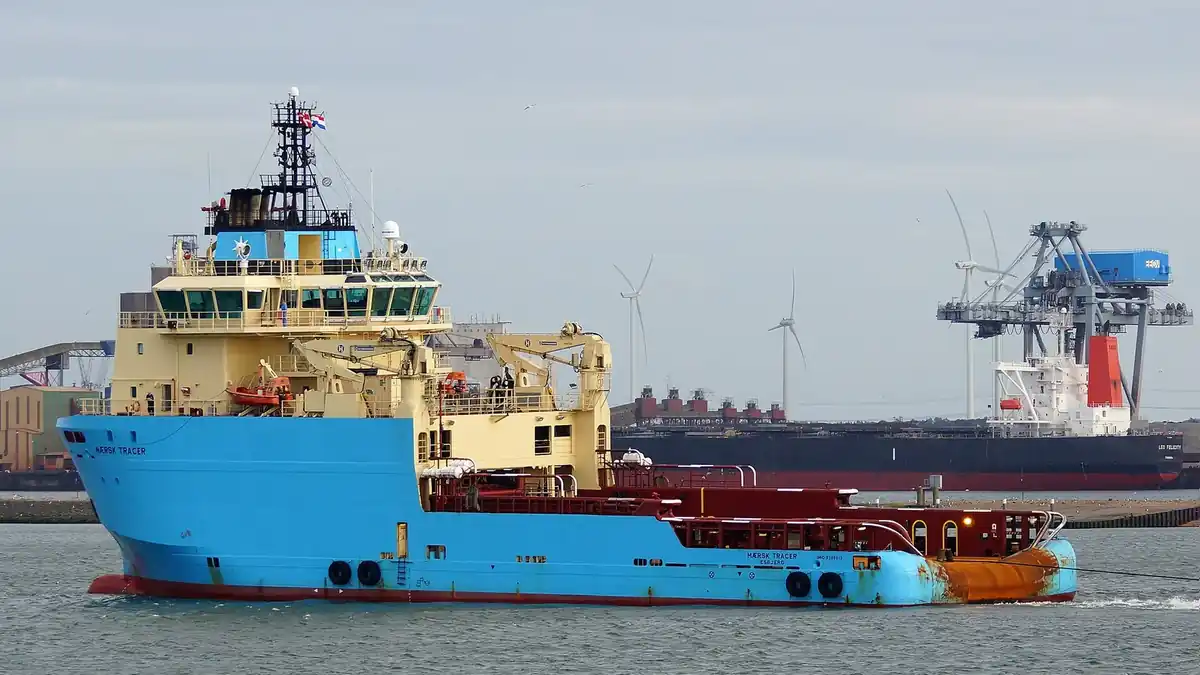
The French note verbale delivered in Ankara over the surveys of the research vessel Abeille Marengo became, within hours, the central political issue around the Greece-Cyprus cable (GSI). The question is a simple one: was it a routine notification, or something that can be read as indirect acceptance of Turkish claims?
The first named government position on the note came from Deputy Foreign Minister Tasos Chatzivasileiou on Monday, November 9. “Following the licensing request submitted to the Greek government and the permit, which was granted exclusively by Greece, the French side proceeded to a notification of the start of work, through a note verbale,” he said, adding that the content of the document shows it is a notification and not a request for permission. Diplomatic sources also say a similar document was sent to Egypt.
We have yet to see the document
Informing a third state is not in itself a problem, provided it is a simple notification and not a recognition of sovereign rights. The problem is that the character of the note is not evident, since the text has not been made public. Everything we know about its content comes from government statements and anonymous diplomatic sources. Until we see the paper itself, any assessment of whether it refers to maritime jurisdiction, the continental shelf or simply navigation remains conjecture.
For now, the country’s official public position is NAVTEX 1411/26 of the Heraklion Station. It is the Greek navigational warning that reserves the survey areas from November 6, 2026 to March 6, 2027 and states explicitly Greek sovereignty on the matter. Turkey responded with its own counter-NAVTEX, as we reported earlier, which shows that Ankara continues to challenge Greek jurisdiction.
A notification that was not necessary
Athens had said it would neither ask for a permit nor inform Turkey. Foreign Minister Giorgos Gerapetritis said it on Wednesday, November 4: “no permit will be requested, nor will we inform Turkey.” He did, however, leave room, saying that an “informal briefing” on the ship’s departure “produces no legal consequence.” On Sunday, November 8, Prime Minister Kyriakos Mitsotakis repeated that Greece and Cyprus are the countries that license the works, without making clear whether Turkey was informed.
The notification from the French side was not formally necessary. The law of the sea on submarine cables (explained here; Article 79 of the UN Convention) provides that the coastal state may not impede the laying of cables on its continental shelf, and the permit for the project has already been issued by Greece. Paris’s choice, and its defence by Athens, show that the government is trying, with diplomatic “cocktails,” to avoid tension with Turkey as the surveys resume.
The cost of this tactic is political. The Greek Left Coalition called the note an “unacceptable development,” the KKE spoke of a “very serious development” and New Left of a “blow” to the government’s “bluster,” while PASOK announced a topical question in the European Parliament. The substance will be decided at sea: if the surveys proceed without harassment on the basis of the Greek NAVTEX, the note will remain a diplomatic footnote. If, however, Ankara invokes it as a precedent, Athens will need to make public exactly what Paris wrote.