Cyprus
Sinirlioğlu’s double flop at the UN: only three favourable votes, and pressed by Greece and Cyprus
Turkey’s candidate for UN Secretary-General reportedly won only three favourable signals in the Security Council’s informal poll, then avoided the substance of Greek and Cypriot questions.

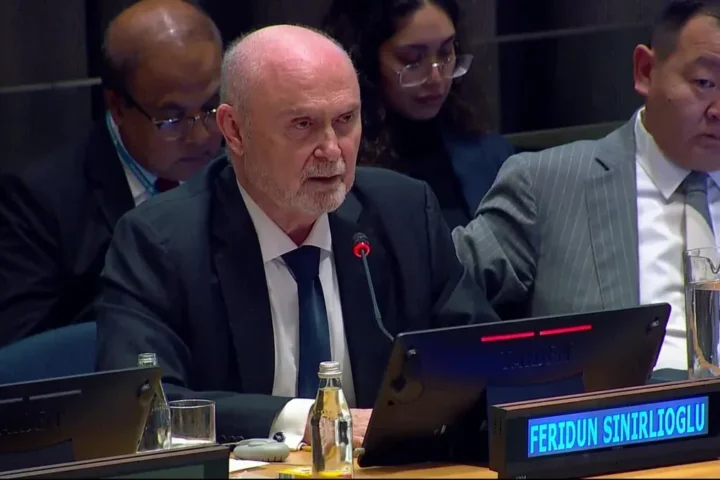
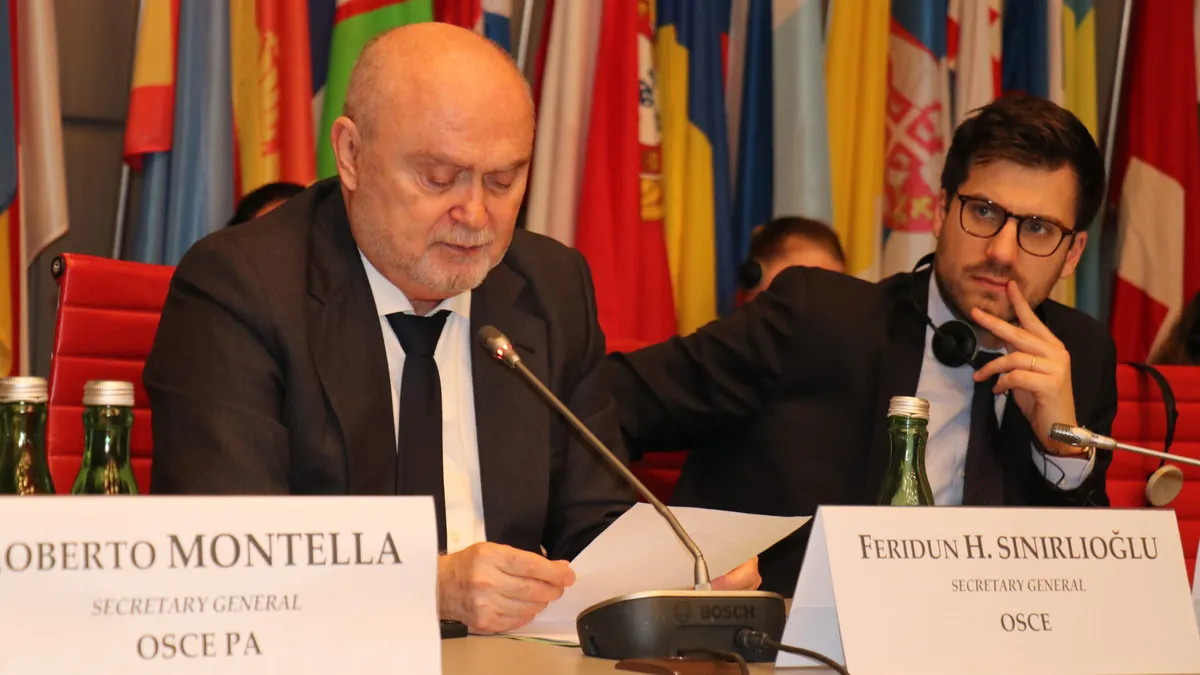
A heavy blow to Turkey’s ambitions to lead the United Nations was the first test of Feridun Sinirlioğlu in the Security Council, while his public hearing at the General Assembly turned into an extremely difficult diplomatic exercise. The Turkish candidate for Secretary-General found himself facing direct questions from Greece and Cyprus, avoiding specific answers on the Turkish-Libyan memorandum, the recognition of the Republic of Cyprus and the implementation of UN decisions.
In the informal vote of November 5, 2026, Sinirlioğlu collected only three favourable signals of support from the 15 members of the Security Council, placing sixth among the eight candidates. The result was disappointing for Ankara, which had submitted his candidacy only four days earlier.
This is an informal straw poll to assess the candidates and not the final election of a Secretary-General. Still, the very limited support he recorded shows how difficult the effort is expected to be for Turkey.
The detailed picture of the vote is even more revealing: three favourable votes, eight unfavourable and four members with no stated opinion. By contrast, Rebeca Grynspan of Costa Rica gathered 12 favourable votes, Rafael Grossi of Argentina nine and Carolyn Rodrigues-Birkett of Guyana eight. The figures come from information leaked from the informal process, as the Security Council does not officially publish the detailed results.
Greece raised the Turkish-Libyan memorandum – Sinirlioğlu avoided the substance
The difficult sequel for the Turkish diplomat came on November 6, during the General Assembly’s interactive dialogue with the candidates. As we reported earlier, Greece’s Permanent Representative to the UN, Aglaia Balta, directly raised the question of the credibility of Sinirlioğlu as a candidate who declares his commitment to international law, recalling the positions he had defended as Turkey’s representative.
At the centre was the Turkish-Libyan memorandum, which ignores the rights of Greek islands. The Greek ambassador stressed that Turkey and Libya have no opposite or adjacent coasts that would justify the delimitation as shown in the memorandum, calling the agreement a flagrant reshaping of geography.
Her question was clear: how can a candidate for Secretary-General invoke good faith, international law and the peaceful settlement of disputes when in the past he has defended positions that violate those very principles?
Sinirlioğlu did not answer on the substance of the Turkish-Libyan memorandum. Instead of explaining or revising his earlier positions, he limited himself to saying: “I have been nominated by my country, but I am not here as a representative of my country.” He also argued that he has proved he can act as an independent and impartial international official. The answer, however, did not address the specific legal and political issue raised by Athens.
Cyprus asked whether he recognises the Republic of Cyprus – he did not answer directly
Even more pressing was the intervention of the Permanent Representative of the Republic of Cyprus, Maria Michael, who put five specific questions to the Turkish candidate.
The first concerned the very existence of the Republic of Cyprus. The Cypriot diplomat recalled a letter of May 19, 2022, in which Sinirlioğlu, then representing Turkey, argued that the Republic of Cyprus had ceased to exist as a legal entity in 1963. Ms Michael asked him to make clear whether he now recognises the sovereignty, independence, territorial integrity and status of the Republic of Cyprus as a UN member state.
The Cypriot delegation also asked Sinirlioğlu to condemn the attacks on UN peacekeepers at Pyla in August 2023, to accept the Security Council’s decisions on Varosha and to commit to implementing the relevant resolutions.
The last two questions concerned allegations of torture in Turkey and restrictions on freedom of assembly after the arrest of Istanbul mayor Ekrem İmamoğlu in 2025. The Cypriot ambassador asked whether the candidate shares the concerns of the competent UN bodies and whether he would support independent investigations and the protection of fundamental rights.
The answer the Turkish candidate did not give
Despite the clarity of the five questions, Sinirlioğlu gave no separate and specific answers. He preferred to invoke the UN Charter in general terms, arguing that its principles would guide his work if elected Secretary-General, including in handling the Cyprus problem. He also referred to changing geopolitical conditions and the importance of an international official’s impartiality, citing former Secretary-General Dag Hammarskjöld.
However, he did not state explicitly that he recognises the Republic of Cyprus, did not specifically condemn the incidents at Pyla and set out no clear position on Varosha or the human rights issues raised.
Three votes and the credibility problem of the Turkish candidacy
For Ankara, the combination of low support in the Security Council and the candidate’s inability to answer the questions put by Greece and Cyprus creates a serious political problem.
The process for choosing the next Secretary-General remains open, and Sinirlioğlu has a further informal dialogue with the Security Council scheduled for November 9. The result so far, though, is clear: Turkey’s choice gathered only three favourable votes in his first test and avoided answering on the substance the most important questions from Greece and Cyprus.