Asia-Pacific
IAEA: North Korea has externally completed a new extension of the Yongbyon enrichment facility
IAEA chief Rafael Grossi told the Board of Governors that North Korea has externally completed a new extension of the Yongbyon enrichment facility, calling the programme's expansion “a cause of serious concern”.

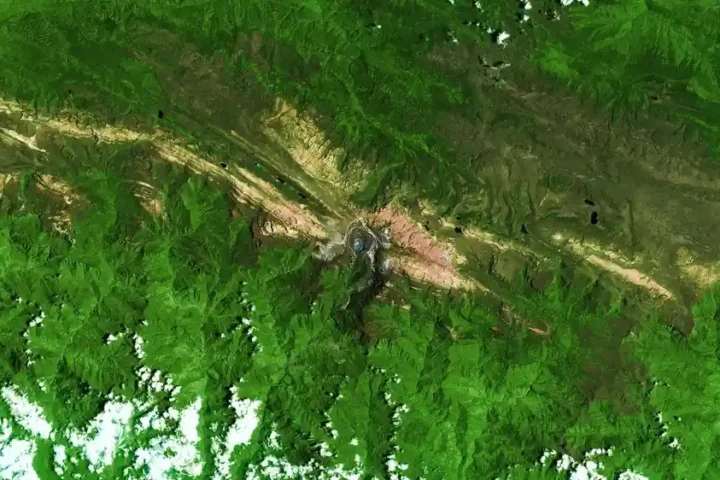
North Korea has externally completed a new extension of the original uranium enrichment facility at the Yongbyon nuclear complex, International Atomic Energy Agency (IAEA) Director General Rafael Grossi announced. Mr Grossi spoke on Wednesday, November 18 in Vienna, in his introductory statement to the Agency’s Board of Governors, which has 35 member states and meets quarterly. “Since mid-September 2026, a further extension of the original Yongbyon enrichment facility has been under construction, with the new extension externally completed by the end of October 2026,” he said.
The head of the IAEA recalled that he has already briefed the Board on the continued operation of enrichment facilities at Kangson and Yongbyon, the construction of an additional enrichment facility at Yongbyon, and reports of a further increase in Pyongyang’s production of weapons-grade nuclear material. “The continued expansion of the DPRK’s uranium enrichment programme remains a cause of serious concern,” he added, using the initials of the country’s official name, the Democratic People’s Republic of Korea. Kangson lies just outside Pyongyang, to the southwest, while the much larger Yongbyon complex is farther from the capital, to the north.
Reactors and the Agency’s blind spot
The Agency has also “observed indications” that the 5-megawatt reactor at Yongbyon, with which Pyongyang produces plutonium from spent fuel, is most likely still operating. According to Mr Grossi, the reactor is in its seventh irradiation cycle, after which the spent fuel will be removed for reprocessing. A second, light-water reactor at Yongbyon has been operating since April, he added. Pyongyang, which has carried out several nuclear tests, appears to continue producing both highly enriched uranium and plutonium, the two materials used for a nuclear weapon’s core.
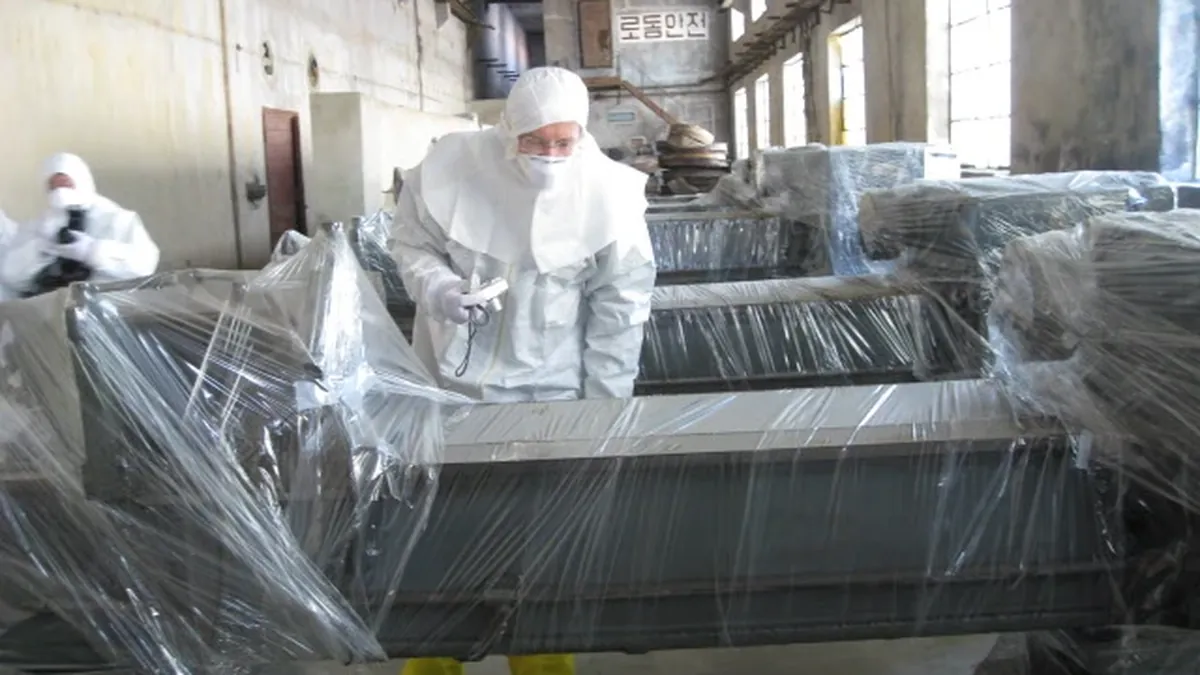
The IAEA has had no access to the country since 2009, when Pyongyang expelled its inspectors, and it monitors the programme mainly through satellite imagery and open sources. In a report before the Agency’s annual conference in September, Mr Grossi had noted the identification of an additional enrichment facility at Yongbyon, a complex Pyongyang reportedly shut down after negotiations and reactivated in 2021. Member states then approved a resolution expressing “growing concern” about North Korea’s nuclear activity. Kim Yo Jong, the sister of the North Korean leader, replied that the country’s status as a nuclear power is “absolute” and called those who hope for denuclearisation “idiots”.
North Korea is under multiple UN sanctions for developing banned weapons. The new picture of Yongbyon follows a dense series of tests in recent weeks, from a volley of about ten short-range ballistic missiles from Wonsan to the test of a cluster warhead for tactical ballistic missiles and of a new “high-speed” torpedo. Earlier this autumn a congressional report estimated that North Korea has material for up to 90 nuclear warheads. The Board of Governors continues its work in Vienna through the week.