Politics & Diplomacy
UN General Assembly votes on US embargo against Cuba for the 34th time on 28 October, after a heated exchange between Waltz and Cuba’s foreign minister
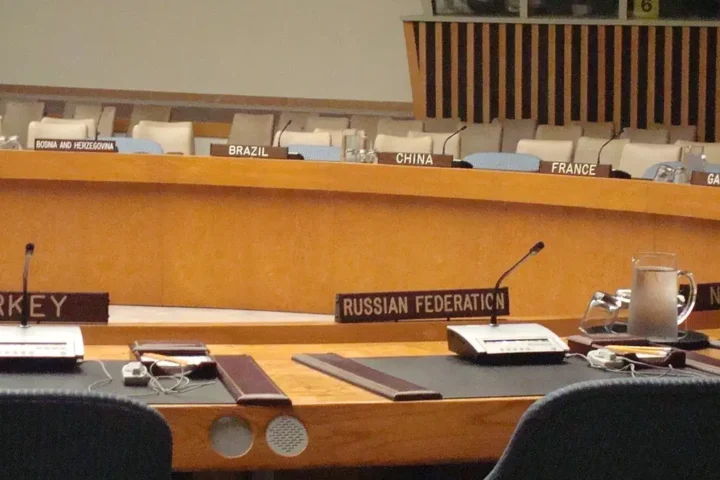
The General Assembly opened its annual debate on the US embargo against Cuba on 27 October, with a vote due on Wednesday 28 October. The debate was briefly suspended after a row between US Ambassador Mike Waltz and Cuba's foreign minister.

The UN General Assembly opened its annual debate on the US economic embargo against Cuba on Tuesday 27 October, and member states are due to vote on Wednesday 28 October on a resolution calling for the embargo to end, UN News reported. It will be the 34th time the Assembly has voted on the text.
The resolution is titled “necessity of ending the economic, commercial and financial embargo imposed by the United States of America against Cuba”. The Assembly has called for an end to the embargo, first imposed in 1960, on each of its 33 previous votes. According to UN News, support has grown markedly since the first vote in 1992, when 59 countries backed the text, three opposed it, 71 abstained and 46 did not vote. It peaked at 191 votes in favour in 2015, 2016 and 2017, during the thaw in relations under President Barack Obama.
A heated exchange in the chamber
The debate has already produced a confrontation. UN News said Cuba’s Foreign Minister, Bruno Rodríguez Parrilla, interrupted the US Ambassador, Mike Waltz, on a point of order midway through his statement. The exchange escalated into a heated row between the two and the President of the General Assembly briefly suspended the session. The debate resumed without further incident, and Rodríguez is due to deliver his own statement on Wednesday.
Waltz rejected the premise of the debate. “There is no blockade,” he said, arguing that Cuba’s crisis is the fault of its own government and not of the embargo. He put US exports to Cuba at more than $876 million in the first eight months of 2026 and pointed to shipments from Canada, Spain, Mexico, China, Russia, the European Union and UN agencies. Cuba’s wealth, he said, had not vanished but had “simply” passed from ordinary Cubans into the hands of the ruling elite.
The humanitarian argument
This year’s debate comes after the Trump administration tightened the embargo. According to the UN Resident Coordinator in Cuba, Francisco Pichon, the move has led to an energy crisis and possible humanitarian collapse. The World Health Organization has warned that energy shortages are taking a toll on health, and in May senior UN officials reported that more than 100,000 surgical procedures had been postponed. Cuban authorities have also pointed to delays in vaccination programmes and to patients with chronic illnesses who cannot get a stable supply of medicines. UN News added that President Donald Trump has this year raised the possibility of military intervention in Cuba.
Successive UN High Commissioners for Human Rights and independent UN experts have condemned the embargo and other unilateral US sanctions, warning that they threaten Cubans’ rights to health, life, food and development. In August, independent experts condemned a fresh round of US sanctions as an attempt to force change on “a sovereign State through threats and coercion”.
What the text says
As in previous years the Cuban-drafted resolution reaffirms the sovereign equality of states, non-intervention and non-interference in internal affairs, and freedom of international trade and navigation. It also voices concern over laws such as the Helms-Burton Act, enacted by the United States on 12 March 1996, whose extraterritorial effects, it says, undermine the sovereignty of other states and freedom of trade and navigation. It calls on all states to refrain from adopting such measures and urges those that still apply them to repeal them.
Canada, China and Russia have long voted in favour, while the United States, backed by Israel, has voted against every year bar one. General Assembly resolutions are not binding, so the vote carries political rather than legal weight. For the Cold War background to US-Cuban confrontation, see our explainer Cuban Missile Crisis explained: timeline of October 1962.