Europe
UN Security Council on Ukraine: 328 civilians killed in September, Moscow and Kyiv trade accusations before Abu Dhabi talks
At the UN Security Council on 9 November, officials reported 328 civilians killed in Ukraine in September, while Kyiv and Moscow traded accusations a day before the Abu Dhabi talks.

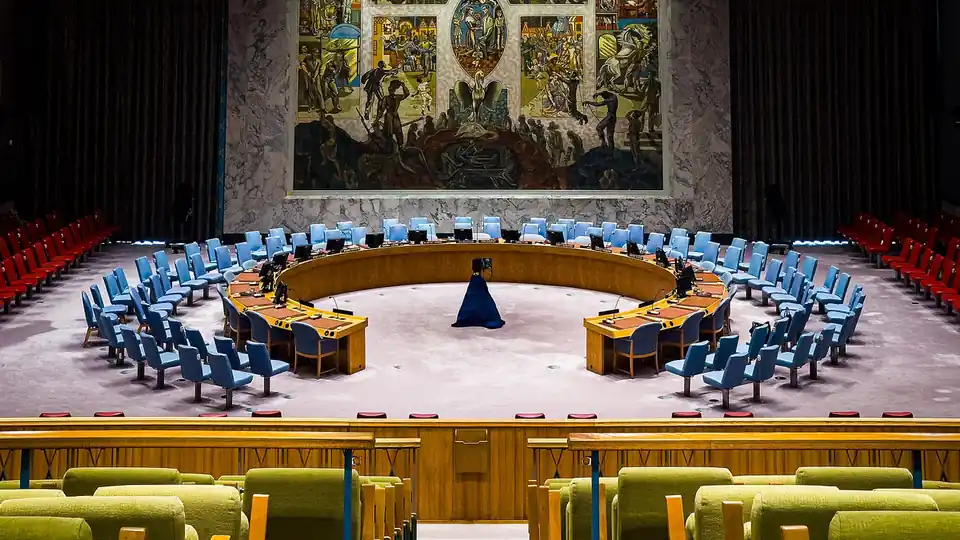
The UN Security Council met on 9 November on the war in Ukraine, a day before US-mediated talks were due to open in Abu Dhabi, and heard senior UN officials describe a rising civilian toll and growing pressure on Ukraine’s energy network. According to the UN press summary of the 10267th meeting, the session was requested by Ukraine in a letter dated 29 October after intensified Russian attacks.
What the UN officials told the Council
Kayoko Gotoh, the UN’s Director for Europe and Central Asia in the political and peacebuilding departments, called the war increasingly “dangerous and unpredictable”. She cited recent strikes on a school shelter and an aid distribution site in Zaporizhzhia, a hospital in Kharkiv, and a hospice and a railway station in Dnipro. She also pointed to the 10 and 11 November talks in Abu Dhabi as an opportunity.
On figures, the UN said at least 328 civilians were killed and 2,105 injured in Ukraine in September 2026, an 85 per cent rise on the year before. Since the full-scale invasion in February 2022, the UN human rights office has verified nearly 18,000 civilian deaths and more than 57,000 injuries, and the real totals are believed to be significantly higher. The Council was also told of 53 people killed and 462 injured in Russia in September, as reported by Russian authorities and attributed to Ukrainian strikes.
Mohamed Yahya, the UN’s Deputy Emergency Relief Coordinator, said attacks on energy infrastructure are causing power and water outages affecting millions of people, and that humanitarian aid can help people cope but cannot replace a grid that is repeatedly destroyed. The UN winter response plan targets more than 2 million vulnerable people.
Gotoh welcomed the six-day local ceasefire in Oleshky, in the Kherson region, as an encouraging example that could be replicated elsewhere. Earlier Geopolitiki reporting on the truce is collected in our piece Merz: “The time has come for this war to end”; the Oleshky truce as a model for energy and the Black Sea.
Ukraine’s position
Ukraine’s representative asked the UN Secretariat not to repeat Russian casualty figures without independent verification, and objected to the appointment of a Russian official as Assistant Secretary-General for Mine Action. He cited Ukrainian estimates of more than 54,000 Russian casualties in October and a net Russian territorial loss of 28 square kilometres; these are Kyiv’s own figures and were not verified in the meeting. He called for an immediate, unconditional ceasefire, more air-defence systems and support for war crimes investigations.
Russia’s reply
Russia’s representative questioned why Ukraine had requested what he called “tired and clichéd meetings”. He alleged that members of the Azov National Guard tortured detainees in a prison near Kyiv, a claim made by Moscow and not confirmed by the UN. He also accused European governments of supplying weapons and money to Ukraine and of preparing their populations for war with Russia, and said the situation “may escalate quickly” if European states start a war.
Other members
The EU delegation, led by Stavros Lambrinidis, noted that despite more than 100 Council meetings on Ukraine, Moscow has ignored repeated calls for a ceasefire and a just, lasting peace. The United States representative said Washington remains committed to ending the war and pointed to cooperation in Oleshky as a possible model for protecting civilians. China’s delegate urged both sides to build consensus step by step toward a binding agreement. Latvia’s Foreign Minister Baiba Braže, who holds the Council presidency for November, argued that Europe already has a security architecture and that the problem is Russia’s violation of its principles.
The United Kingdom’s separate statement at the same meeting is covered in UK at the UN Security Council: Russia is using winter as a weapon, and Britain will stand with Ukraine “for as long as it takes”.