Analysis
Budapest Memorandum explained: what Russia, the UK and the US promised Ukraine
The 1994 Budapest Memorandum gave Ukraine security assurances, not a defence guarantee, when it gave up its nuclear weapons. What the six paragraphs say, and what happened next.

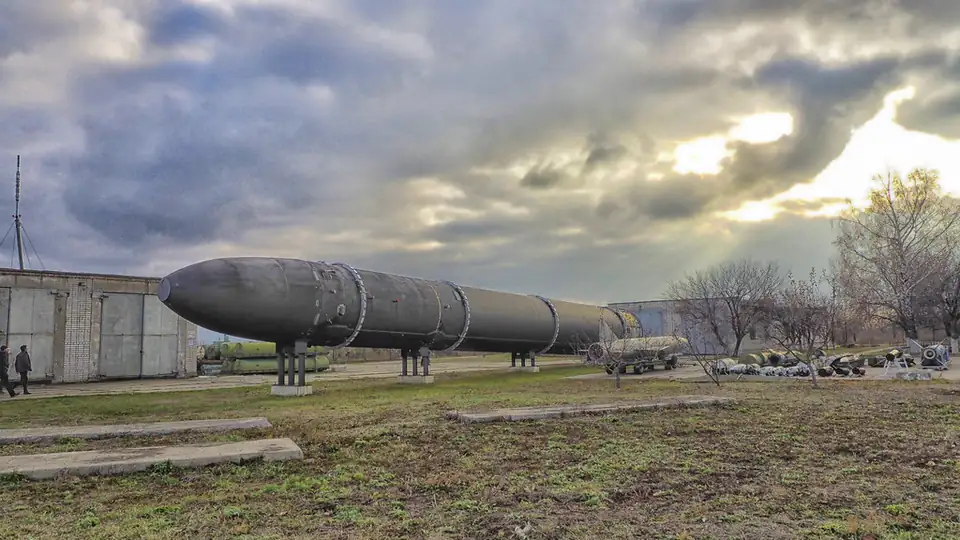
The Budapest Memorandum is a political document signed on 5 December 1994 in which Russia, the United Kingdom and the United States gave Ukraine “security assurances” when it joined the Treaty on the Non-Proliferation of Nuclear Weapons as a non-nuclear-weapon state. It commits them to respect Ukraine’s borders and not to use force against it, but it does not oblige anyone to defend Ukraine militarily.
Key points
- Signed in Budapest by Leonid Kuchma, Boris Yeltsin, John Major and Bill Clinton; it applies from signature, and Ukraine registered it with the United Nations on 2 October 2014.
- Ukraine inherited about 1,900 strategic warheads, according to the Arms Control Association, and its last warhead left for Russia in 1996.
- The six paragraphs reaffirm existing principles; only one promises action, and only in a case of nuclear aggression.
- The United States, the UK and Ukraine called Russia’s 2014 annexation of Crimea a violation of the assurances; the war that followed is the background to today’s talks on “security guarantees”.
What is the Budapest Memorandum?
Its full title is the Memorandum on Security Assurances in Connection with Ukraine’s Accession to the Treaty on the Non-Proliferation of Nuclear Weapons. The United Nations Treaty Series lists it as an agreement between Ukraine, the Russian Federation, the United Kingdom and the United States, with English, Russian and Ukrainian authentic texts, entering into force “by signature” on 5 December 1994. Ukraine registered it with the UN Secretariat only on 2 October 2014, after Russian troops had entered Crimea.
The Arms Control Association describes it as a political agreement rather than a treaty. That distinction matters, because the document itself is built from verbs of reaffirmation, not of new obligation.
Why did Ukraine give up its nuclear weapons?
According to the Arms Control Association, Ukraine held the world’s third-largest nuclear arsenal in 1991, with an estimated 1,900 strategic warheads, 176 intercontinental ballistic missiles and 44 strategic bombers. Its 1990 Declaration of Sovereignty pledged “not to accept, produce, or acquire nuclear weapons”, although, the Association notes, some politicians still favoured keeping the weapons as a deterrent against Russia.
The path to Budapest ran through three steps, as the Association records them:
- 23 May 1992: the Lisbon Protocol, in which Ukraine agreed to return the weapons to Russia and join START and the NPT.
- 14 January 1994: the Trilateral Statement in Moscow, in which Ukraine committed to full disarmament in exchange for economic support and security assurances from the United States and Russia.
- 5 December 1994: Ukraine acceded to the NPT as a non-nuclear-weapon state, START entered into force, and the memorandum was signed.
The Trilateral Statement, signed by Presidents Clinton, Kravchuk and Yeltsin, spoke of “simultaneous actions” on the transfer of warheads from Ukraine and compensation in the form of fuel assemblies for nuclear power stations. It also said the United States and Russia were “prepared to provide security assurances to Ukraine” once START I entered into force and Ukraine joined the NPT. The Budapest text delivered those assurances, with the United Kingdom added as a third provider.
Ukraine’s last nuclear warhead went to Russia on 1 June 1996, and its last strategic nuclear delivery vehicle was eliminated on 30 October 2001, the Association reports.
What does the memorandum actually say?
The operative text has six numbered paragraphs. In the first five, Russia, the UK and the US “reaffirm” commitments. In summary:
| Paragraph | Content |
|---|---|
| 1 | Respect for the independence, sovereignty and existing borders of Ukraine, in line with the CSCE Final Act |
| 2 | Refrain from the threat or use of force against Ukraine’s territorial integrity or political independence; no weapons used against Ukraine except in self-defence or in line with the UN Charter |
| 3 | Refrain from economic coercion designed to subordinate Ukraine’s sovereign rights to their own interest |
| 4 | Seek immediate UN Security Council action to assist Ukraine if it becomes a victim of an act of aggression, or an object of a threat of aggression, “in which nuclear weapons are used” |
| 5 | No use of nuclear weapons against a non-nuclear-weapon state party to the NPT, except in the case of an attack on themselves, their territories, forces or allies by such a state in association or alliance with a nuclear weapon state |
| 6 | All four parties “will consult in the event a situation arises which raises a question concerning these commitments” |
Was it a security guarantee?
On the text, no military defence of Ukraine was promised. Paragraph 2 is a pledge to refrain from force, and paragraph 4 commits the three powers only to seek Security Council action, and only if nuclear weapons are used or threatened. The final paragraph provides for consultation, not for a joint response. The Arms Control Association likewise says its description of the assurances does not include any obligation to defend Ukraine militarily.
This is the gap that shapes today’s debate. A mutual-defence commitment of the kind in the North Atlantic Treaty is a different instrument; we explain how it works in NATO Article 5 explained: what it covers and why Greece joined.
What happened in 2014 and 2022?
The Arms Control Association records that Russian troops entered Crimea in March 2014 and that on 18 March Russia declared its annexation, over the protests of Kyiv, the UN Security Council and Western governments. It reports that the United States, the UK and Ukraine called this a violation of the security assurances in the memorandum. Russia’s Foreign Ministry replied, according to the same source, that the assurances had been given to the legitimate government of Ukraine and not to the forces that replaced it. In 2009, the Association adds, Russia and the United States had issued a joint statement confirming that the assurances would remain valid after START expired.
Russia then supported a separatist insurrection in the Luhansk and Donetsk provinces, massed more than 150,000 troops near Ukraine’s borders in late 2021 and early 2022, and launched a large-scale invasion on 24 February 2022, the Association’s timeline states.
Why it matters now
The memorandum’s wording is the baseline against which any new “security guarantees” for Ukraine can be read. Our recent coverage follows the current talks: G7 in Paris: Europe asks for a seat in the Ukraine talks – what Rubio said about security guarantees ahead of Abu Dhabi, and earlier Zelensky: “Yes, right now we must freeze” – Kyiv open to a ceasefire along current front lines, then security guarantees.
The principles the memorandum restates, respect for existing borders and the refusal of force against a state’s territorial integrity, are drawn from the CSCE Final Act and the UN Charter. Paragraph 1 and paragraph 2 say so in terms, tying the commitments to those two sources.
Sources
Sources: United Nations Treaty Series, volume 3007, I-52241 (text of the memorandum); Arms Control Association, Ukraine, Nuclear Weapons, and Security Assurances at a Glance; Trilateral Statement of 14 January 1994 (National Security Archive copy).