Politics & Diplomacy
Wadephul: Armenia must change its constitution for a peace treaty with Azerbaijan to be signed
German Foreign Minister Johann Wadephul says Armenia must amend or replace its constitution for the peace deal with Azerbaijan to be signed. Pashinyan says the draft new constitution will be published on November 23.

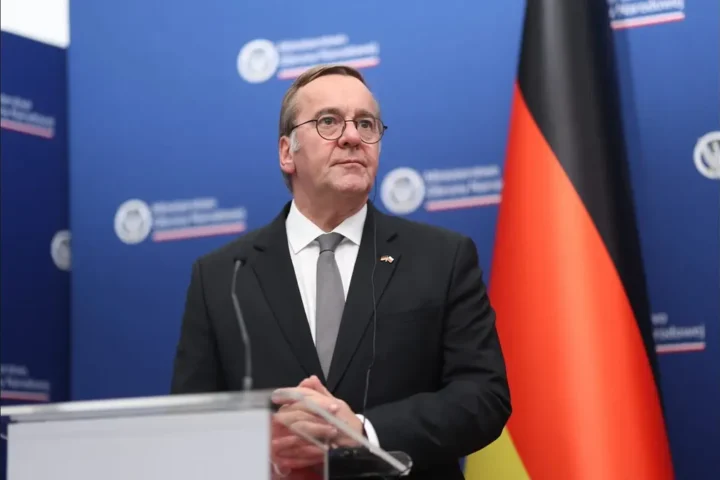
Armenia must amend its constitution or adopt a new one so that the peace agreement with Azerbaijan can finally be signed, German Foreign Minister Johann Wadephul said in an interview with Germany’s Tagesschau. “Above all, it is decisive that the agreement is finally signed,” he said. Wadephul noted that developments in the South Caucasus are moving in a positive direction and that the two sides have reached agreements, but the peace treaty has not yet been signed. A lasting peace, he said, will open new transport routes after a conflict that cost tens of thousands of lives.
The remarks follow Wadephul’s first tour of the South Caucasus, in Baku on Tuesday, November 17 and Yerevan on Wednesday, November 18. “It was a trip for peace,” he told Deutsche Welle, adding that there is reason for optimism that the treaty will be completed, as he sensed the will on both sides. In Yerevan, the German Foreign Office wrote that the Armenian government has taken a “big and courageous step” toward peace and accused Russia of not hesitating to use energy as a weapon. In Baku it described Azerbaijan as a “strategic pillar” of Europe’s energy security. Prime Minister Nikol Pashinyan stressed Germany’s support for relations between Armenia and the EU.
The constitutional question
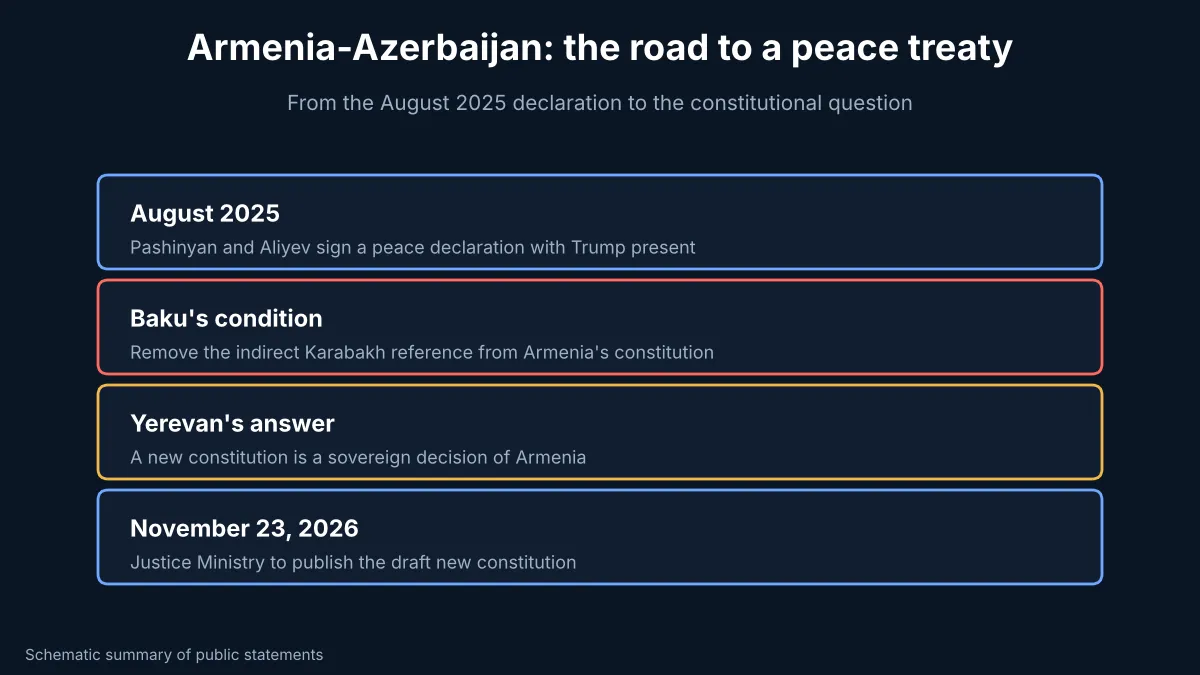
Azerbaijan insists that the indirect reference to Karabakh be removed from Armenia’s constitution and links the change to signing the agreement. Yerevan replies that a new constitution is Armenia’s sovereign right and is not being adopted because another state asks for it. On Friday, November 20, Pashinyan announced that the Justice Ministry will publish the draft of a new constitution on Monday, November 23. He called on the parliamentary opposition to supply the six votes needed for a referendum and said he is ready to resign if citizens reject the new fundamental law.
“Yes, we have established peace. We are on the road to making it final, irreversible and lasting,” Pashinyan told parliament in the 2027 budget debate. The only obstacle, he said, is the parliamentary opposition, while the current constitution and the 1990 Declaration of Independence are tied to an agenda of conflict. The “Armenia” and “Strong Armenia” blocs oppose the process and link it to Baku’s demands. Pashinyan, who in October proposed an exchange of enclaves with Azerbaijan, does not have the majority needed in parliament.
Pashinyan and Azerbaijani President Ilham Aliyev signed a peace declaration in August 2025 in the presence of Donald Trump. The United States wants a central role in the roughly 43-kilometre transport corridor “Trump Route for International Peace and Prosperity” (TRIPP), which would link Azerbaijan with its Nakhichevan exclave on the border with Turkey. Yerevan is gradually moving away from Moscow, where a CSTO summit recently took place without Armenia.